
A Wichita restaurant in the ’70s delivered food via choo choo train — and it’s been found
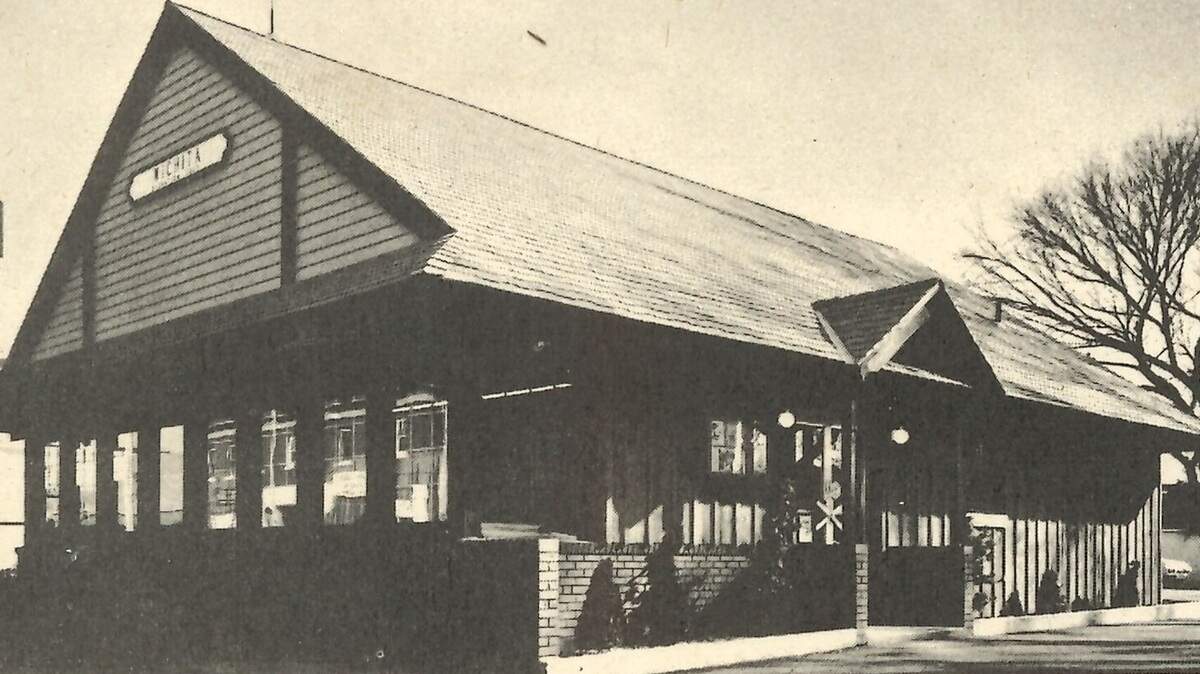
In the 1970s, if a kid in Wichita brought home a good report card or behaved at the store, the reward would often be a meal at Casey Jones Junction.
Native Wichitans of a certain age still light up at the mention of the restaurant, which famously featured a toy train that would choo choo burgers and fries to expectant children sitting at the counter. Wichita had two of them — one on the east side and one on the west side — and they lasted until the mid-1980s.
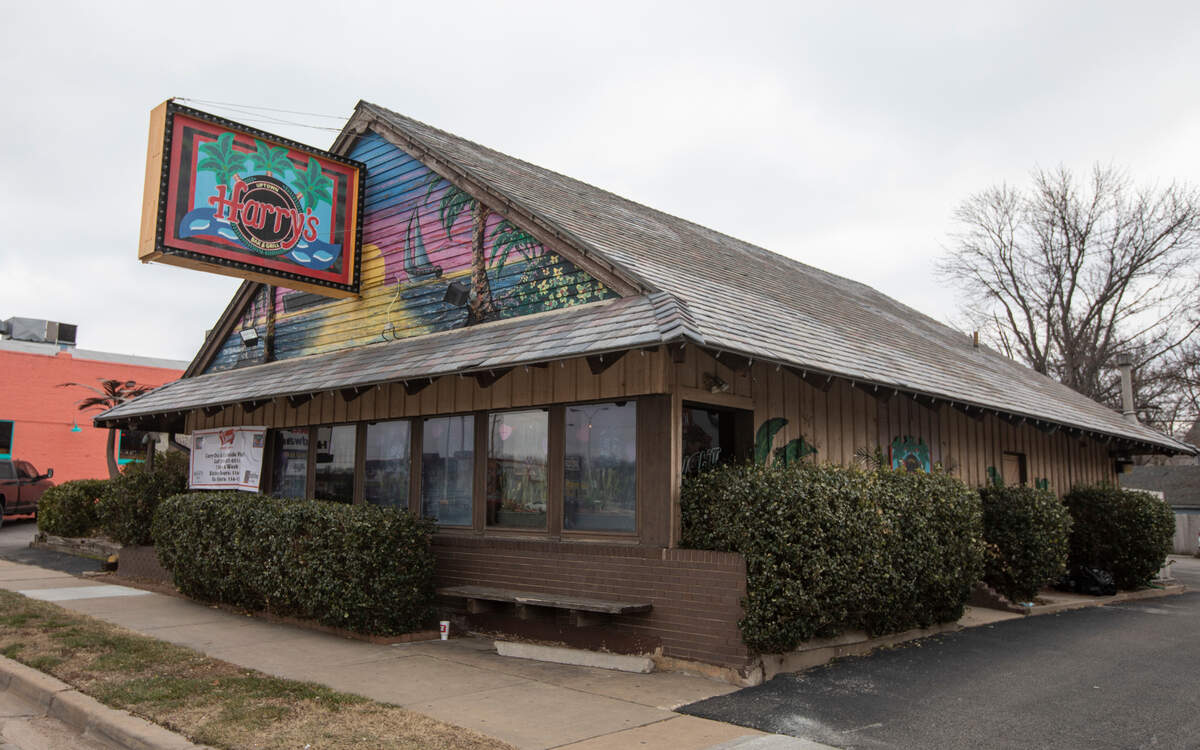
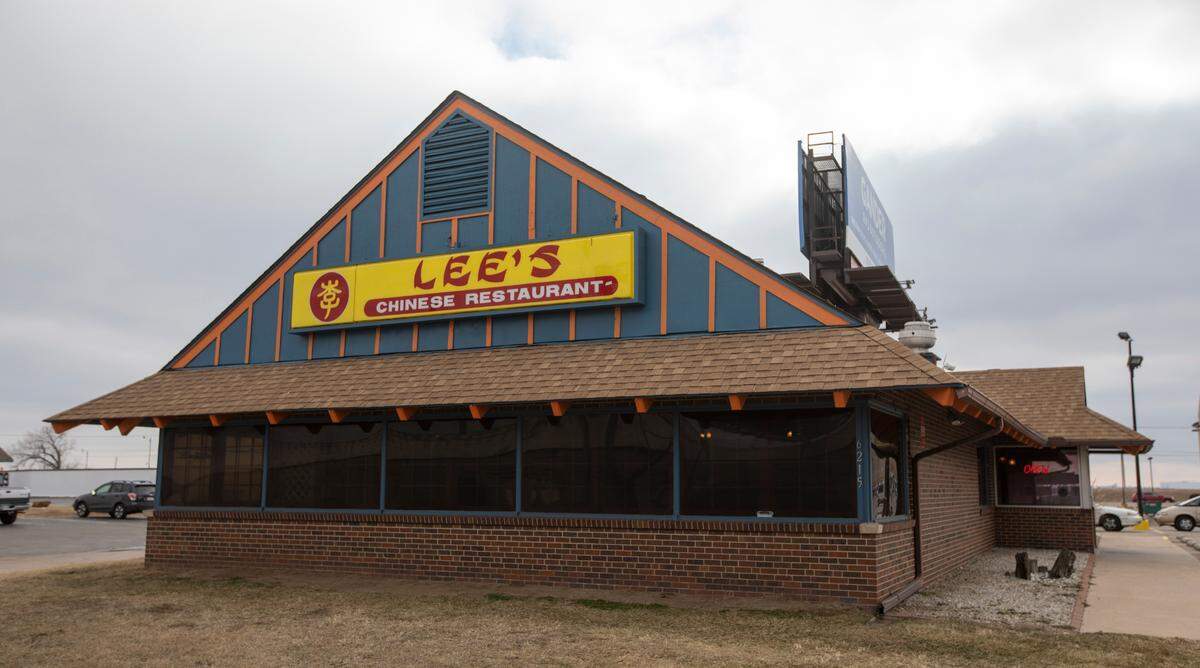
Local businessman and train enthusiast M. Eugene Torline opened the first of Wichita’s two Casey Jones Junction restaurants in 1968 at 3023 E. Douglas — in the building that Harry’s Uptown occupies now — and he followed it up with a second larger restaurant two years later at 6215 W. Kellogg, in the spot where Lee’s Chinese restaurant is now.
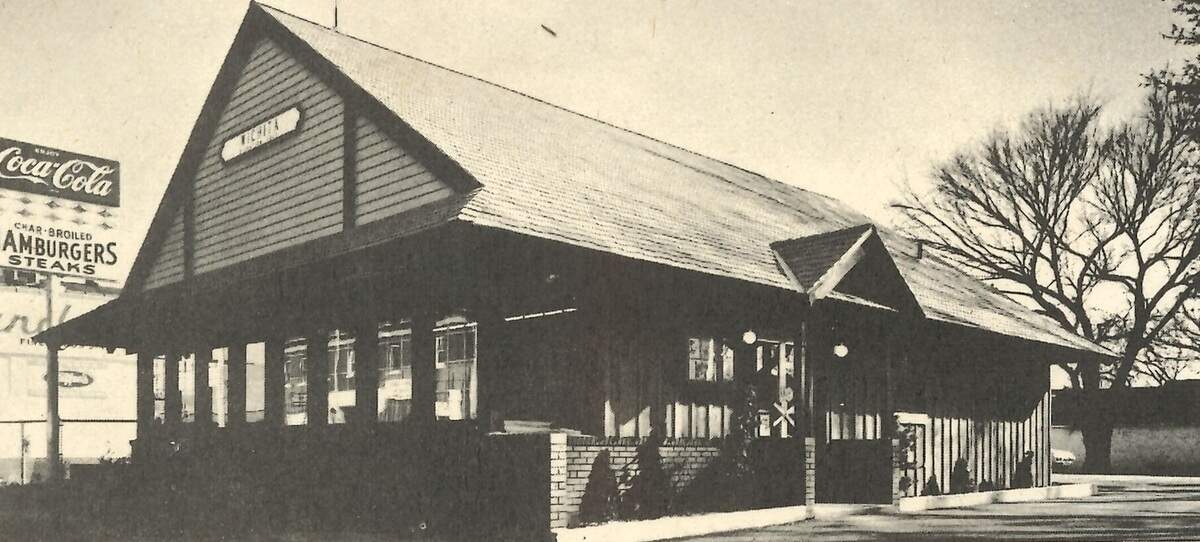
The restaurants both closed shortly after Torline died in 1986 at the age of 60, and nothing much remains except for fond memories and the original counter that served as a train track — which Harry’s now uses as a bar.
But a couple of years ago, Torline’s nephew — Wichita house flipper Mark Funk — was cleaning out his mother’s North Riverside home following her death, and he uncovered relics from the restaurant that he didn’t know still existed, including the train that used to deliver Tom Thumb specials to smiling kids at the West Kellogg restaurant.
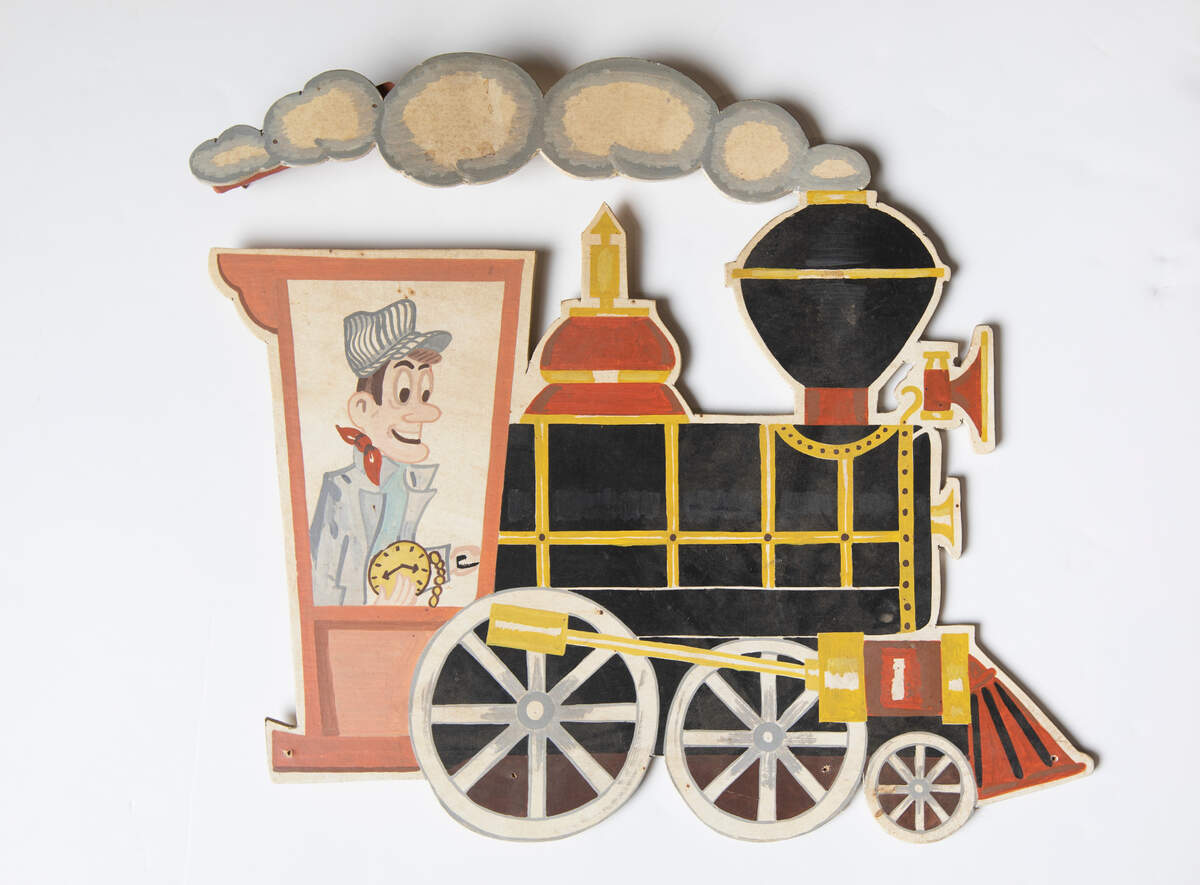
He also found an old wooden wall hanging of Casey Jones piloting the train that had decorated the original store as well as a copy of the original menu, an artist’s color rendering of the Douglas store, and several framed articles that were written about the restaurants during their heyday.
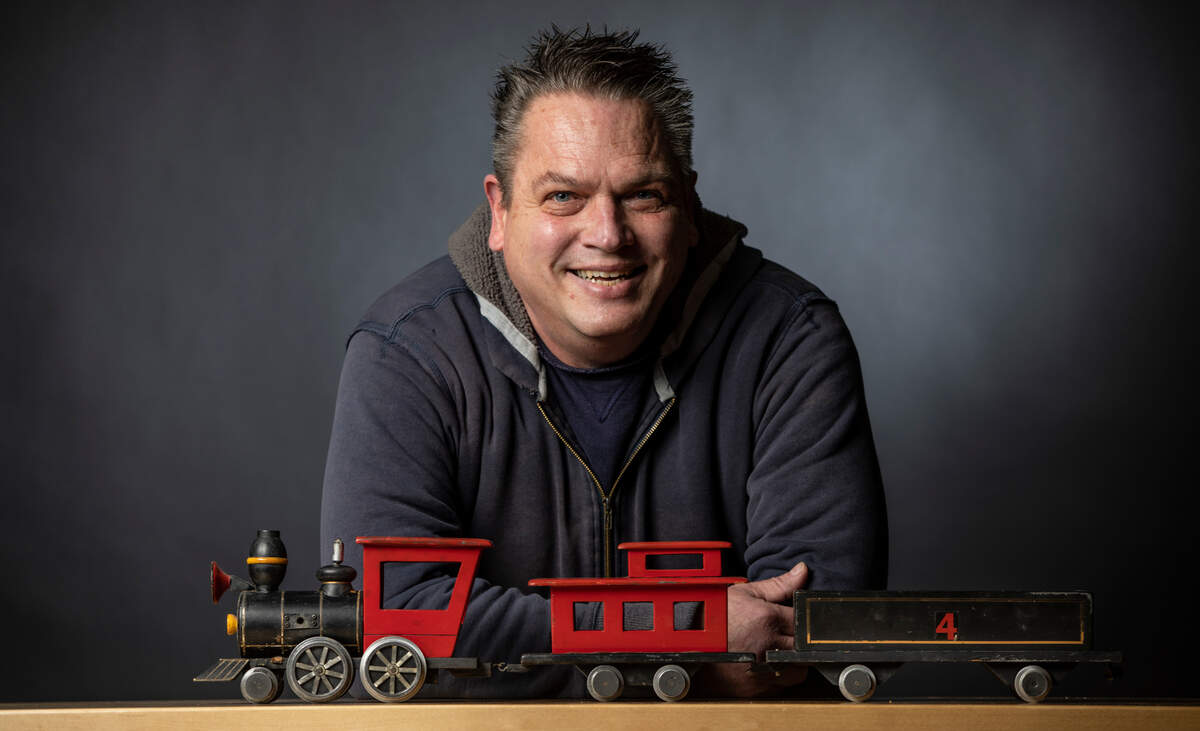
Funk started reminiscing about the restaurant, where he had his first job as a 14-year-old, long-haired Black Sabbath fan. And with years of distance, he said, he’s come to realize how much his uncle’s businesses meant not just to his family but to a whole generation of Wichitans, who frequently bring up Casey Jones Junction on social media.
“My dad would take us kids there every weekend,” one person commented on a January Facebook thread about the restaurant. “Great childhood memories.”
“My mother would reward me by taking me there a couple of times a month,” another said.
“It was usually the restaurant we picked for our birthday dinner,” said another.
Recently, Funk — who strongly resembles his late uncle — sat down to share the artifacts he uncovered and to talk about his uncle’s restaurants, which were so important to so many families in the 1970s and early 1980s.
Finding those items at his mother’s house helped him reconnect emotionally not only to his uncle, an early business mentor of his, but also to his mother, Dorothy Funk, who worked at the restaurant as a hostess for years.
%20(1).jpg "141968491_203474638146447_5433159404872660195_n (1) (1).jpg")
When the restaurants closed, he remembers, Casey Jones Junction employees just started throwing things away. But his mom gathered up all the pieces she could. He never knew what she’d done with them until he came across some boxes covered up in a bedroom at her house.
“My mom took as much as she could because it was her brother, and she and my uncle were very close,” he said. “She just held on to this stuff.”
Railroad dreams
Torline, a native Wichitan and 1944 Cathedral High School graduate, had been an amateur boxer in high school and even won the city lightweight championship. He made a career as a geologist but eventually took over as president of the Variant Corporation, a company whose subsidiaries include Acme Oil Corp.
He’d always been fascinated with trains, especially the tale of Casey Jones, a railroad folk hero who died in a train crash in 1900 and whose life was recounted in many songs.
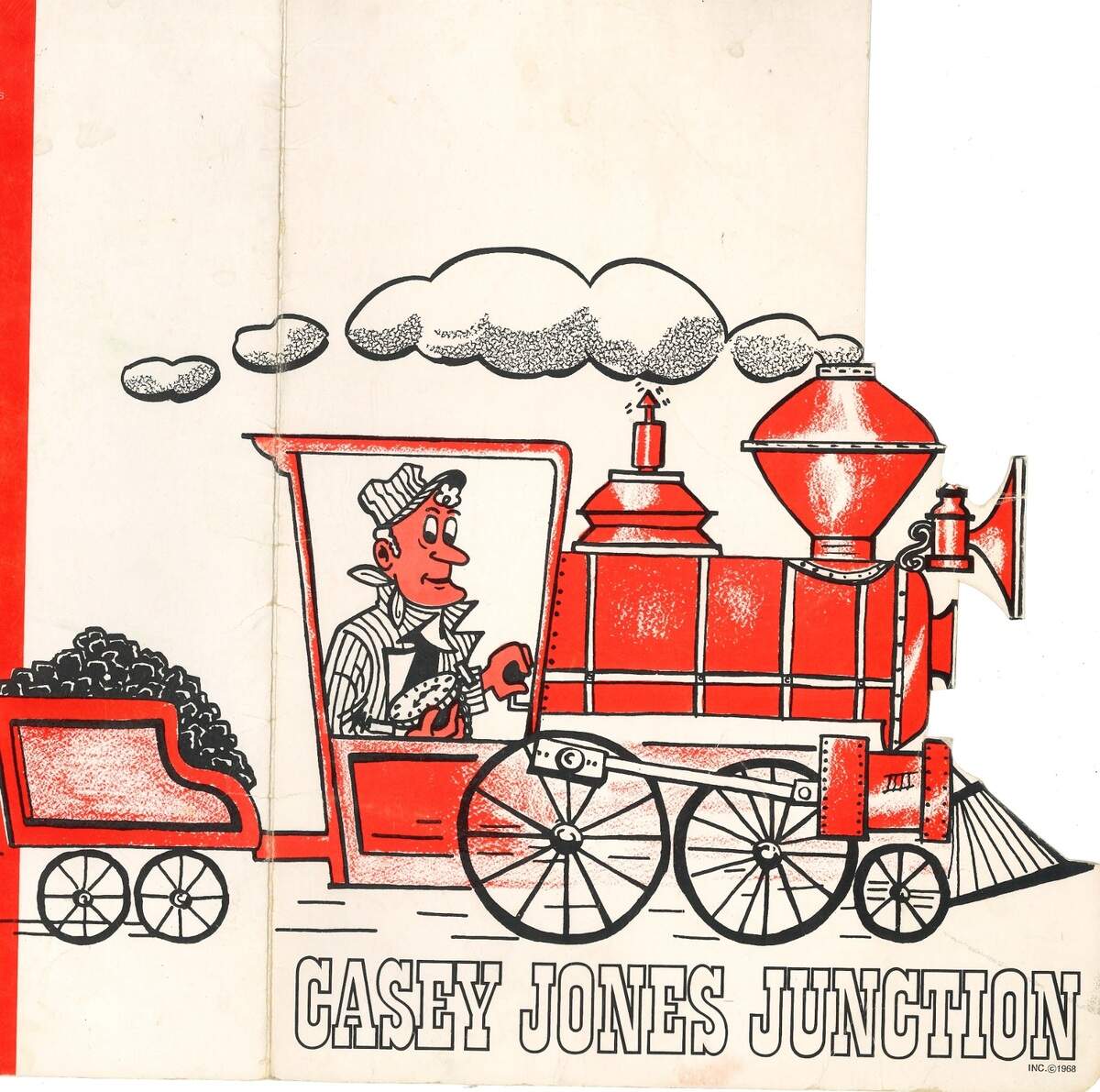
In the late 1960s, Torline came up with the idea for a restaurant that would celebrate railroad culture. The centerpiece would be a model train that would deliver food to customers. He patented the name Casey Jones Junction and started experimenting with model trains. He took trips to Casey Jones’ home and museum in Jackson, Tennessee, to make sure his restaurant would be historically accurate.
Acme Oil Corp. would be the owner of the restaurant, and it bought a lot on East Douglas that held an old Victorian house. It was razed to make way for the first restaurant, which opened in the summer of 1968.
The new building was designed to look like a train depot and included a separate room for birthday parties. The inside was decorated with train memorabilia, and there was even a gift counter at the front where kiddies could beg their parents to buy them train-related toys.
But the centerpiece was that model train, which went through a variety of designs over the years but which included a cargo car that could transport a tiny burger and serving of fries from kitchen to kid.
The locomotive-shaped menu, whose cover featured a cartoon Casey Jones as conductor, offered breakfast items like waffles or ham and eggs, a variety of burgers and sandwiches, and dinner specials like the “Engineer,” a 12-ounce charbroil T-bone steak for $3.75, and the “American Flyer,” three pieces of fried chicken with honey for $1.50. The 35-cent “Tom Thumb” meal for customers 12 and under would be delivered by train to kids lucky enough to score a seat at the counter. Onetime, restaurant legend goes, the train didn’t stop on time and plunged headfirst into the deep fat fryer.
Funk remembers being recruited as a small boy to pose in a photo shoot for an advertisement his uncle had purchased. That ad is among the items he uncovered at his mother’s house, and in the accompanying photo, he’s gazing eagerly at the passing train as his young cousin, Beth, grabs for a burger attached to one of the cars.
In 1970, a second and larger Casey Jones Junction opened on West Kellogg, and that’s where Funk later got his first job as a busboy and dishwasher.
He remembers that in 1973, his uncle obtained in Indianapolis an old train car that was said to have belonged to the Crown Princess of Japan, and the story was that she’d taken it on a 1930 tour of the United States. The 85-foot car included a parlor, bedrooms, bathrooms, a kitchen and a dining room, and Torline had it renovated and parked behind the West-side restaurant, offering his customers tours. At one point, Funk was assigned to conduct the tours.
The Casey Jones Junction restaurants remained a draw for families for years and were the No. 1 place in Wichita for birthday parties. When Torline died of a sudden heart attack in 1986, though, no one could envision carrying on without him. The restaurants were closed and liquidated. The old train car was sold for scrap.
Funk said he remembers his uncle as a hard worker and a good businessman and said he picked up several tips from Torline that have helped him throughout his own career.
All these years later, he realizes that his uncle was a bit of a visionary, and the fact that he is in possession of pieces of his family’s restaurant legacy means something to him.
“If you think about it, this was before Chuck E Cheese. This was before the interactive dining experience was a thing,” Funk said. “And for Wichita, Kansas, it was kind of special.”
This story was originally published February 11, 2021 at 5:01 AM.
.jpg)