
Wichita Symphony’s 2025-’26 season reflects new executive director
The hand of Wichita Symphony Orchestra’s new executive director is evident in the 2025-26 schedule, announced last week during a WSO concert.
“Yeah, it was really a collaborative process between Daniel and I and sort of getting input from people throughout the organization, some stuff that was set up a little bit coming in that we kind of knew was on the docket or that we needed to hit on,” Tim Storhoff said of music director-conductor Daniel Hege. “It was a collaborative team effort.”
Storhoff, who began in September, was previously chief philanthropy officer for North Carolina’s Winston-Salem Symphony, with a doctorate in musicology and a master’s degree in ethnomusicology.
“This orchestra is top-notch,” Storhoff said of WSO. “I knew they were good when I accepted the job, or even just sort of looking at the job. Until you hear an orchestra live and in person you don’t can’t appreciate the quality of musicianship that we have — and for a community of Wichita’s size to be to have and maintain this quality of musicians is really something special.”
Hege praised Storhoff’s work so far.
“He’s brought a fresh look. I mean, his experience is fantastic and exactly what I think we need and what we have needed,” said Hege, completing his 15th season as WSO maestro. “He has a very collaborative approach, which is wonderful. He has experience in performing as a musician, but also he’s a scholar in ethnomusicology and knows repertoire very well.
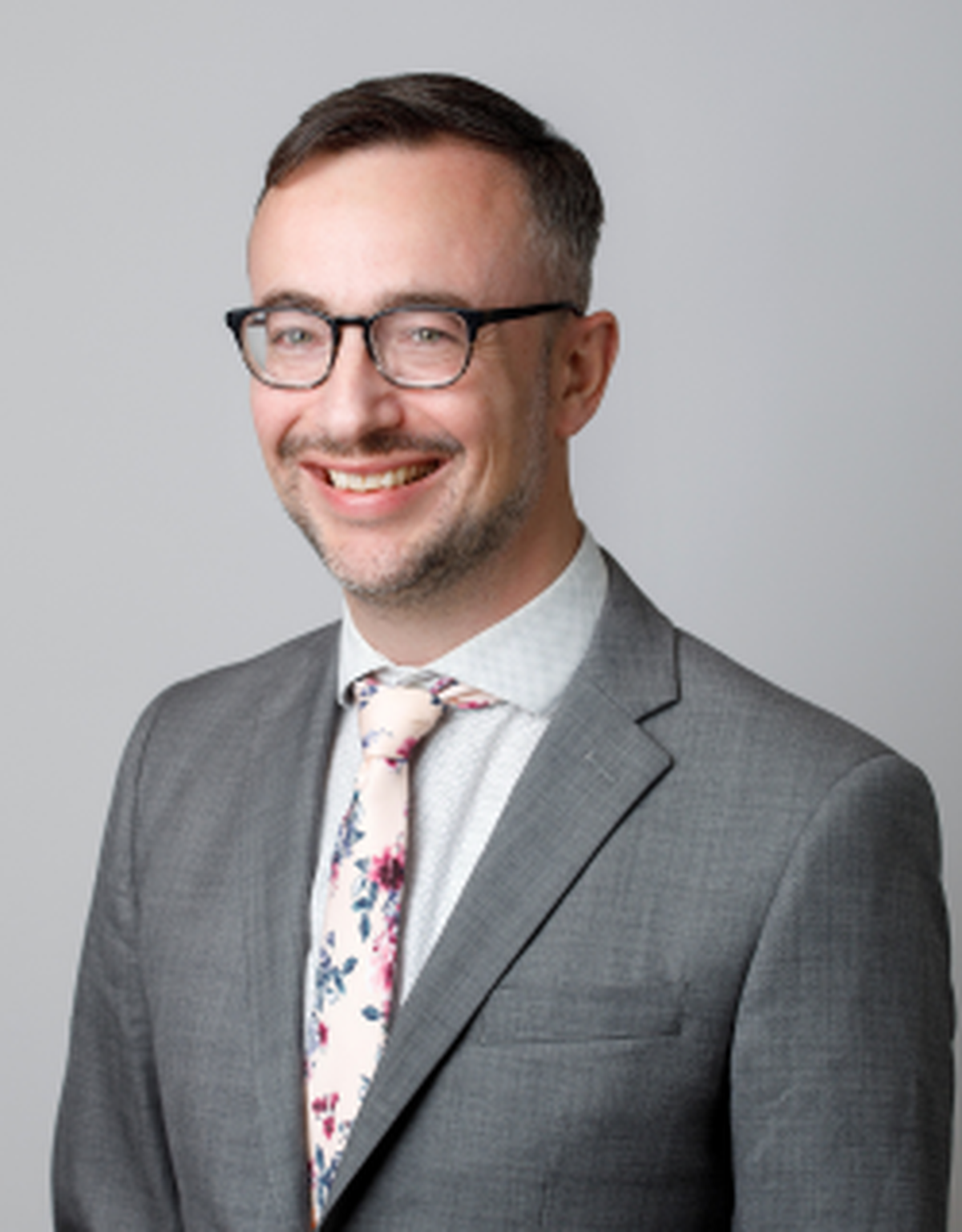
“He also has experience as a fundraiser and working with people,” he added. “It was clear from his resume that he was promoted from within an organization which is always a very good sign because whenever you’re inside of an organization, it’s always yours to lose because there’s something. There were just so many positives that the search committee that I looked at, the musicians saw.”
With Beethoven’s Ninth symphony scheduled for April 12 and Symphony in the Gardens in Botanica May 16 to wrap up the current season, here’s a look at what’s coming up for 2025-26, which concludes with a salute to the semiquincentennial – or 250th anniversary – of the United States concluding the season.
Oct. 5: Symphonic Metamorphosis
The concert’s title piece, by early 20th century German composer Paul Hindemith, is “just a great, great vehicle for an orchestra. It’s like a showpiece And I just think the audience is going to love it,” Hege said.
The concert begins with Verdi’s “La Forza del Destino” (“The Force of Destiny) and continues with guest violinist Alexi Kenney on Korngold’s “Violin Concerto in D Major.” Kenney is also scheduled to give a solo concert the night before, Storhoff said.
“He released an album last year that’s mostly music of Bach, but also with some electronics and some works by new composers that sort of draws upon Bach,” he said. “It’s going to be really cool, and it’ll be with projections. He worked with this filmmaker who has all these are sort of different images.”
Also on the bill is Christopher Theofanidis’ “Rainbow Body.”
Oct. 25: Beethoven’s Emperor
Pianist Michelle Cann makes her WSO debut with Beethoven’s “Piano Concerto No. 5.”
“Her name has been floating around for a while and I know in past seasons I’ve been really wanting to engage her to come to Wichita but for whatever reason, repertoire or dates, just didn’t work out,” Hege said. “But I’m so excited that she can finally get here to play the Emperor Concerto, which is one of the really great concertos, obviously, of all time.”
Cann, who won her first Grammy this year for her work on “Beyond the Years: Unpublished Songs of Florence Price,” is also scheduled to give a solo performance that weekend.
Tchaikovsky’s Symphony No. 5 closes the night. “That’s just two home run pieces,” Hege said.
The concert opens with a work of a modern composer, Carlos Simon’s “Fate Now Conquers.”
“It’s a five-minute short work, but because there is kind of the fate motif that is in Tchaikovsky’s Fifth Symphony,” Hege said. “It’s a wonderful work. And I’ve seen it on a number of other orchestras websites and I’ve heard it’s beautiful. So that’s going to be a really nice program.”
Nov. 16: “What Music Is”
With guest conductor Thomas Heuser, narrator Bill Barclay and animation by Shawn Feeney, it examines “music’s expansive role in our collective well-being,” according to a WSO release.
“We want to make sure that every season sort of plays to all the senses and this one is going to be visual as much of anything,” Storhoff said. “We’ve got anything screen up there and it’s got animations, narrator, a ton of great music was provided by the orchestra live on stage. It’s really diving into what the science and find some music and the role that it plays in human society.”
Jan. 24: Voyage to Vienna
In its annual spotlight on a WSO musician, principal cellist Leonid Shuksev is featured on Haydn’s “Cello Concerto in C Minor.”
“I just felt like it was Leonid’s turn as a principal player to get to play a concerto,” Hege said. “We talked about a number of different choices and he really wanted to do this Haydn C major concerto.”
The concert also features Brahms’ Symphony No. 4, one of Hege’s favorites and one that WSO hasn’t done since his first season.
The concert opens with modern British composer Anna Clyne’s “Restless Oceans”
“It is just a really exciting, another accessible work that I think the audience is going to love,” Hege said. “The orchestra actually has to do voiced sounds like they have to hoot and holler a little bit. And it’s very joyous and very raucous in some ways, but it’s also very lyrical.”
Feb. 14: “Tango Caliente”
The Valentine’s night concert features operatic soprano Camille Zamora, who performs in a variety of Latin American musical styles, Hege said.
“Tango just seemed like the right fit for this,” he said. “We’ve got the visual element with dancers on stage. I think this is one that will also appeal to people who come to our Masterworks concerts because composers like Piazzolla, who they have heard on Masterworks concerts, also wrote tango music and you know that will be on this program.”
Besides the dancers, a musician playing the bandoneon — described as an Argentinian accordion — will also be featured.
Feb. 22: “Rhapsody in Red, White & Blue”
Composer Peter Boyer received a joint commission from 50 orchestras in 50 states, including WSO, Hege said, and will perform it throughout the country in 2026.
Although it has no connection besides the title, it will be paired with George Gershwin’s “Rhapsody in Blue.”
“There are things that simply present themselves to us that we think that’s a great choice,” Hege said. “We can make that work.”
Pianist Jeffrey Biegel, whom Hege has worked with previously, will be featured on “Rhapsody in Blue.”
The concert opens with Charles Ives’ “The Unanswered Question,” which Storhoff suggested to Hege.
“This is something so unusual because we have three different groups of instruments that are in different parts of the hall,” Hege said. “It really is like someone asking a question. … It’s kind of like an unknown. It sounds very interrogative and almost metaphysical in some ways.”
Symphonic dances from Bernstein’s “West Side Story” rounds out the program.
March 15: “The Firebird”
A world premiere of Daniel Perttu’s “Stealing from Birds” will feature concertmaster Holly Mulcahy on violin.
“The piece is being written specifically for her in mind,” Hege said of the piece by Westminster College music theory professor Perttu, whose work was featured by the symphony last week.
“’Stealing from Birds’ is based on listening to nature, listening to birds and their bird calls and trying to make some sort of counterpoint out of that,” Hege said. “So he’s actually recording bird sounds and Holly is sending him bird sounds. Birding is really this passion for so many people and we’re hoping it can kind of come together. It’s an unusual kind of thing, but I hopefully will be very attractive.”
Stravinsky’s ballet from “Firebird Suite” seemed like a logical choice to pair it with, Hege said, and the concert will open with Wagner’s “Flying Dutchman” Overture.
April 11: Verdi Requiem
“It will have been at least 10 years since we’ve done that. And it’s one of the great epic works, let alone great epic choral works,” Hege said. “It really unfolds almost like with the drama of an opera, and it’s theatrical. I mean, you’ve got offstage trumpets that are playing. You’ve got that exciting ‘Dies irae’ theme which is played ubiquitously on every ad you see.
“It’s a dramatically intense, profound work,” he added, “and it’s something that the Wichita Symphony Chorus, I think, is going to be very excited to do.”
May 9: Byron Stripling’s America the Beautiful
Stripling, who brought a Louis Armstrong tribute to WSO a few years ago, is the guest conductor, trumpeter and vocalist for the concert.
“This is sort of a diving into jazz and ragtime spirituals, sort of the popular side of early 20th century American music and I would really create the soundtrack for our nation,” Hege said. “And it’s going to be some really fun stuff for audience and orchestra.”
The May 9 concert is the closest that WSO will get to a pops concert per se in the next season.
“One of my philosophies,” Storhoff said, “is that I want to have some of those concerts where people look at it and say, ‘Is this a pops or is it a Masterworks and I can’t quite figure it out.
“We don’t want to encourage people to segregate themselves into one type of audience or another like this. Orchestral music is for everyone, and it is so malleable that it can play with all this type of music. So, we’re not going to stop doing those shows, but don’t have any of them on this season.”