
Violinist, composer join forces in new concerto based on life of Amelia Earhart

Acclaimed violinist Anne Akiko Meyers didn’t know much about Amelia Earhart until she commissioned a concerto from composer Michael Daugherty, who based “Blue Electra” on the life of the Kansas-born aviator.
“I’ve become sort of an obsessive Amelia fan, with her poetry and just her range as a human being, all the things she did – the innovation, she was so ahead of her time on so many levels,” Meyers said in a Zoom interview from her home in Santa Monica, Calf. “Such an extraordinary woman.”
After premiering “Blue Electra” at the Kennedy Center in November – a Washington Post review called it “stunning, cinematic and relentlessly inventive stretch of music” – Meyers will perform the piece with the Wichita Symphony Orchestra next weekend, encouraged to do so by WSO chief executive Don Reinhold. Also on the program are William Grant Still’s “Serenade” and Schumann’s Symphony No. 3, “The Rhenish.”
Daugherty, who has composed music based on the lives of icons such as Rosa Parks, Jackie Kennedy, Ernest Hemingway and Frank Lloyd Wright, said in a separate interview that he has had a longtime fascination with Earhart.
“She was a woman who was ahead of her time who not only was an aviator but a professor at Purdue University, a poet and a writer of several books,” he said.
The composer was unaware that the pilot was also a poet until he found a collection of her works in the archives at Purdue. Two of those poems, “Courage” from 1928 and “From an Airplane” from 1921, inspired two movements in “Blue Electra,” named for Earhart’s plane.
“She read (‘Courage’) before going in flight and I just feel like Amelia, getting into the cockpit,” Meyers said. “The courage it took to fly this small, little plane everywhere is mindboggling.”
The second movement, “Paris” (1932) is based on Earhart’s transatlantic flight, where she was celebrated with the Legion of Honor from the French government in a piece that celebrates the jazz era, Meyers said.
“It’s just so fun and celebratory,” she said.
The third movement, “From an Airplane,” is a reflection by a younger Earhart about the possibilities of flight – “The freedom and the falling in the air and being like a bird,” Meyers said. “It’s really exciting.”
The final movement, “Last Flight,” details her 1937 attempt to fly around the world, where she disappeared. Neither she nor her plane were ever found.
“The ending is unlike anything you have ever heard before,” Meyers said. “People will be really shocked. It’s like one note is held throughout the orchestra, and I’m scrubbing the bow repeatedly over and over so it sounds like a propeller — the whole orchestra sounds like a propeller and it’s astounding.”
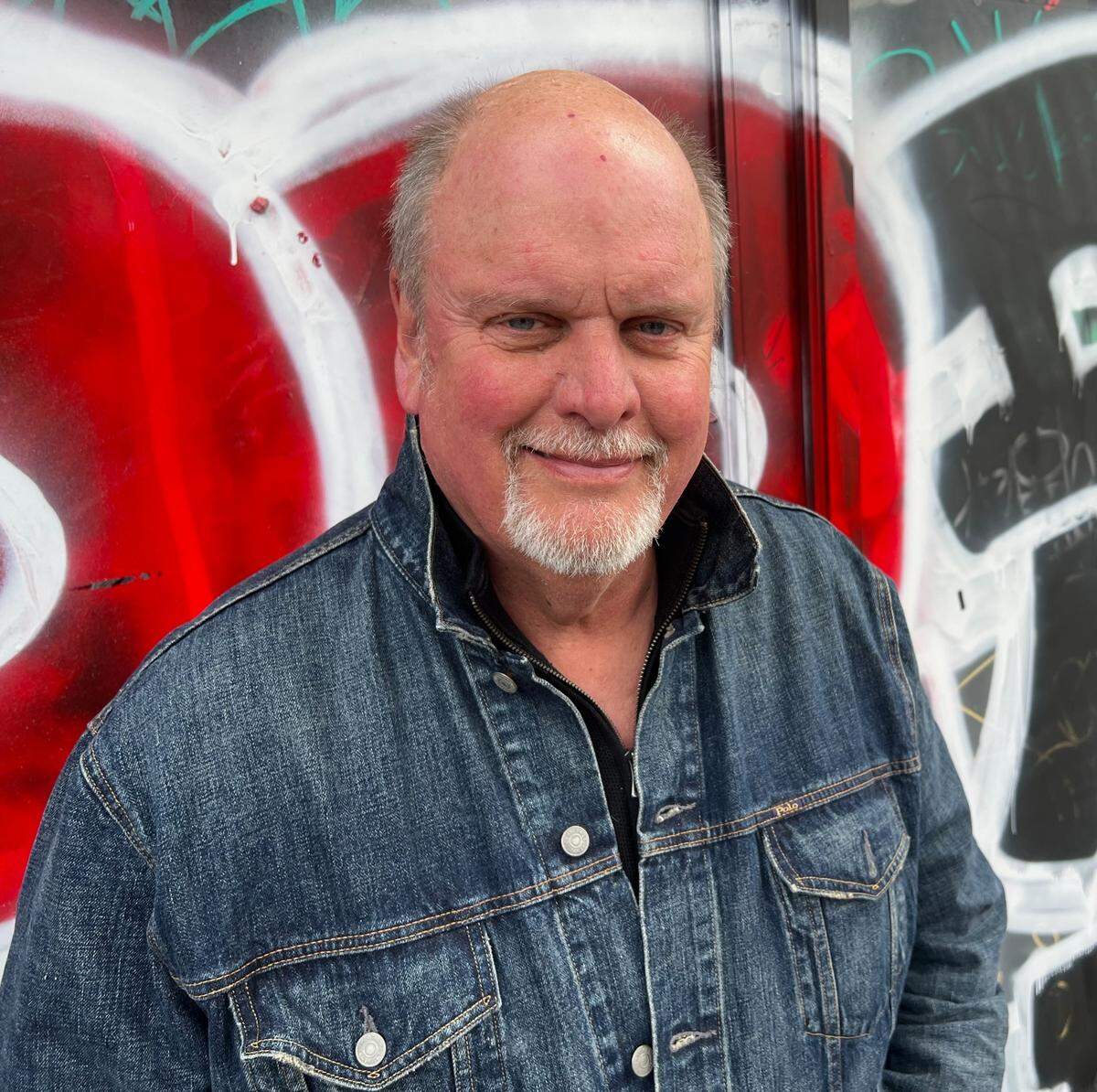
Daugherty said he had 15-20 different possibilities for the finale and was pleased with his choice.
“The response was phenomenal,” he said of the Kennedy Center debut. “The ending was a surprise to the audience and also to Anne Akiko Myers. It left the audience breathless and achieved the purpose, which was to end the piece with a dramatic question mark.”
Meyers said she regrets that her trip to Kansas won’t include a visit to Earhart’s hometown of Atchison, where a Hangar Museum scheduled to open in April will join the aviator’s birthplace as tourist stops.
The 52-year-old violinist, who debuted at age 7 and was on Johnny Carson at 11, said she studied Earhart documentaries, biographies and even theories about the pilot’s disappearance and corresponding conspiracy theories to better inform her playing.
“All these mysterious theories that are interesting to study,” Meyers said. “She was such a multifaceted lady.”
Daugherty said “Blue Electra” took him two years to complete, twice as long as similar-length concertos, because of the pandemic.
“Because the premiere was pushed back an additional year, that gave me time to go over the music again and make revisions and think about the work,” he said.
The composer and the performer kept in contact over Zoom, where she would play parts of the piece.
“He was very open to suggestions,” Meyers said. “Thankfully he didn’t revise a lot. With composers you never know until you hear the final product what goes through their minds.”
“We made some tweaks here and there,” Daugherty added.
Meyers praised Daugherty for the lyricality of “Blue Electra.”
“It’s not like one of these new contemporary works where you’re forced to eat kale the entire time and dissect it and write a theoretical report about it,” she said. “Music like that drives me crazy, actually.”
Another performance of “Blue Electra” is scheduled for New York’s Albany Symphony Orchestra in April, where it will be recorded for an album.
Although this is Meyers’ first time performing with the Wichita Symphony, several of Daugherty’s pieces, including a cello concerto about Hemingway and part of his “Metropolis” symphony about Superman, have been performed through the years. Daugherty said his friendship with WSO conductor and musical director Daniel Hege goes back 30 years, when the latter was an assistant with the Baltimore symphony.
Meyers said she was glad to be performing the Earhart piece with the WSO.
“Wichita, with its rich history of aviation, is the perfect place to be performing this concerto,” she said. “I’m really excited to work with Daniel Hege.”
Although she has commissioned at least 100 pieces, Meyers said the effect of the Earhart work will stay with her for the rest of her career.
“She was a cool lady,” Meyers said. “I feel like I could have really hung out with her. We could have been at a bar having a whiskey together.”
WICHITA SYMPHONY ORCHESTRA
When: 7:30 p.m. Saturday, Feb. 11
Where: Century II Concert Hall, 225 W. Douglas
Tickets: $25-$80, from wichitasymphony.org, 267-7658 or the WSO ticket office on the second floor of Century II