
Western meets classical in ‘The Rose of Sonora’ at Wichita Symphony Orchestra
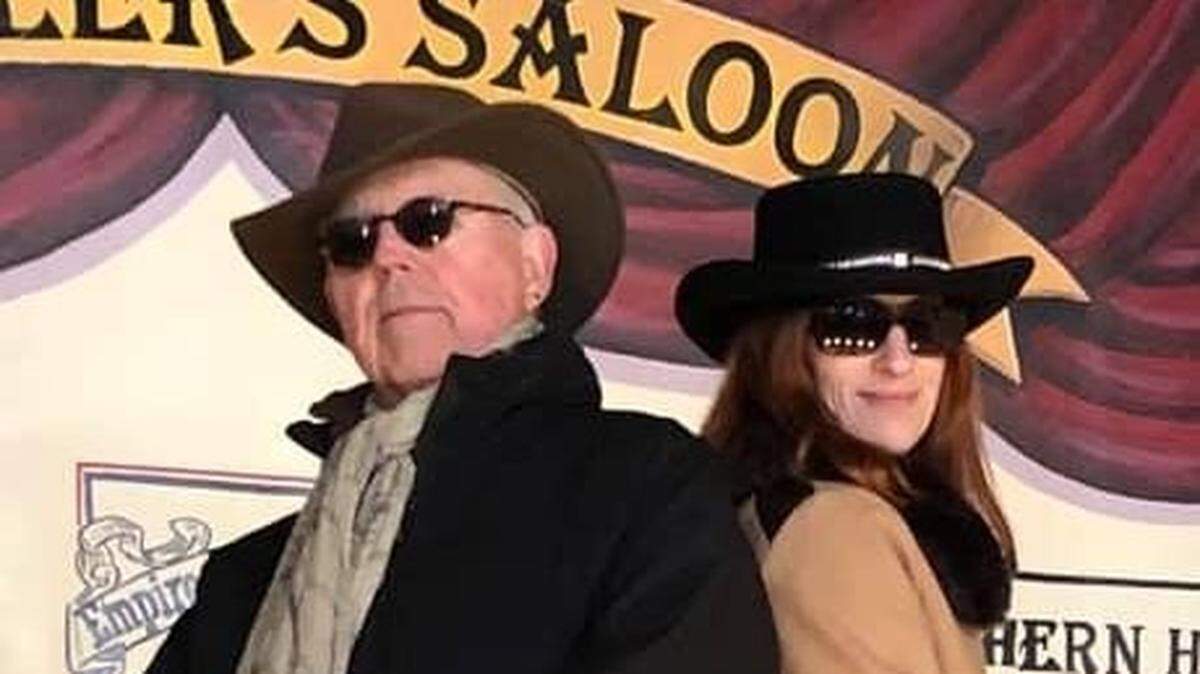
One of Holly Mulcahy’s favorite childhood memories is weekend afternoons on snowy days in her native Colorado, cuddling up with her family and a big bowl of salted popcorn to watch movies.
And more often than not, those movies were Westerns.
“I never really liked the Westerns,” the violinist now says, “but I loved the music.”
That love stayed with her, even loading her music player with eight hours of Western soundtracks for trips from her home in Chicago to music festivals in Wyoming.
She had a thought that stuck with her: “Wouldn’t it be cool if there was a violin concerto in the style of these epic Westerns?”
Like many thoughts that may or not be a good idea, she posted it on social media.
“I put that on Facebook,” Mulcahy recalled. “As soon as I hit enter, I thought, ‘What have I done? I have just outed myself as not a serious musician — nobody’s going to take me seriously anymore.’”
Instead, “Within seconds, people were hitting ‘Like’ and well-respected musicians were saying, ‘That’s a fantastic idea.’”
That’s the origin of “The Rose of Sonora,” which Mulcahy will finally get to play with the Wichita Symphony, where she is concertmaster, in two performances next weekend. It was originally on the symphony schedule for April 2020 but was delayed because of the pandemic.
With the online encouragement, she contacted George S. Clinton, a film composer and native of Chattanooga, Tennessee, where Mulcahy is also concertmaster for the symphony.
“We realized we had a lot in common in terms of film music and everything,” Mulcahy said.
Clinton is a veteran of 40 years of movie composing, including the “Austin Powers” and “The Santa Clause” franchises, as well as the upcoming “Zombies 4” movie for The Disney Channel.
But he had never written a violin concerto.
“To be honest I’ve never really liked them, because to me they’re like a really great guitar showing you how fast they can play instead of playing something meaningful,” he said with a laugh.
But Mulcahy piqued Clinton’s interest when she said she wanted a concerto in the style of a movie Western.
“Light bulbs went off in my head at that point,” he said. “I realized it really could be something special.”
Clinton and Mulcahy began their research about female outlaws.
“Strangely enough, a lot of them were associated with Wichita, Kansas,” Clinton said. “It seemed to be the breeding ground for a particular female.”
Although fictional, “The Rose of Sonora,” Clinton says, “is a compilation of a lot of people we read about.”
Instead of movements, the concerto is in five acts: Escape, Love and Freedom, Ambush, Death and Healing, and Vengeance. A brief description by Clinton will be included in the program.
For someone whose career is based on scoring a film, Clinton said he initially felt a bit lost with visuals to inspire him but got his muse from Mulcahy and her ideas.
“Film music is all about collaboration,” he said. “It’s all about making the film the thing everyone’s efforts are serving.”
He’s especially proud of the beginning of one of the scenes, when Mulcahy’s technique gradually advances from Western fiddling to a full classical sound.
“She just took it and ran with it,” Clinton said. “It’s unbelievable, it’s just a great moment I never would have thought of.”
A male choir, dubbed the Sonora Sirs, are part of the concerto, Clinton said, to give it the feel of the “Spaghetti Westerns” and Warner Bros. movie and TV series of the era.
Despite the delayed performance for “The Rose of Sonora” by the Wichita Symphony, Mulcahy has already played it for a dozen orchestras across the country and has three more performances before the end of the season, as well as booking the piece for other symphonies for 2022-23.
“This is a big success for George, because very often — too often — new concertos get one performance,” she said. “You’re lucky to get two.”
The response from where she has played, Mulcahy said, has been overwhelming.
“We kind of had a hunch it would be a good response. What we heard from the audience was kind of an engagement that most orchestras only hope for,” said Mulcahy, who is also partner for audience engagement for the WSO. “Audiences usually leave and will think to themselves, ‘Well, that was cool.’ This concerto, people are talking for weeks or months afterward. People just welcomed it.”
“It’s really the kind of engagement that classical music has been lacking for a very long time,” she added. “This just brings it all in, especially to a modern society when we’re used to watching Netflix and being engaged in stories. This does it.”
Clinton said symphony audiences have welcomed “Rose of Sonora” as a change of pace.
“There’s a classical audience that sort of expects a certain type of music, and it’s dying off now,” he said. “It’s going to take a different kind of interest coming from younger audiences for them to feel welcome into a situation that all too often feels too elite.”
All of the performances so far have featured Mulcahy as the soloist, and the piece is exclusively hers “as long as she wants it,” Clinton said.
“Rose of Sonora” will give Clinton pieces bookends on the WSO season. “Old Cowtown Suite,” inspired by his and Mulcahy’s visit to the Wichita Wild West landmark in 2019 after a preview of “Rose,” opened the season in October.
“It’s a composer’s dream. I consider it an honor,” he said.
Clinton said he believes “Old Cowtown” and “Rose” are the first two-thirds of a trilogy.
“There’s a third thing we haven’t gotten to — yet,” he said. “It’s calling us and when we find it, it’ll be great.”
‘THE ROSE OF SONORA’
When: 7:30 p.m. Saturday, April 9, and 3 p.m. Sunday, April 10
Where: Century II concert hall, 225 W. Douglas
Concert: Besides “Sonora,” the concert includes John Williams’ “Cowboys Overture,” Barber’s “Adagio for Strings” and Aaron Copland’s “Rodeo: Four Dance Episodes,” the latter two featuring full-screen photos by Nicholas Bardonnay, photographer and multimedia artist
Tickets: $30-$85, from wichitasymphony.org, the symphony box office or 267-7658