
Adventures of 15-year-old Holly Sykes bring ‘The Bone Clocks’ to life
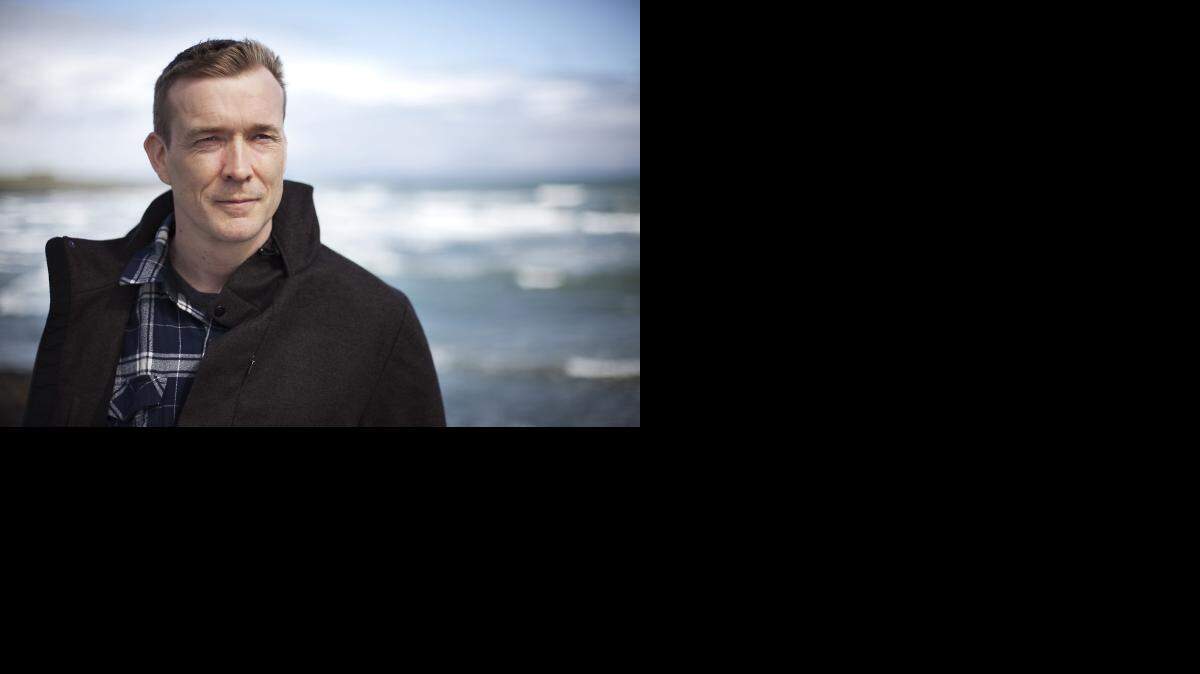
“The Bone Clocks” by David Mitchell (Random House, 624 pages, $30)
Writing a novel is no small task. David Mitchell makes it look easy. Like a magician, he conjures characters and settings from across our world and across time – past, present and future.
In “Cloud Atlas” (2004), his best-known work, which was made into a movie, he combines six novellas set in the 1850s, the 1930s, the 1970s and a dystopian future. In that same book he employs a variety of genres, including historical, detective and science fiction.
In “Ghostwritten” (2001), his first novel, he creates nine disparate yet connected tales from various characters and settings.
“The Thousand Autumns of Jacob de Zoet” (2010), which I reviewed here, on the other hand, is a more traditional historical novel, set in 1799 in Japan and involving Dutch traders.
Mitchell’s newest novel, his sixth, puts his storytelling virtuosity on display, weaving together many of the elements he has used in his previous work.
Again he divides his story into six segments, each told in first person by a variety of characters and each carefully dated. We begin in 1984 (on June 30, in fact), then move to 1991, 2004, 2015, 2025 and 2043.
What unites this long tale and breathes life into it is Holly Sykes, who appears in all six parts. Mitchell is masterful at using detail and language to place his story, and he creates suspense and action that keep you reading, but it’s the character Holly that brings his story alive.
And it’s quite a story. It begins with Holly at 15 running away from home. As she moves into the English countryside, she encounters visions and coincidences that make her question what is real. “I run as fast as I can, now, knowing something strange is going on, but not knowing what.” In an underpass, she thinks, “I know I’m awake but I know this can’t be real.”
Mitchell has used his skills to place Holly (and the reader) in a realistic setting, with references to Talking Heads, a “Quadrophena” T-shirt, a TSB bankbook and many other details from that period. Suddenly we are thrust into a supernatural thriller. But, like Holly, the details of what is happening beyond the natural world don’t become clear right away.
Eventually we learn that Holly and others are tangentially involved in a war between the evil Anchorites and the good Horologists, both of whom are interested in Holly. Her younger brother Jacko disappears, taken by the Anchorites, and she spends the rest of her life hoping to find him.
Mitchell tends to get carried away with his virtuosity. He fills the book with clever one-liners: “Life is a terminal illness.” “Love is a blurring of pronouns.” But after a while, many of the characters sound similar. Holly says, “Guys are like sperm-guns.” Ed, her partner who is a journalist working in Iraq during the war, says: “Pete’s bat-eared and his hairline’s beating a hasty retreat, but Sharon’s marrying him for love, not hair follicles.”
Then there’s Crispin Hershey, a novelist who is given a long section yet is perhaps the least interesting character. He describes a woman as “short, boyish, and sports a nerdy pair of glasses and a shaven head: electrotherapy chic.”
On a visit to Australia, Crispin critiques the galleries selling Aborigine art and says, “It’s as if Germans built a Jewish food hall over Buchenwald.”
All these creative phrases tend to sound more like David Mitchell than realistic characters. At the same time, he seems to anticipate that his critics will laugh at himself. When Crispin’s agent asks him about the novel he is working on, he says, “Crispin, are you trying to tell me that you’re writing a fantasy novel?” Crispin replies: “It’s only one-third fantasy. Half, at most.”
Mitchell also injects fun references. In the section set in 2023, he recounts some headlines that include “Justin Bieber’s fifth divorce.” And one character muses, “Will I die without ever reading ‘Ulysses’ to the end?”
When the battle of the warring “Atemporals” (“bone clocks” are humans, bounded by time) occurs, Mitchell’s description, with its invented terms, is difficult to follow. We encounter “psychosoteric.” Marinus, an Horologist (the British pronunciation), narrates: “I pour psychovoltage into a neurobolas and kinetic it at our assailants.” He “ingresses” into Arkady, who “suborders” Holly. Then, Marinus says, “I transverses into Holly, ingress, evoke and Act of Total Suasion.” Got it?
Anyone who writes a fantasy set in the future gets to comment on the present, and Mitchell is no exception. In 2043, energy supplies are low. Holly (standing in for Mitchell) grieves “for the regions we deadlanded, the ice caps we melted, the Gulf Stream we redirected, the rivers we drained, the coasts we flooded, the lakes we choked with crap, the seas we killed, the species we drove to extinction, the pollinators we wiped out, the oil we squandered, the drugs we rendered impotent, the comforting liars we voted into office – all so we didn’t have to change our cozy lifestyles.”
Mitchell is a gifted storyteller, and “The Bone Clocks” is an enjoyable read. But it doesn’t register as much emotionally as, say, his previous book, “The Thousand Autumns.” It’s clever and arresting, just not that moving.
Gordon Houser is a writer and editor in North Newton.
This story was originally published October 18, 2014 at 7:00 PM with the headline "Adventures of 15-year-old Holly Sykes bring ‘The Bone Clocks’ to life."