
Gluck’s new poems showcase light of her oracular voice
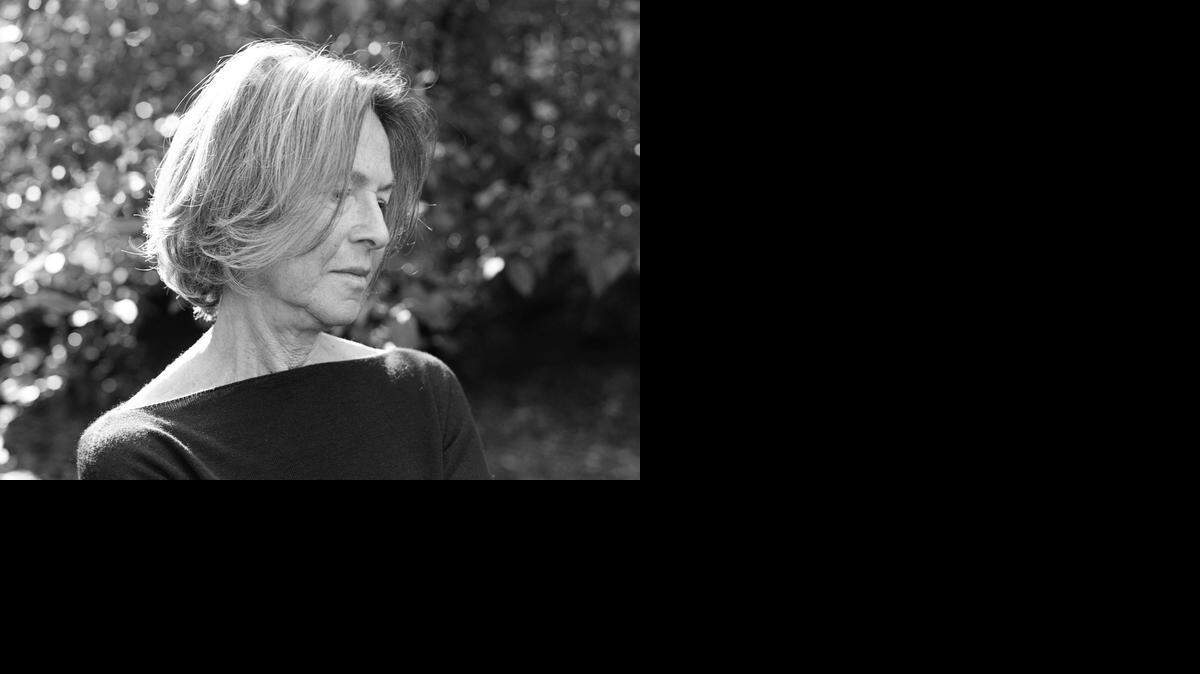
“Faithful and Virtuous Night” by Louise Gluck (Farrar, Straus and Giroux, 81 pages, $23)
At last the night surrounded me;
I floated on it, perhaps in it,
or it carried me as a river carries
a boat, and at the same time
it swirled above me,
star-studded but dark nevertheless.
Louise Gluck just keeps getting better.
One of our finest contemporary poets – as her collected poems showed two years ago – she has changed her aesthetic strategy over the years, moving away from adaptations of Greek and Roman myths toward a new oracular tone of her own. The result is brilliant and haunting, captivating and mysterious, but, as always, couched in spare, emotionally charged diction.
But these farewells, I said, are the way of things.
And once more I alluded to the vast territory
opening to us with each valediction. And with that phrase I became
a glorious knight riding into the setting sun, and my heart
became the steed underneath me.
In “Faithful and Virtuous Night,” her 13th collection, Gluck writes with a timeless quality, perched on the edge of expectation, awaiting a revelation through the mist, a signal in the capacious night. Her richness of thought and restrained, melancholy voice call forth the rhythms of the broken heart: beating valiantly in quiet desolation. She is the lost pilgrim, unsure whether the still, small pinnacle of her experience is a peak or plateau.
“Parable,” the opening poem, sets the stage for the series of dispassionate discoveries to come, the outlines of the Gluck mythology: technically precise, yet dreamlike and archetypal.
First divesting ourselves of worldly goods, as St. Francis teaches,
in order that our souls not be distracted
by gain and loss, and in order also
that our bodies be free to move
easily at the mountain passes, we had then to discuss
whither or where we might travel, with the second question being
should we have a purpose.
Motifs echo throughout this slim volume. We hear of night, of mist, of deceased parents, of religious phrasings: Shall I be raised from death? All of it resounding with the dark music of loss.
And I told him of the emptiness of my days,
and of time, which was running out,
and of the meaninglessness of my achievement.
We also hear much about painting, Gluck’s metaphor for writing, as though language has exhausted itself, and only canvases of color can express the wanderings of the heart.
so that I was constantly
face-to-face with blankness, that
stepchild of the sublime,
which, it turns out,
has been both my subject and my medium.
In the past, Gluck wrote expertly from her deepest self, the core of her carefully modulated confessionalism. Here, she introduces a profound distance to the poetic “I,” now male, now female, now old, now young – all personae moving, open and malleable, into the haven of the night. “But who would / see this light, this small dot among the infinite stars?”
Identity is not the only enigma that fascinates Gluck; she also revels in stark antinomies:
And yet his complacency disguised suffering
as perhaps my suffering disguised complacency.
Or:
I closed my eyes.
I was torn between a structure of oppositions
and a narrative structure—
Or:
The whole exchange seemed both deeply fraudulent
and profoundly true, as though such words as emptiness and meaninglessness
had stimulated some remembered emotion
which now attached itself to this occasion and person.
In addition, Gluck has expanded her range of poetic forms, from her hallmark pure lyric, to multi-layered narrative, to the sensitively constructed prose poem, a fable spreading across the page, adding an effective counterpoint to the tighter, shorter lines of the standard poems.
As she has admitted in recent books, Gluck is aging, now 71. Thus the kingdom of death figures prominently, heralding the approach of a permanent separation and perhaps of an incipient faith.
But if the essence of time is change,
how can anything become nothing?
That was the question I asked myself.
Or:
Feeling has departed–it occurs to me
this would make a fine headstone.
But I was wrong to suggest
this has occurred before.
In fact, I have been hounded by feeling;
it is the gift of expression
that has so often failed me.
Failed me, tormented me, virtually all my life.
Whatever traces of despair color these poems, they are offset by a primal wonder, by the immense, mute promise of the darkening sky.
All of these elements add up to an impeccable first act following the triumph of her collected poems. Gluck has ventured into new territory with stunning, valedictory success “like a pilgrim seeking expiation and forgiveness.”
As she continues to refine her poetic voice, we can only wait for what new, spirited treasures lie ahead – should she have a purpose.
Arlice Davenport is Books editor for The Eagle. Reach him at 316-268-6256 or adavenport@wichitaeagle.com.
This story was originally published October 4, 2014 at 7:00 PM with the headline "Gluck’s new poems showcase light of her oracular voice."