
Large-scale origami sculptures are on display in Wichita. How, when to see them
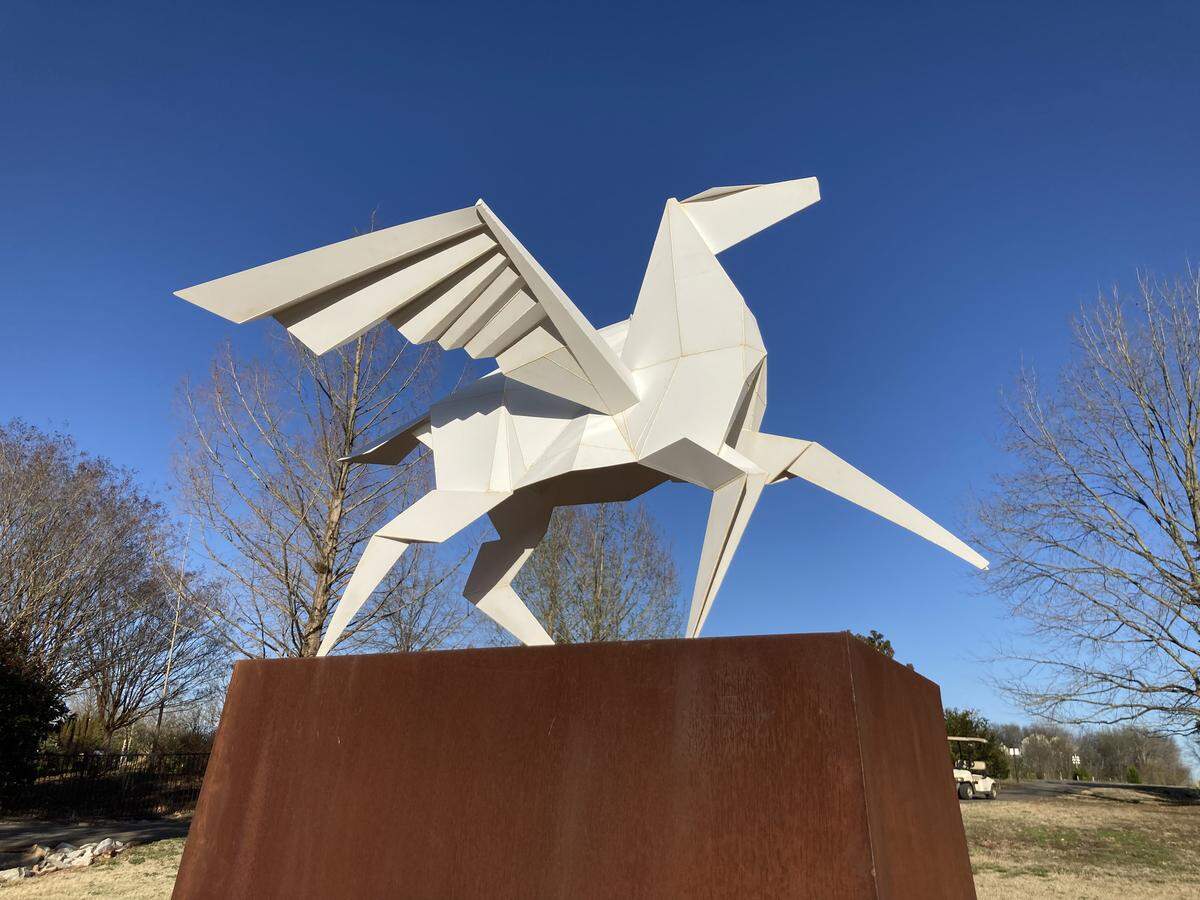
The new outdoor traveling summer exhibition at Wichita’s Botanica, “Origami in the Garden,” may be based on the traditional Japanese paper art, but the 18 pieces on display throughout the 20-plus-acre gardens are built to withstand the elements.
“Inevitably, people will read about (the exhibition) and when it rains, they’ll call the gardens and ask, ‘Are the pieces OK?’” said Jennifer Box, whose husband, Kevin, a New Mexico-based artist who pioneered the process of casting monumental- and hero-scale metal sculptures based on paper artwork tiny enough to fit in the palm of one’s hand.
The Boxes created “Origami in the Garden” in 2013, and the exhibition made its debut at the Santa Fe Botanical Garden in 2014. Variations of the exhibition have been installed at gardens across the U.S. ever since.
The couple also maintains an outdoor version on their property in Cerrillos, New Mexico, south of Santa Fe, called the Box Studio and Sculpture Garden. This year, it’s open weekdays May 1-Oct. 30. McKee Botanical Gardens in Vero Beach, Florida, is hosting a version of the exhibition called Florigami, comprising floral sculptures, which opens May 24. Jennifer Box estimated that about 3 million people have visited the various exhibitions over the years.
At Botanica, located at 701 N. Amidon St. in Wichita, the exhibition can be seen daily from 9 a.m.-8 p.m. through Sept. 26; general admission prices apply.
What makes up Origami in the Garden
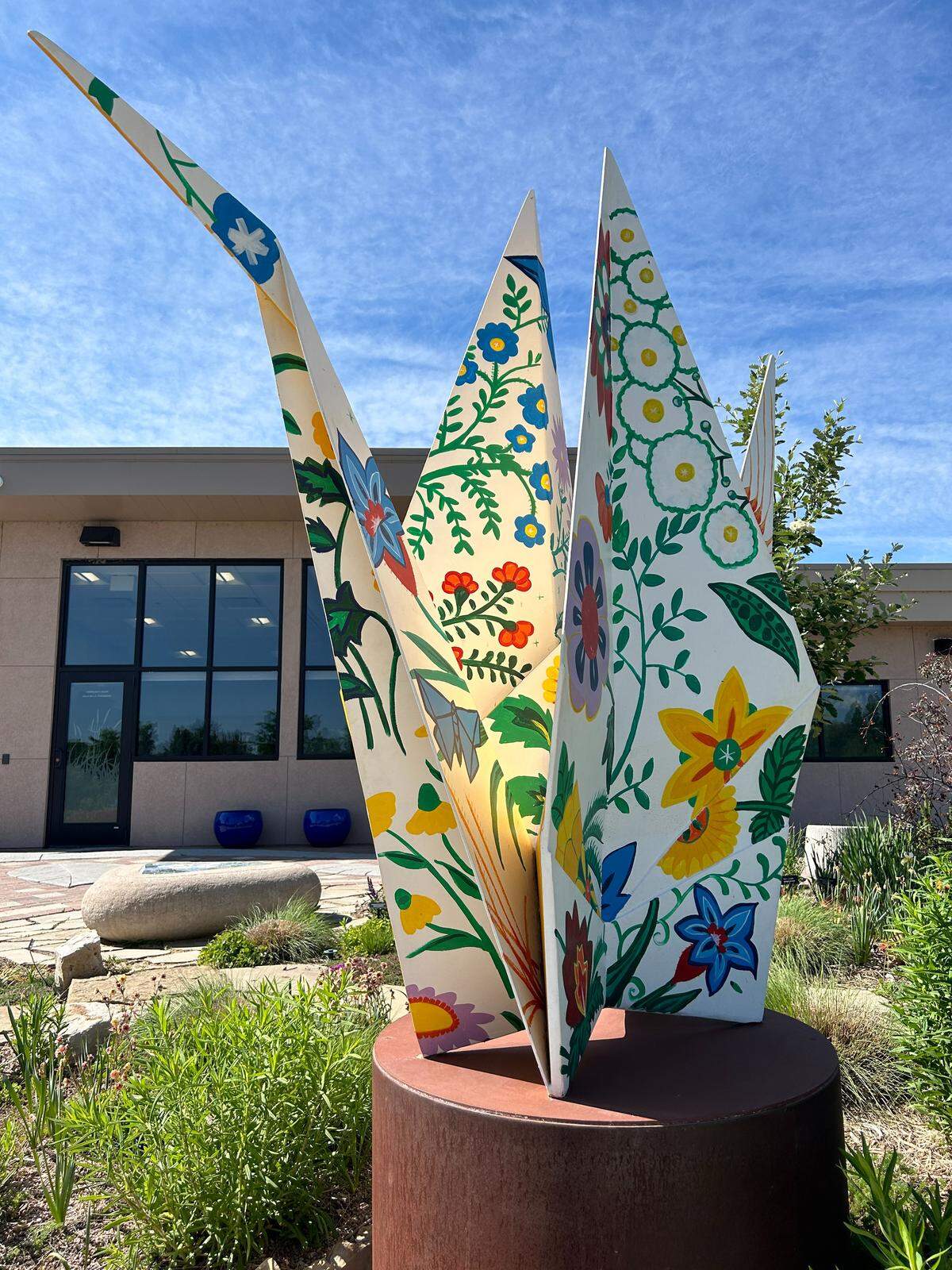
While the sizes may be larger scale in “Origami in the Garden,” the sculptures, however, do have light and colorful elements like their paper counterparts created by origami artists who collaborate with Kevin Box.
“Most are about an eighth- to a quarter-inch thick, and they’re hollow,” he said, referring to the metal segments that comprise a sculpture. He works primarily with aluminum, stainless steel or bronze.
With their bright colors, usually white, occasionally yellow and sometimes colored patterns, the sculptures are easily spotted against the natural palette of Botanica’s gardens.
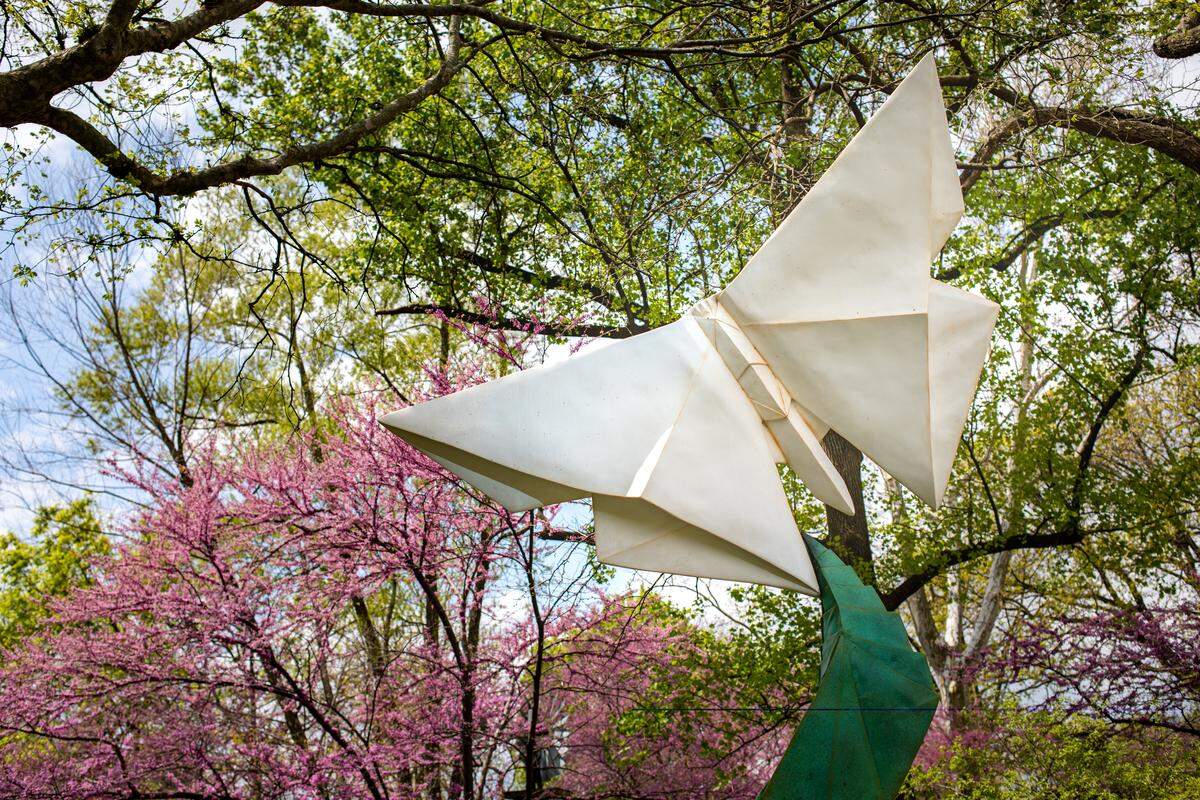
Sometimes the pieces are curated to specifically fit a certain area of an exhibition venue. For example, at Botanica, “Emerging Peace,” which follows the progression of a butterfly from its egg stage to caterpillar and then butterfly stage, is positioned within the butterfly garden.
Since origami paper originates with bark of mulberry trees, Box planned to hang an aerial sculpture from Botanica’s massive mulberry tree near the venue’s Martha Parriott Terrace Garden.
Who is Kevin Box, the artist?
Box, who graduated from the School of Visual Arts in New York City, spent several years in bronze-casting foundries in Texas. But he wanted to create sculptures that didn’t start with clay, and instead, he looked to incorporate his love of paper.
In the foundries, “I had the opportunity to pioneer the techniques of capturing the delicate nature of paper and museum-quality metal that hadn’t really been done before,” Box said. “It took about two years of failure to figure out how to succeed at using paper as the original and casting it in metal.”
While Box doesn’t make the origami art in his artistic practice, he has folded abstract stars, mandala patterns and, of course, paper airplanes. And he particularly appreciates the symbolism of how each sculpture starts.
“It’s actually a blank page, and every sculpture tells the story of what is possible with a blank page,” he said.
But it’s not just the folded piece that he finds compelling. The creases and folds left when an origami piece is unfolded are just as captivating, he said.
“When you unfold it, you see this beautiful design.”
That’s why both he and his wife Jennifer, his creative partner and the executive director of Box Studio, are excited to add a complementary indoor exhibition called “Inside Out,” which will be on view inside Botanica’s main entrance. Comprising a total of eight pieces, “Inside Out” will display four origami pieces and their companion unfolded design.
“To show them together is such an important thing to see. The inspiration beneath the surface is even deeper than what you might see on the surface,” Kevin Box said.
Origami and the Japanese paper art kirigami
The world-renowned origami artists with whom Box collaborates — Tim Armijo, Te Jui Fu, Beth Johnson, Michael G. La Fosse, and Robert J. Lang — are no longer surprised when he asks them to create a second origami piece and then unfold it.
While most of the sculptures are based off origami designs, which are created by folds only, Box also has incorporated a second type of Japanese paper art called kirigami, which includes cutting, folding and cutting folded paper.
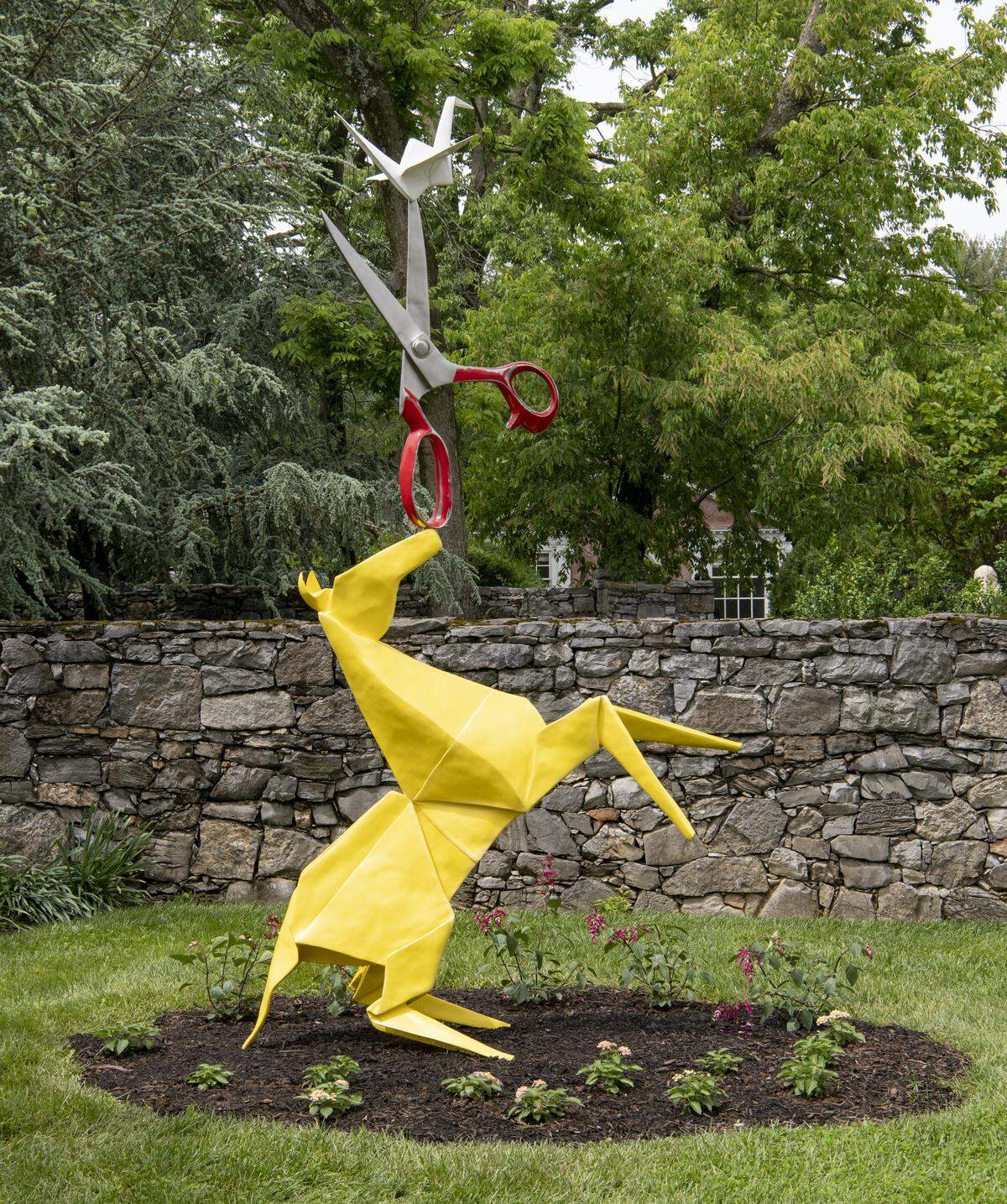
At least two sculptures in the exhibition, one called Balancing Act and the other called Conversation Peace, incorporate kirigami designs. The bright yellow pony or horse that balances on its hind legs in both pieces is based on kirigami. Another common piece in both is a pair of metal scissors, which are balanced on the horse’s nose.
“And above the scissors (in Balancing Act) is an origami crane, which has no cuts and is out of the reach of the scissors, so to speak. The pony is balancing the scissors on his nose, and he has four cuts,” Box explained. “That sort of playfulness reminds me of a circus act. A paper horse balancing scissors would be dangerous, right?”
In Conversation Peace, the horse is balancing on a rock. In a take on the “rock, paper, scissors” game, this sculpture “is about balancing conflict through communication,” Box said.
Not only has Box pioneered the technique of creating metal sculptures based on paper, but he’s also proud that one of his sculpture designs won a structural engineering award in 2014 for showing that the sculpture itself, balanced on three legs, served as the structural support. The sculpture based on that design can be found by the Brown Family Great Lawn and Stage within Botanica.
When visitors tour “Origami in the Garden,” they will have the option to access an audio tour on their cell phone. When the call is placed, the listener can hear the artists speak about the work. Maps that include the numbers will be available to take home so the audio tour can be accessed 24/7.
‘Origami in the Garden’ at Botanica
What: A summer traveling exhibition of metal sculptures that are based on much smaller origami creations
Where: Botanica, 701 N. Amidon St. in Wichita
When: Origami in the Garden runs through Sept. 26. Botanica’s hours are 9 a.m.-8 p.m. daily, with members-only hours of 7:30-9 a.m.
Admission prices: Included in general admission prices of $12 for ages 13 and older; $10 for ages 3-12 and 65 and older, and veterans; free for children 2 and younger and Botanica members. Botanica is a participating Blue Star Museum, offering free admission to active-duty military personnel with a valid military ID and up to five family members from May 16-Sept. 7.
More info: 316-264-0448 or botanica.org