
On eve of his retirement, Symphony CEO reflects on his dozen years of leading, rebuilding

Don Reinhold prefers to be behind the scenes.
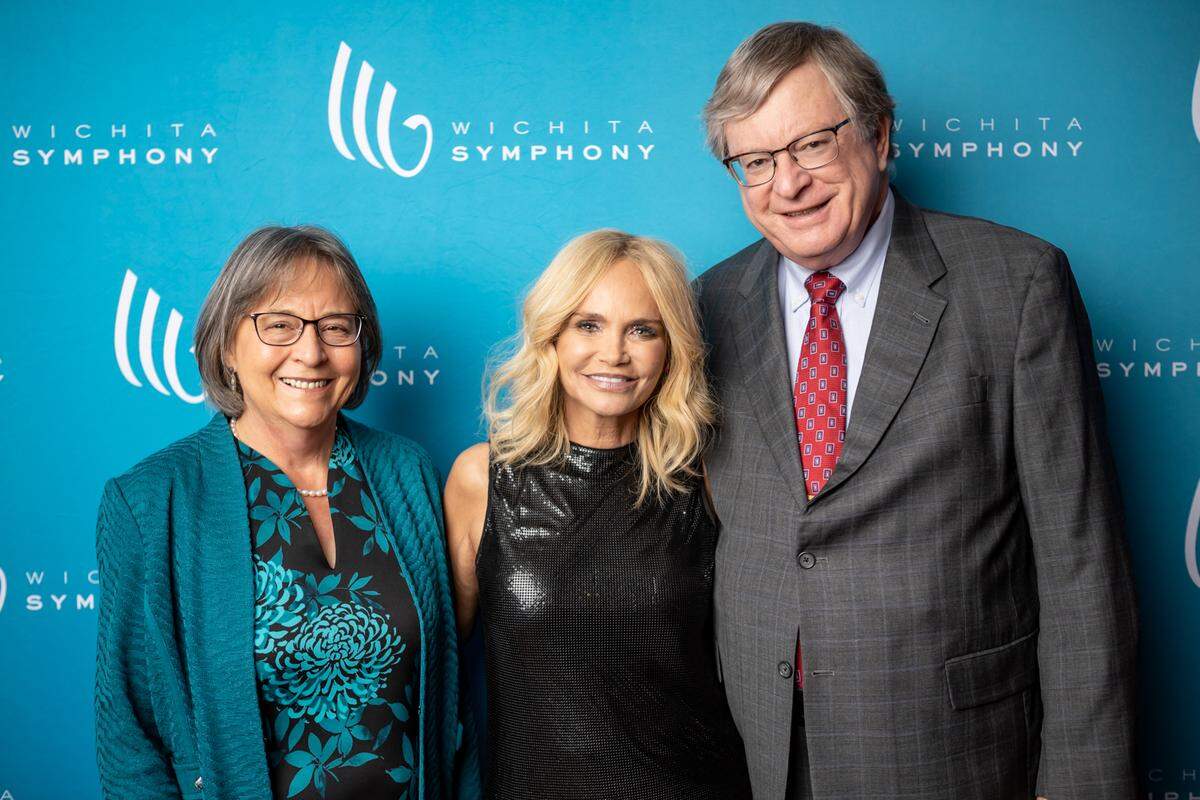
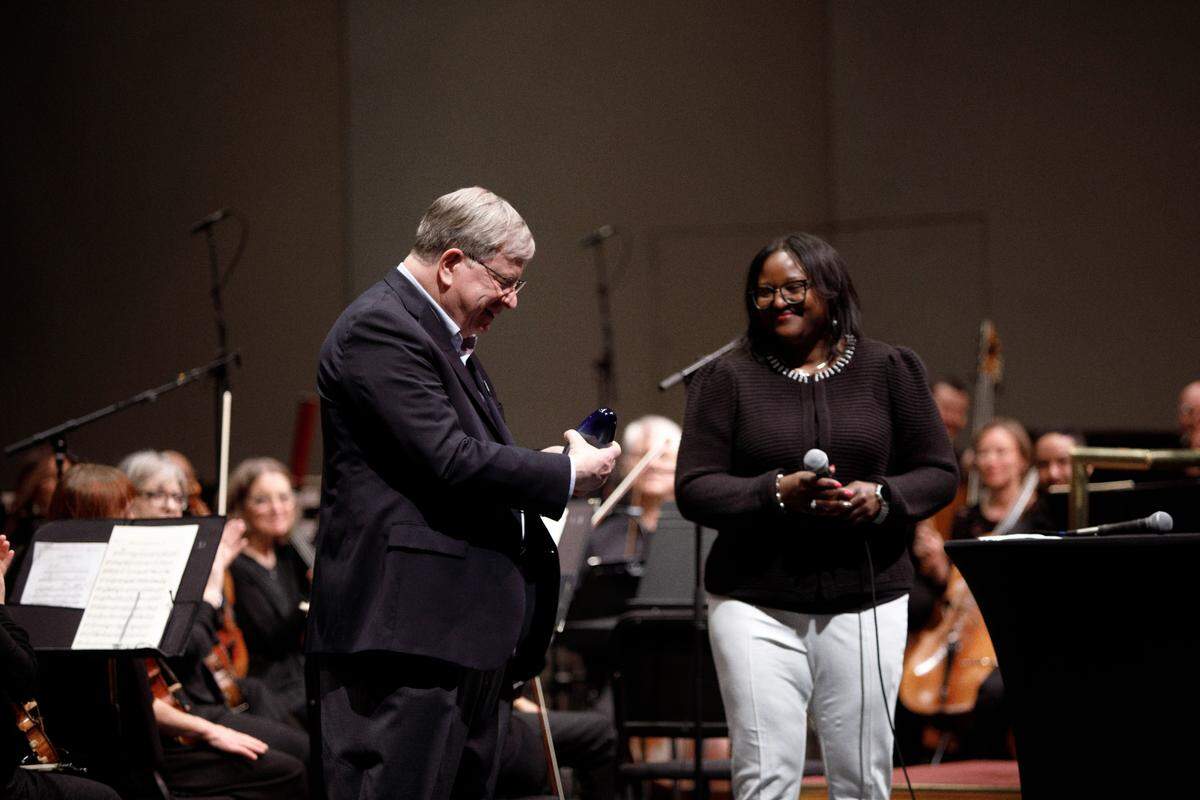
The CEO of the Wichita Symphony Orchestra reluctantly spoke to the audience at the final concert of the 2023-24 season to thank them, for which he received a standing ovation.
“I was a little bashful about doing it, but I did it, and I’m glad I did,” recalled Reinhold, who retires from his position at the symphony after 12 years at the end of the month.
“That’s kind of my personality,” he added with a laugh. “Let somebody else take the flak.”
Daniel Hege, conductor and music director of the WSO, has known Reinhold since about 1997, when Hege was with the Baltimore Symphony and Reinhold was in charge of the National Orchestral Institute at the University of Maryland.
“Don is just a very thoughtful man,” Hege said. “He’s called himself an introvert, and I don’t think of him as an introvert. He is one who likes to read, likes to ponder, likes to write. That kind of temperament, his personality, is well-suited to the position as CEO of the Wichita Symphony.”
It was thanks to Hege that Reinhold, a New Jersey native, ended up in Wichita.
Mitch Berman, executive director of the symphony for 31 years, died in September 2011, two months after being diagnosed with pancreatic cancer. Berman had been planning for retirement prior to his diagnosis, Hege said, and plans to find a successor were in tentative stages.
Meanwhile, Reinhold was growing discontent as executive director of the Fresno Philharmonic, since the recession had hit hard in the San Joaquin Valley of California. On LinkedIn, he sent out a message to colleagues asking them to keep his name in mind if they heard of an opening.
Hege immediately replied to the message, telling him of the vacancy at WSO, and hyped him to the symphony board of directors.
“He’s a top-notch human being and a greater leader for the arts,” Hege recalls telling the board. “It was just a wonderful situation, immediately, what they could see in Don and what the promise could be.
“I did get Don’s foot in the door, but he took it from there.”
Eastward bound
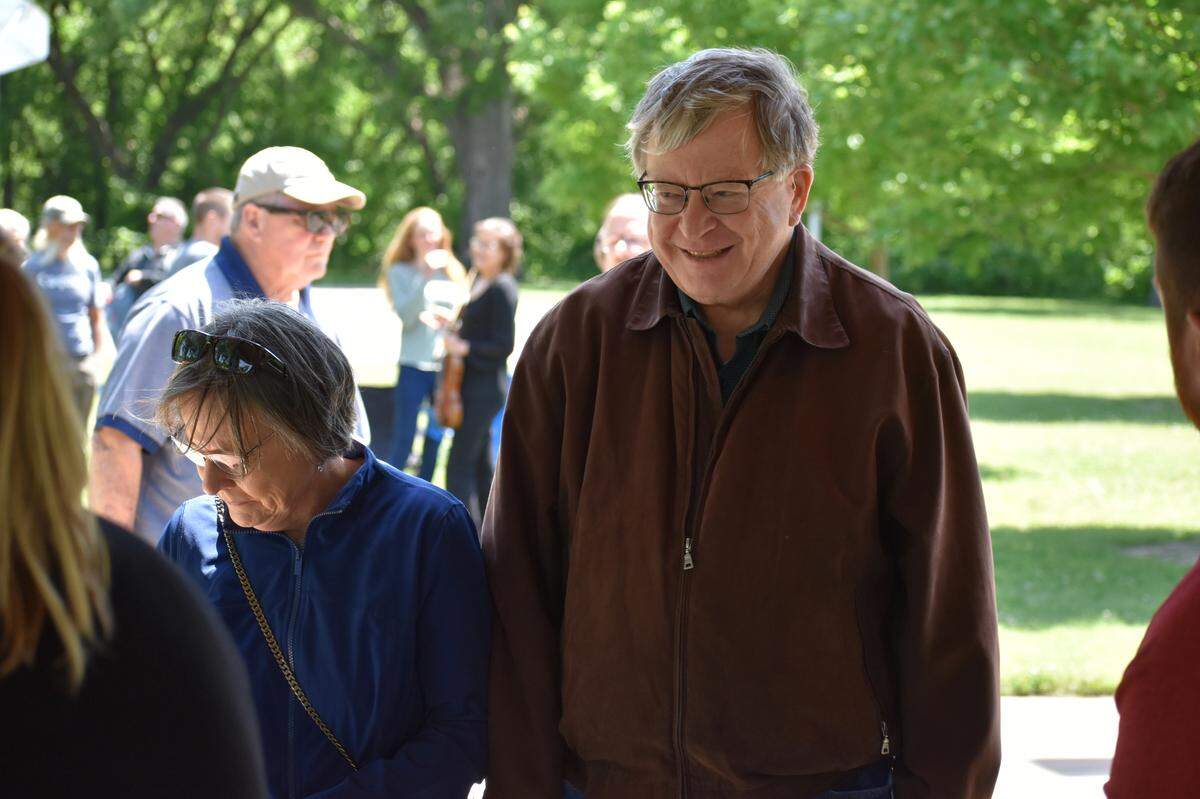
With a packed station wagon and his black cat as company, Reinhold drove from California and arrived in Wichita on New Year’s Eve of 2011, as his wife, Pat, stayed behind to get the house ready for sale. He began work on the second day of 2012.
“It’s been an interesting 12 years because we really had to go through two recoveries — the recovery of the great recession and the recovery from the pandemic,” Reinhold said.
Reinhold arrived mid-recession to find the symphony finances in dire straits.
“There wasn’t enough money in the bank to make this thing float,” he recalled. “They had a small endowment at the time — $3, $4, $5 million — but they were draining it just to keep the thing going for a couple of years. They were taking far too much out of it.”
The symphony had less than $200,000 in the bank and no reserves, Reinhold recalled.
“It was an eye-opener,” he said. “We got through it. We took out a line of credit, I remember that. And a few months in, we got a very generous bequest of unrestricted funds (from the estate of a late board member). I don’t know what would have happened without that. There was luck involved, but we also very quickly had to get the financial business in order.”
The symphony’s endowment fund, he said, went from $3.5 million in 2012 to “just shy of $9 million” at his departure.
“We just can’t keep leaking money,” he said. “Endowments are not cash cows. You have to preserve them.
“We have cash reserves to deal with contingencies, whatever that might be,” Reinhold added.
The COVID pandemic proved a challenge for the symphony from 2020 to 2022. While large-scale concerts at Century II were forbidden, the symphony found a way to extend its outreach with online webinars, Zoom recitals, television broadcasts with small ensembles, and taking small groups out to Wichita parks.
“We were very creative,” Reinhold said. “It was one of those things where the government stepped in and gave us a lot of funding, some of which helped some of the projects that we were doing.
“That funding helped us come out of the pandemic much quicker and helped us to recover. That was the critical need at the time,” he added.
Hege said it was through the pandemic that Reinhold’s leadership shined.
“Don was the central figure there, for the whole staff, really trying to keep our spirits up,” Hege said. “He’d say, ‘Folks, we are going to get to the other side of this. There is another side to this.’
“He would try to draw ideas from people and get them working on different things,” he added. “He let them put their strengths forward, to have them do what they do best.”
WSO ticket sales, Reinhold said, are at about 80% of what they were pre-pandemic, which is a better rate than many symphonies across the country.
“Are we back? It depends on what you call ‘back,’” he said. “If you come to a concert today, you will see more people in the halls than before the pandemic. The pandemic was where we recognized we were losing many patrons because we basically had a two-year hiatus, and symphonies everywhere were.”
Needed changes, big concerts
Among the changes post-COVID was to break from the longtime tradition of putting on two Masterworks performances over a concert weekend, reducing it to one.
“While that was less work for the orchestra, the amazing thing was we were able to fill our hall with one performance,” he said. “It took the crisis to force that issue.”
The fuller house at Century II for one concert is gratifying, Reinhold said.
“The electricity that’s generated is recognized by the patrons in the hall. It’s felt by the orchestra on stage,” he said. “That two-way passage of electrons creates a whole different environment than a Sunday afternoon when you have only 500 people in the hall.”
Besides righting the economic ship of the orchestra, Hege said, Reinhold improved the ticketing system for the WSO and brought it online, to make it more efficient, track more information and become more customer friendly.
“Things were starting to change, in a big tectonic way, the way arts organizations kept track of donors and ticket buyers and households,” Hege said. “There was a lot more data being stored. That’s the way things were changing. Don was on the cusp of it, and that helped us a lot.”
In making the changes, Hege said, Reinhold made the WSO more friendly to its patrons.
“We’ve become much more attentive to our ticket buyers. It wasn’t just transactional; it was about forming relationships,” Hege said. “Don ushered in a lot of new initiatives.”
Reinhold said the changes in 2012 were needed.
“We brought this institution into the 21st century,” he said. “The staff before me were hired and trained using 1980, 1990 models and hadn’t really begun to make the shift to the 21st century.”
Hege said that while Reinhold was always cognizant of the symphony’s finances, he gave the OK for larger-scale works, such as the performance of Bartok’s opera “Bluebeard’s Castle” in 2015, which included six larger-than-life glass sculptures by renowned Dale Chihuly.
The cost of transporting the 14-foot, 1,500-pound statues from Seattle to Wichita was $75,000 alone, plus round-the-clock security.
“It was really going out on a limb,” Hege said. “But whenever we mentioned it to somebody in the community, they would be reaching for their checkbook before we finished the sentence. They’d say, ‘You had me at Chihuly.’”
Hege said “Bluebeard’s Castle” showed the magnitude of work that WSO could do.
“Those kinds of things don’t grow on trees,” he said. “They’re difficult to come by. Otherwise, we’d do them all the time.”
Reinhold said “Bluebeard’s Castle” stands out as one of the monumental works during his tenure, as well as the debut of “Old Cowtown Suite” during COVID; collaborations with Music Theatre Wichita; and a 2019 weekend by French pianist Lise de la Salle, who performed all five of Rachmaninoff’s piano concertos in one weekend.
“We were the only orchestra in the United States that took her up on that offer” made by an email from her agent, Reinhold said. “I don’t know why the others didn’t.”
Hege said that Reinhold was a driving force behind concerts such as the 2014 performance by the American Brass Quintet that included Native drummers and photo projections of Native Americans above the orchestra.
Reinhold also advocated a 2013 performance of Mahler’s 4th symphony, which required more than the usual roster of orchestra players.
“Orchestras of Wichita’s size don’t do something like that. It’s very adventurous programming,” Hege said. “I feel like I had a great partner in Don who could enable the best of things happening with the orchestra.”
Reinhold said that during his time at WSO, the symphony reached out to work with various arts organizations in the community.
“Every concert Daniel does is excellent,” he said. “But there are some where collaborations with the community allow us to occasionally really scale the heights.”
Steady leader for tough times
With all the raves the symphony has received, Reinhold said, he is proudest of a four-star rating from Charity Navigator, a nonprofit watchdog.
“We have one of the highest ratings among symphony orchestras in the entire country. That’s more than the Chicago symphony, more than the New York Philharmonic, more than the LA Philharmonic. Don’t ask me about those algorithms and how they’re all related, but we’re at the top,” he said. “That says something about how small organizations can succeed.”
Ebony S. Clemons, chair of the WSO board, praised Reinhold’s ability to connect with the symphony audience.
“One of the many qualities that I admire about Don is that he has a skill set that artfully marries strategy, repertoire, network and community,” she said.
A piano teacher with her own studio, Clemons said Reinhold gave her students a backstage look at the symphony, including meeting Hege and many of the musicians.
“It was a collaboration that hopefully strengthened those families’ interest in great classical works of music,” she said. “I know that it has impacted the students, as I have a few students who have graduated with music degrees and attribute the WSO experiences as diversifying their musical palates.”
A successor to Reinhold, Clemons said, should be announced sometime in September.
“Because of his works, we are here today,” she said, “standing strong and optimistic about the future.”
Hege praised Reinhold’s steadiness as CEO.
“His temperament is perfect for a job like that because he can absorb things that could turn into crises or mini crises, depending on how someone else might see them, and he can simply look at the problem, the challenge, whatever is in front of him, and break it down,” Hege said. “He can see the things that matter, and he can go after those in a very steady and thoughtful way.”
Reinhold and his wife will stay in Wichita, he said.
“I’m not sure what retirement holds yet,” he said. “For the first few months, I will spend some time reading, a trip or two, practicing the piano and maybe in 2025 if I want to unretire and do something different, I’ll do it.”
Reinhold’s respect for the community’s support for the arts has grown during his dozen years in Wichita.
“The wonderful thing about Wichita is the love that people have here for the arts,” he said. “It’s very deep and it goes way back to prior generations that built this city and built these art institutions that have continued to thrive in different ways.”