
Opera for all audiences: Efforts underway in Wichita to keep art form fresh, relevant
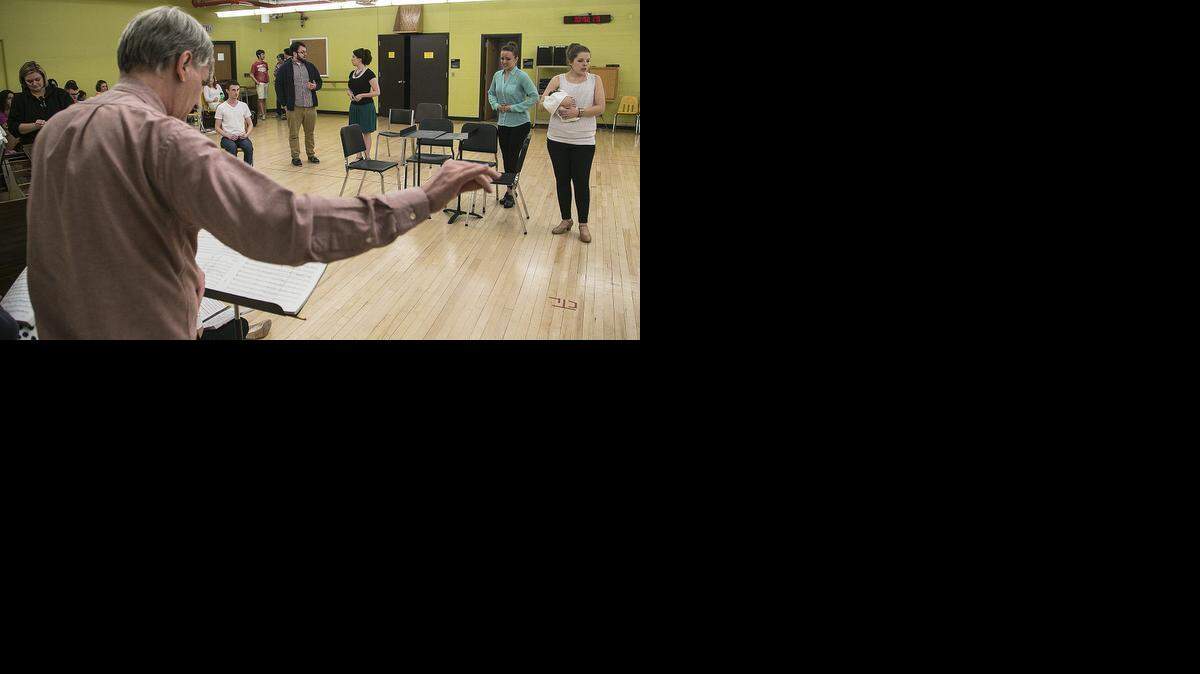
Opera may be a 400-year-old practice steeped in pomp and rigor, but numerous efforts are underway to keep it fresh and relevant for wide audiences. Pop-ups in public parks, partnerships at schools and in nursing homes, and performances on the lake at a trendy shopping center are among the ways Wichita audiences are being exposed to the art form. Though some characterize it as stuffy or overblown, many of opera’s local ambassadors see power in its tradition.
Relevance in tradition
Carolyn Ramseur, 23, is among those who believe opera’s salience lies in its heritage. A student at Wichita State University studying opera performance, she said most people her age avoid classical music of all types for fear of being deemed “out-of-date” or “uncool.” She thinks each generation has to learn the importance of music’s broad range, though, and sees the essence of opera being particularly enticing to her age cohort.
“Opera has the innate ability to shock and comfort all at the same time,” she said. “We find intrigue in the story lines and the impressive voices on stage but yet there is something oddly familiar and comforting about the emotion this makes us feel. Therein lies the draw of opera.”
Samuel Ramey, a distinguished professor of opera at Wichita State University who has been on staff since the fall of 2012, said the advent of surtitles probably did the most to make opera more accessible to wider audiences. The first American opera house to use them was New York City Opera in 1983, and they’re now a standard feature in most productions, projecting translations of the dialogue over the stage so that audiences can read along as the action unfolds. That hasn’t stopped stereotypes from persisting, though, he noted.
“Your average person probably thinks it’s big stuff, over their heads,” Ramey said when asked about people’s perception of opera. “That’s common among people who haven’t been exposed to it in general.”
To counter this view, Ramey said, many companies are modernizing or adapting their performances.
“I don’t know that I go along with what a lot of places are doing to think they’re making it more accessible by doing outlandish productions,” he said. “I’m very much a traditionalist.”
That’s an approach Ramseur appreciates. She characterized Wichita State’s opera program as “tending to air on the side of classical interpretation” and noted that its performances don’t attempt to veer into more avant-garde territory or minimalist styles.
“In my opinion this is great,” she said. “I fell in love with opera because of its grandeur and circumstance; to take that away doesn’t make much sense.”
Where the people are
Paul Brodene Smith thinks the key to expanding opera’s appeal is to take it directly to where people are, heightening its relevance. As managing artistic director for Opera Kansas, part of his work centers on placing operatic productions in areas beyond the traditional theater. In the past year, they’ve staged operas outside in places like College Hill Park and at several nursing homes around Wichita.
They’ve also found success getting younger audiences engaged by being at elementary and middle schools. During Black History Month this past February, the company performed a short opera about the Underground Railroad in several Wichita schools. Smith thinks the program, made up of excerpts from American composer Susan Kander’s opera “She Never Lost a Passenger,” helped make opera more relevant to the students.
“It was a chance to show the kids the art form of opera and also weave that in their curriculum from USD 259,” Smith said. “It’s easier to get students to understand opera when it’s topical – so since they’re learning about it, it makes it more relevant. It also helps with us going into their environment and showing that operas are stories, no matter what time period, about personal relationships. When you’re that close to it, you understand that it’s a different way to tell a story, more than just a different art form.”
Kevin D. Mitchell, a 26-year-old Wichita State student who is working on his master’s of music in opera performance, was part of that production. He thinks outreach and education programs are making opera more popular among younger audiences.
“I was a bit leery at the start of the project; however, the children were highly receptive. One little girl actually told us that she had decided to study opera after our performance,” Mitchell said. “I also believe that young people that are already in the know about classical music and opera are getting their friends and family to support the genre by inviting them to witness performances.”
Parvan Bakardiev, president and CEO of Wichita Grand Opera, said his company was at the vanguard of making opera more accessible by broadening who gets to see it. Their Opera on the Lake production, staged in the summer on the terrace at the Bradley Fair shopping center, brings out thousands of people. The free event, he believes, has brought in wider audiences to the company’s regular programming and heightened appreciation for the art.
In recent seasons Wichita Grand Opera also has taken several of its performances “on the road,” staging operas at the Stiefel Theatre in Salina and at the McPherson Opera House. When opera comes to your community and includes performers that are Kansans, it makes it more relevant, he said.
Ramey said he sees Opera Kansas’ efforts of taking opera into the schools as being especially important for the art form’s longevity. He also credits Wichita Grand Opera as being a pioneer in making Kansans receptive to opera, noting that before its formation 15 years ago, the state lacked its own large-scale opera company.
Culture makes opera pop
Opera’s biggest maven may be popular culture. Films like “10 Things I Hate About You,” “Swan Lake” and even the 2013 zombie flick “Warm Bodies” are loosely based on operatic productions. Ramey said those sorts of films help with exposure and can spread interest.
Bakardiev agrees, saying young people have seen opera, even if they don’t know it, because its themes, story lines and music run deep in many well-known shows.
“Bugs Bunny is opera. ‘The Lone Ranger’ is opera. ‘Into the Woods,’ ‘Fiddler on the Roof,’ ‘Phantom of the Opera’ … they have seen opera in so many movies,” he said. “From ‘The Godfather’ to ‘Pretty Woman,’ there are universal themes apparent because opera is the ultimate art form.”
Smith says it’s the inherent human nature that makes opera relevant and will ensure its continued success.
“Any story that is inherently human will touch anybody in any century,” he said. “Love stories and war stories resonate with any generation throughout time. If you find a theme that is inherent to the human condition, then it doesn’t matter what kind of art form it is, what time it is. It will always resonate with a certain group.”
If you go
‘Cold Sassy Tree’
What: Kansas native Samuel Ramey heads the cast of Carlisle Floyd’s 2000 opera about scandal in a small Southern town when a recent widower announces plans to marry a much younger woman.
Time: 7:30 p.m. April 9-11, 2 p.m. April 12
Place: Miller Concert Hall at Wichita State University
Tickets: $16, $14 for faculty, seniors and military, $6 for non-WSU students, free for WSU students
Information: 316-978-3233, wichita.edu/fineartsboxoffice
If you go
Wichita Grand Opera season
What: The season begins April 25 with the Russian National Ballet Theatre performing “Cinderella” at Century II. Other operas are “Swan Lake,” May 3; “Turandot,” Aug. 28; “Don Carlo,” Sept. 25 and 27; and “The Grand Duchess,” Oct. 16 and 18.
Out-of-town performances: “Turandot,” Aug. 30 at the Carlsen Center in Overland Park; and “The Grand Duchess,” Oct. 10 at the McPherson Opera House.
Information: www.wichitagrandopera.org
Tickets: www.selectaseat.com, or call the Wichita Grand Opera box office at 316-262-8054.
This story was originally published March 27, 2015 at 3:22 PM with the headline "Opera for all audiences: Efforts underway in Wichita to keep art form fresh, relevant."