
The zoo’s Stingray Cove ‘touch’ exhibit, featuring 40 slimy new friends, is ready to open
Visitors at the Sedgwick County Zoo have long been able to feed giraffes and pet goats.
But starting on Friday, a big new exhibit will allow visitors to touch and feed the zoo’s 40 slimy but playful new residents.
Stingray Cove, which will be at the zoo for at least five years, will open to the public on Friday and will feature 40 stingrays and five sharks who will reside in a specially constructed 17,000-gallon, 2 1/4-foot-deep saltwater pool.
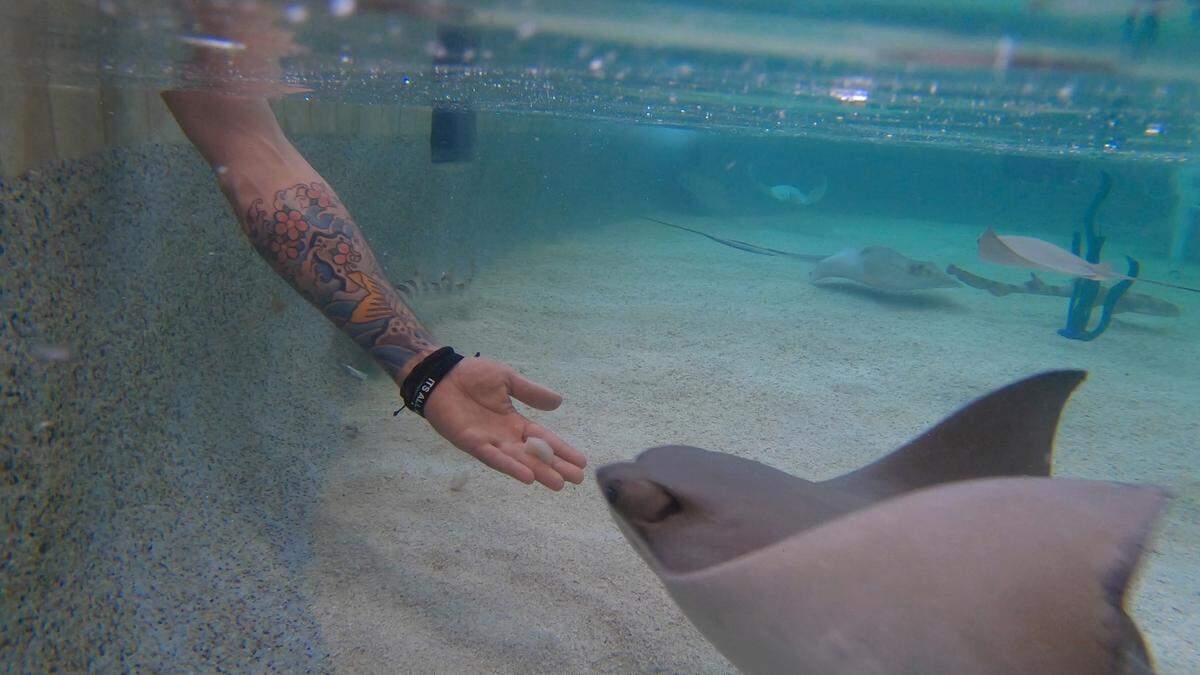
For an extra fee ($5, $4 for zoo members), people will be able to visit and carefully touch the backs of the stingrays and their shark friends as the animals swim around the shallow saltwater pool. For an additional $2, they also can feed the rays and get a chance to feel their mouths suck up pieces of shrimp and fish.
Stingray Cove is owned by Arizona-based Living Exhibits, which has similar exhibits set up at the Fort Worth, St. Louis and Denver zoos. It has contracted to keep an exhibit at the Sedgwick County Zoo for five years, though if the exhibit is a hit, it could stay longer, said Jennica King, the zoo’s director of communication.
It’s set up in the zoo’s open-air pavilion, which sits just east of the Tropics exhibit and just south of the Amphibians & Reptiles building. Previously, the pavilion was used for special events at the zoo.
In anticipation of Stingray Cove coming, though, the zoo transformed the pavilion, adding a stone wall with a waterfall and a giant pool that has walls short enough that children can lean over and plunge their hands in the water to touch the animals. The pool is wide enough, though, that the sharks and stingrays can swim out of reach if they choose to do so.
But the animals, says Skyler Parker — one of three Living Exhibits employees who moved to Wichita to open and run Stingray Cove here — seem to enjoy being touched and fed. She described them as “friendly, curious and very playful.” But should the animals decide they’re tired of being touched, they have ways to escape: While the stingrays can swim out of reach, the sharks have little underwater enclosures they can retreat to when they’ve had enough.
“It is all up to them,” she said. “They get to pick and choose. Sometimes they interact with us amazingly well. And then other days, they’ll have a day where they’re like, ‘No, I’m good.’ So we don’t ever force anything on them. It’s free will.”
There’s also no danger that visitors will get hurt, and Parker assures everyone who asks her about Steve Irwin — the famous Australian “Crocodile Hunter” who was killed by a stingray barb while filming in the Great Barrier Reef in 2006 — that these stingrays are harmless.
And people ask her all day, every day, she said.
The zoo’s exhibit has two types of stingrays. Three of them are female Southern stingrays, which are the larger of the animals. The rest are tinier cownose stingrays. Irwin was killed by a massive bull stingray after its barb pierced his chest. But that was a freak accident, Parker said, and the small rays at this exhibit are docile and harmless.
Plus, their caretakers keep their barbs trimmed.
“We watch that routinely,” Parker said. “We’re always monitoring.”
Sweet and slimy
Those who want to visit the new Stingray Cove will find it open daily from 9 a.m. to 4 p.m. from April through October.
When they arrive, they’ll line up on the west side of the pavilion, and King warns that the line could stretch all the way around to the Penguin Cove, especially during the early days of the exhibit.
People can buy their entrance tickets online in advance, but it won’t save them any time or money, she said. Those with advance tickets stand in the same line as those buying them on the spot. Visitors also will decide when they pay to get in whether they want the $2 upgrade that offers a cup of food they can feed to the stingrays.
Once visitors get to the front of the line, they’ll be asked to rinse their hands — without soap — at an on-site station. It’s better for the stingrays, King said, if people have no sunscreen, lotion, dirt or food debris on their hands when they touch them. Hand sanitizer is especially toxic to the rays.
The staff will control how many people are around the pool at any given time, but once visitors’ turns have arrived, they’ll find a spot to stand around the edge. They’ll be instructed to put their palms flat in the water and wait for the rays to approach, when they can gently touch their backs as they pass by. The stingrays feel soft, slippery and muscular.
Those with food will be shown how to put it between their fingers and hold their hands underwater until a stingray approaches. The stingrays’ mouths are on the undersides of their bodies, and they’ll float over human hands and gently suck the food up into their mouths. It feels like a kiss from a slimy little vacuum.
The three Living Exhibit staff members will either be in the pool with the stingrays or outside of the pool with visitors. They’ll be watching out for the animals’ safety, stopping overzealous visitors from grabbing at them or trying to pick them up and answering questions about the stingrays. Zoo staff will also be on hand.
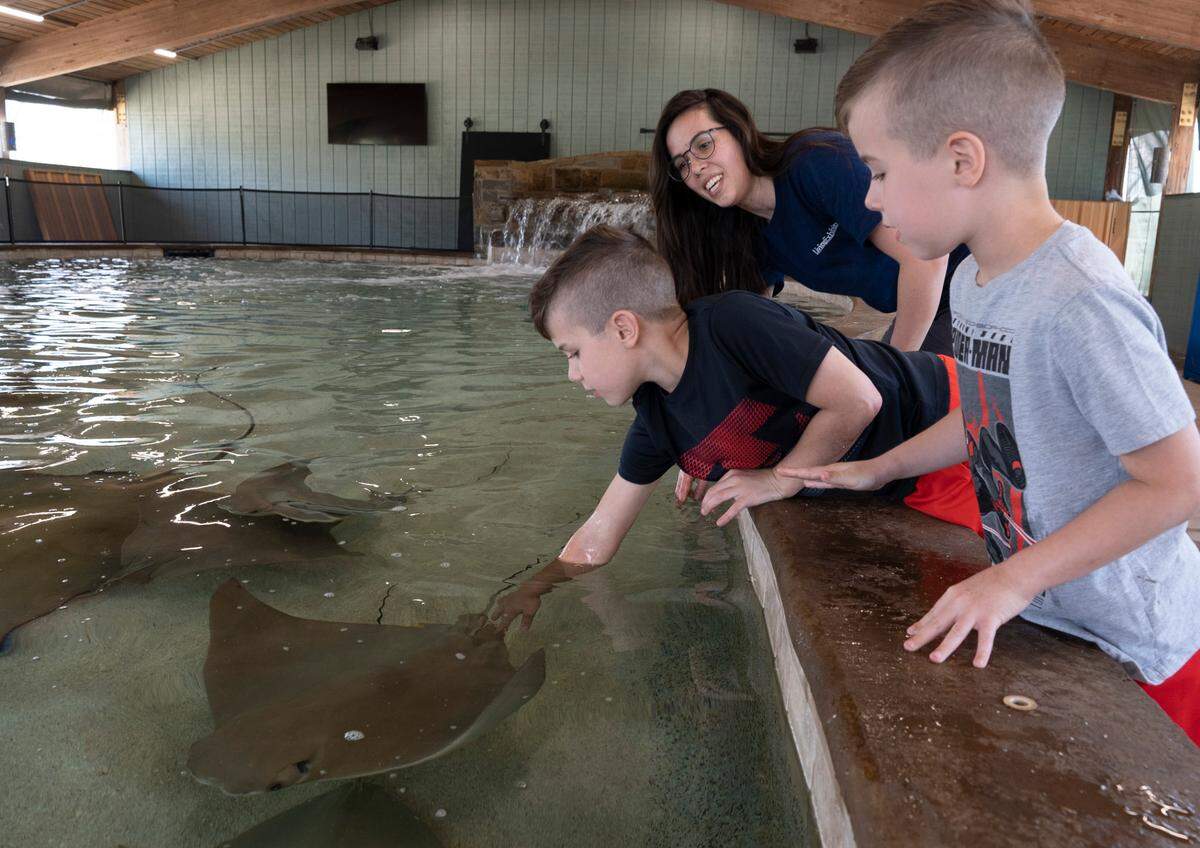
Visitors will be required to follow many safety rules designed to protect both themselves and the animals. No running is allowed in the pavilion, where the water splashes out of the pool and makes the floor slick. People will not be allowed to sit or stand on the pool wall, and they shouldn’t splash the water, slap the pool wall or make loud noises that will alarm the animals.
And they’re asked not to try to feed the sharks (two whitespotted bamboo sharks and three brownbanded bamboo sharks), who not only are on a special diet but who also have rather sharp teeth. The sharks, though, are trained not to go for food in hands, Parker said.
The exhibit doesn’t have a time limit, though most people tend to stay between five and seven minutes, King said. Those who stay too long during busy times might be politely asked to wrap it up.
Sushi, Hank, June and India
Each of the 40 stingrays and five sharks in the new exhibit has a name and a distinct personality, Parker said, and the Living Exhibit employees can identify them on site.
India is the largest Southern stingray and has about a 5-foot wingspan. Other stingrays have names like Sushi, Debbie, June and Hank. Two of the tiniest stingrays, who are only about a month old, don’t even have names yet. And the itty-bittiest one was a surprise addition born two weeks ago while the animals were in transit from Florida, where they’re held during the winter, to Wichita.
Touching the rays is fun, but observing them is also pretty entertaining. Often, viewers will see a splash and notice that two stingrays belly-to-belly on the bottom of the pool, which means a mating attempt is underway.
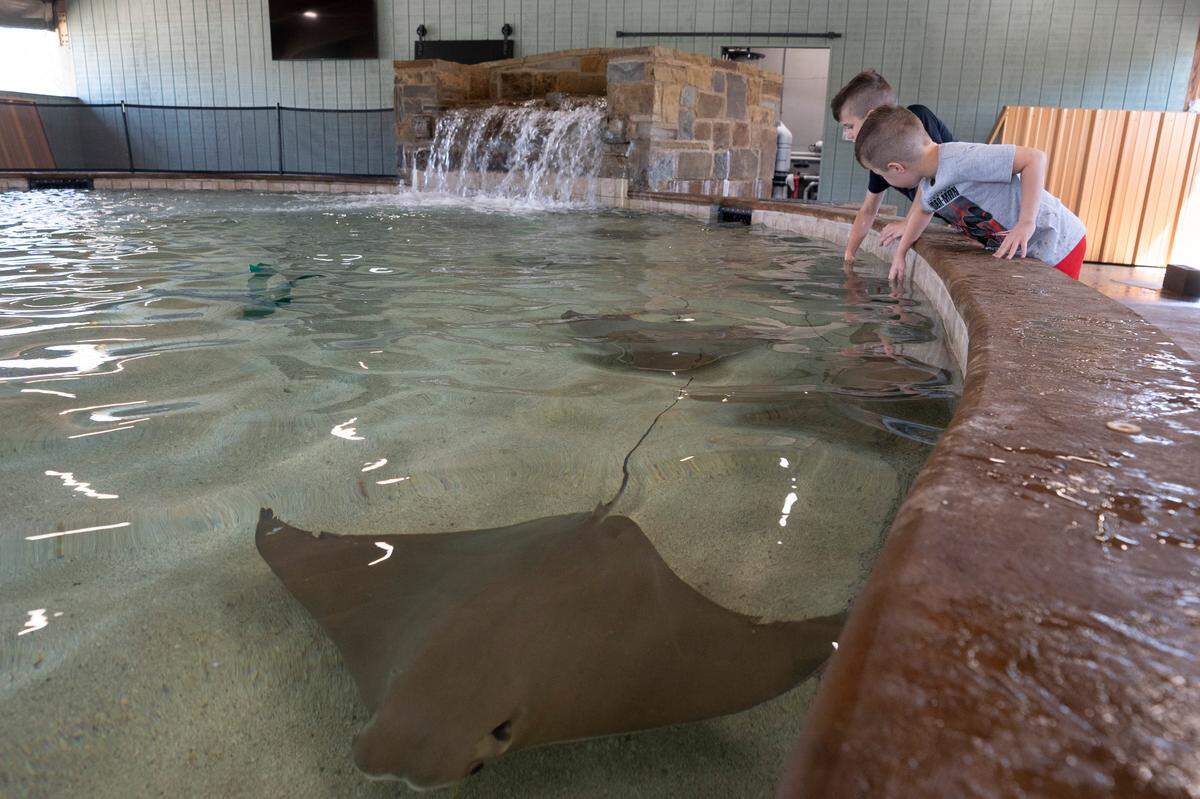
Sometimes they’ll splash up out of the water, and frequently, their wings will surface as they swim. Visitors can expect to leave pretty soaked, Parker said.
There may be times where buying food is not an option, Parker said. The staff is trained to keep the stingrays from overeating, so if they’ve had too much on a busy day, quantities will be cut back or feeding might end for the day. But visitors should still get a chance to touch an animal.
Parker predicts that Wichitans will quickly find their own favorite stingrays. One of the loftier goals of the exhibit is to educate people about stingrays and turn visitors into advocates for the animals.
“We are here in a landlocked state, so getting to see them in more of a place where you wouldn’t get to see them is so exciting,” she said. “You can learn more about them in a controlled place where you have people who can help you, educate you and answer all your questions. They’re crazy smart, and you get to see that.”
Stingray Cove
What: An “touch experience” featuring 40 stingrays and five sharks that will be in Wichita for at least five years
Where: Sedgwick County Zoo, 5555 W. Zoo Blvd., in the pavilion
When: Exhibit opens Friday, April 15, and hours are 9 a.m. to 4 p.m. daily
Cost: Admission to Stingray Cove is $5, $4 for members on top of regular zoo admission. Children 2 and under will be admitted free. Food cups for feeding the animals are $2.
Tickets: Available online at scz.org, though advance tickets aren’t discounted nor do they shorten the wait. Also available at the pavilion gate
This story was originally published April 14, 2022 at 5:03 AM.
.jpg)