You know it’s spring when these colorful birds arrive in the Wichita area
For most birders, the first sign of spring is a flash of green as hummingbirds dip their beaks into red feeders filled with sugar water. The Ruby-throated Hummingbird is one of the first to show up in April as birds start migrating from the tropics and Texas.
Many of these April migrants are known for the songs and bright colored feathers that they bring to the state. A common misconception is that these birds are migrating for warm weather, but actually, they’re following their food source.
“They’re here for fruit, insects and a breeding area,” said Bob Gress, former director of the Great Plains Nature Center. “You’re most likely to see them in bushes or brush.”
This means there’s no need to change the type of food in bird feeders to attract these birds, because outside of sugar water for Hummingbirds or oranges for Orioles, these birds are more interested in live insects for their lunch. You can still attract these birds to your yard with plenty of bushes, brush or a fresh supply of water in birdbaths.
Early April
In early April, the first to arrive are hummingbirds and warblers, which announce themselves with their unique sounds. The Ruby-throated Hummingbirds have tiny emerald green bodies, with red-throats and are known for their love of sugar water and their unique, quick flight patterns.
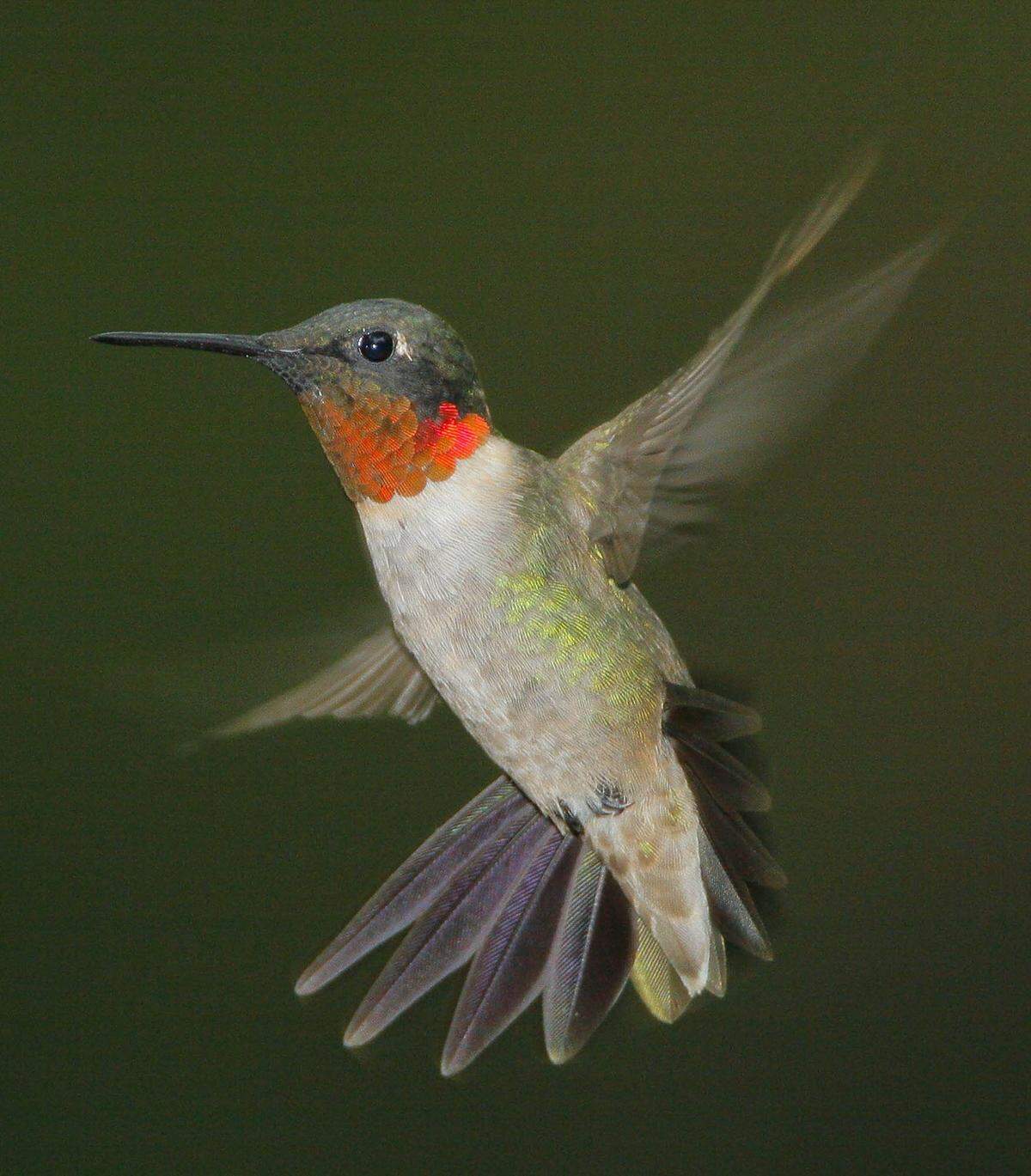
When providing sugar water for these quick little birds, be sure to change the water if it becomes cloudy or discolored, because during hot weather the sugar water can ferment and becoming toxic alcohol.
Two types of Warblers arrive in early April. The Yellow-rumped Warbler is about 5 inches long and weighs as much as a AAA battery. These streaky brown and yellow birds are impressive foragers and are regularly seen flying out of trees to nab insects mid-flight.
The gorgeous, bright lemon yellow Prothonotary Warbler is a little larger than its cousin and forages along the ground, hopping between branches and twigs to search for food. They’re stunning to look at, but need to be around water, so Gress recommends looking for them near El Dorado or Cheney reservoirs.
Mid-April
In mid-April, four types of Vireo arrive, and spotting these secretive birds who rest on the upper canopy of trees can be difficult for even the most experienced birder, according to Gress, who says he relies on sound to identify them.
“They’re more often heard than seen, but they make the springtime sound,” Gress said. “Their songs are a big part of Kansas’ springtime noise.”
Aptly named, the small, olive-gray Warbling Vireos sing in a spirited, up-and-down bird sound that could easily be recognized as a spring bird song.
Despite their name, spotting the “red-eye” of the large, chunky Red-eyed Vireo is difficult, as they often appear dark from a distance. Their quick, sharp whistling song has been described by some as “unending and monotonous,” but in 1952, a birder recorded a single Red-eyed Vireo as he sang 22,197 songs over 10 hours in search of a mate.
Adding to spring’s orchestra, the Bell’s Vireo hides in dense vegetation as they forage for insects, but announce their presence, and their territory, with a rapid, two-part scratchy chirp song.
Appearing to wear yellow “glasses” around their eyes, giving them their name, the Wide-eyed Vireo’s rapid harsh chirps can be heard all day, but especially at dawn and dusk as they search for a mate.
If Vireos are the spring orchestra of Kansas, the Brown Thrashers that arrive during this time are the lead singers, known to sign more than 1,100 different songs and imitate other birds. But be careful coming too close to these reddish-brown birds’ nests, because they are aggressive defenders and have been recorded striking people and animals hard enough to draw blood.
Last Week of April
The end of April will see a big influx of birds, as more than 18 species will arrive in this area. Wichita birdwatchers will be in Oak Park in Riverside and Chisholm Creek Park by the Great Plains Nature Center every morning at dawn, looking for new arrivals of birds during this time, according to Gress.
“That end of April, early May period is probably the best period of the year for birdwatching,” Gress said. “Instead of being quiet and sitting in the tree like they do other parts of the year, they’re full of hormones, they’re colorful and they’re singing.”
Five types of Thrushes — shy, but extremely vocal songbirds — will arrive in Kansas in late April. The most common type is the Swainson’s Thrush, a slim brown bird that settles territory disputes in singing battles.
Four more species of Warblers and the last Vireo species, the Yellow-throated Vireo, will arrive, bringing final additions to the April springtime song.
Warblers are often favorites of bird watchers because of their colorful and distinctive looks, meaning they’re pretty and easy to spot, but also because they come in massive numbers.
The Orange-crowned Warbler is olive-colored with an orange circlet on its head, and the Yellow Warbler is a small, all-yellow bird, like a Peep candy. With black and white bodies and a bright yellow face, the Black-throated Green Warbler hangs out in large trees and sings a loud, ringing song.
“People really like that group of birds because they signal the return of spring and they’re really colorful,” Gress said. “People like that in springtime.”
Spotting the 4-inch long sky blue Cerulean Warbler is a challenging task, as only a few of them venture to Wichita each year.
Joining the colorful chorus of Warblers are the Indigo Bunting and the Summer Tanager, which looks like a cardinal but is the only completely red bird in North America. Indigo Buntings are one of Gress’s favorite birds because of their striking blue color.
Arriving with a serious sweet tooth, the bright orange-breasted Baltimore Oriole and the russet red-breasted Orchard Oriole are easy to attract to your yard with sliced oranges nailed to trees or bird feeders. You’ll be rewarded with displays of their bright plumage and chirping song.
Often a welcome sight because of their diet, four types of flycatchers make their way to Kansas at the end of April, hungry for insects. The smallest of the flycatchers, the Least Flycatcher has been known to use dragonfly wings as nest lining.
The Eastern Phoebe is a chubby, round gray and white bird with a dark head and is named for its “phoebe” call. Brown and gray with a bright lemon belly, the Great Crested Flycatcher’s whistle can be heard as males look for a mate.
Perhaps the most visually unique of flycatchers, watchers of the white-headed Scissor-tailed Flycatcher will notice the peach flanks that extend to giant black and white long tail feathers.
This story was originally published March 26, 2021 at 5:01 AM.