
How to celebrate Women’s History Month in Wichita
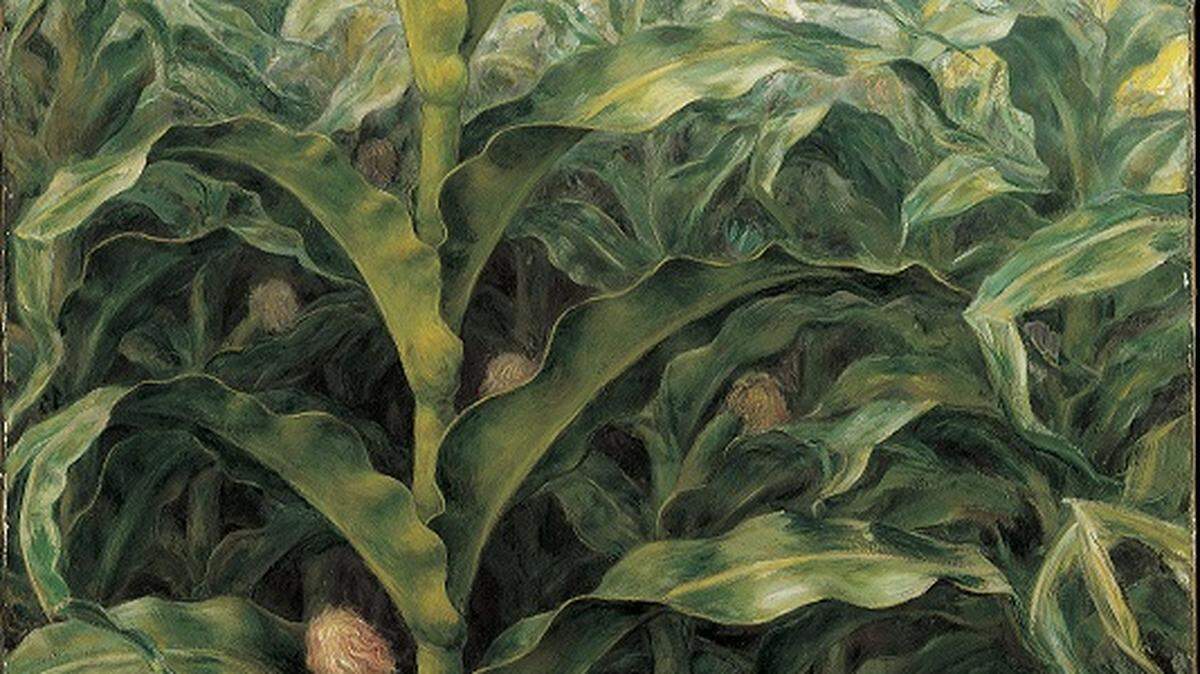
What started as a weeklong celebration, turned into a month.
The national Women’s History Month, celebrated in March, got its start in 1980 when President Jimmy Carter designated a Women’s History Week in early March. By 1987, Congress passed a resolution to turn that celebration into a month. More than a dozen states by that time had already turned Women’s History Week into Women’s History Month to commemorate the achievements and experiences of women.
Here are a few ways you can celebrate the month and learn about women’s history locally.
Support women-owned businesses
Women have owned and run businesses for a long time in Wichita, going back to its trading post days, according to Jay Price, a history professor at Wichita State who directs the local and community history program.
Catherine Greiffenstein, who was a landowner, helped run the frontier trading post she and her husband, William, started in Wichita’s early days. One of the city’s first women entrepreneurs was Catherine McCarty, who bought some land and started a laundry service. McCarty was the only woman to sign Wichita’s founding charter in 1870. She also gained some notoriety as the mother of outlaw Billy the Kid.
Today, Wichita has many women-owned and -run businesses. Grab a bite to eat at Tanya’s Soup Kitchen, Gaby’s Peruvian Restaurant, The Kitchen, The Old Mill Tasty Shop, Doo-Dah Diner, The Monarch, Prost, Two Olives and Bagatelle that are among the many eateries that have women at their helm. For gifts, boutique and clothing merchandise, head to The First Place, started by Helen Galloway in 1973; Best of Times; Lucinda’s; Rodriquez Fashions; Moxie, and K. Lanes, to name a few.
While Wichita has a long history of women business owners, it wasn’t until 1995 that the Wichita Regional Chamber of Commerce had its first female chair. That distinction is held by Anita Oberwortmann, who started a janitorial services company in the 1978 and owns Metro Courier.
Support women artists
Women have been contributing to Wichita’s arts and cultural scene for decades, as well.
The Wichita Art Museum, which celebrated its 85th anniversary last year, owes its start to two women. Louise Caldwell Murdock, owner of an interior design company and widow of Wichita Eagle business manager and part-owner Roland P. Murdock, provided the seed money to start WAM’s collection when she died in 1915. Elizabeth Navas — who worked for Murdock in her design firm — was tasked with buying the paintings for what art historians consider a premier collection of American art. A WAM exhibit celebrating the two women ends Feb. 28.
During the monthly First Friday art crawl in Wichita, with opening receptions March 6, women artists are among those whose work will be displayed. Gallery XII, 412 E. Douglas, is showing artwork by longtime multimedia artist Judy Dove this month. Vertigo 232, located above Hewitt’s Antiques at 232 N. Market, is featuring until March 19 Tara Hufford Walker’s selections of quilts created during the pandemic. Several of the artists featured in the Alley Doors project are women. The project features alley and back-of-building doors in downtown Wichita that have been turned into canvases ; a map and listing of artists can be found at downtownwichita.org/alleydoors.
Women are the subject of one exhibit currently on display at the Ulrich Museum of Art on the WSU campus. This semester’s “Solving for X” exhibition subject features a collection of memories shared by WSU faculty, staff and students of their mothers and grandmothers. “Identity/Sharing of Matrilineal Memories” runs until May 8.
The Ulrich is also hosting a virtual program to update women artists entries to the open-source encyclopedia Wikipedia. “Art + Feminism Wikipedia Edit-A-Thon” is happening 1-4 p.m. Saturday, March 6. The focus is on researching and writing or updating the entries of the women artists represented in the Ulrich’s collection. It’s free to participate but registration is required. For more information, visit ulrich.wichita.edu/programs.
Support public service
Back in the 1910s, Laura Buckwalter spearheaded two campaigns in Wichita. The first led to the building of Park Villa, the stone and tile-roofed pavilion in North Riverside Park, and the second was a bid to serve on the Wichita city council, a campaign she lost. Buckwalter, the appointed foreman of the project, ended up completing Park Villa in 1913 using prisoners from the city jail whom she stood guard over with a shotgun in hand.
In Kansas, women earned the right to vote in 1912, noted Price, the WSU history professor, while the 19th amendment giving women all across the U.S. the right to vote was adopted in 1920.
But it took decades for women to hold seats on two local government boards.
Connie Peters, later Kennard, became the first person elected to the city council in 1973 and went on to serve as mayor twice (’75-‘75 and ‘78-’79.) Since then, Wichita has had three other women serve as mayor: Margalee Wright, Kathleen Edmiston and Elma Broadfoot. At least one woman has served on the seven-member council since Peters’ election, but women have never held the majority.
According to 2019 U.S. Census records, females comprise 50.8% of Wichita’s population and 50.6% of the Sedgwick County population.
When Lacey Cruse was contemplating a run for the Sedgwick County Commission in 2018, she said she was shocked to see how few women have served on the five-member board. At the time, only five women had served, with the first being Betsy Gwin in 1991 and the last being Gwen Welshimer, who left in 2010.
“After making a spreadsheet at 11 o’clock one night, my mind was made up,” said Cruse, who won the 4th District seat in 2018. With the addition of recently elected 2nd District commissioner Sarah Lopez, two women now sit on the commission.
Considering the county’s demographics, Cruse is pushing for more gender and racial equality among the representation on board-appointed boards. The makeup and vacancies of those boards can be found at boards.sedgwickcounty.org.
Learn more about local women’s history
The 1970s brought about a variety of changes both nationally and locally. WSU, for example, started offering its first women’s studies classes in 1971, and then in 1976, added women’s studies as a major. Nancy Landon Kassebaum became Kansas’ first woman senator in 1978. (Kathryn O’Loughlin McCarthy from Hays was the first woman from Kansas elected to Congress in 1932, according to the League of Women Voters of Kansas.)
The personal stories of dozens of Wichita women recounting what was happening were compiled in a 2011 book published by Wichita’s Watermark Books. “Radiating Like A Stone: Wichita Women and the 1970s Feminist Movement” is organized by topics, with accounts written by several familiar names: Jill Docking, Broadfoot and Wright (two of Wichita’s former women mayors), Nola Foulston, Bonnie Bing and more.
The Wichita Public Library has several copies of the book. And one historical tidbit readers might find interesting: Back then, married women needed their husband’s signature to get a library card.