
Think outside the casino: 4 ways to start an outdoor vacation in Las Vegas
_White%20Domes%20Road%20view_photo%20by%20MeLinda%20Schnyder.jpg "The view from the White Domes Road in Nevada’s Valley of Fire State Park, a short drive from Las Vegas.")
There may be no other U.S. city so focused on indoor entertainment, which is why I’ve claimed for years that I might be in the running for Las Vegas’ most non-traditional tourist.
Sure, I’ve experienced over-the-top shows, celebrity chef restaurants, $16 crazy shakes, the spectacle of the Las Vegas Strip and downtown’s laser light canopy, touring The Mob Museum and The Neon Museum, and many of the other must-see attractions in Vegas. But the last four times I’ve landed at McCarran International Airport (LAS) — including my last vacation before the pandemic — I’ve embarked on trips revolving around the great outdoors rather than casinos.
If you’re eager to travel when COVID-19 infection rates start to drop and health experts OK non-essential travel, you might consider taking advantage of low-cost carriers offering nonstop flights to Las Vegas, the most-traveled destination from Wichita Dwight D. Eisenhower National Airport (ICT).
When Frontier Airlines begins nonstop service between ICT and LAS on March 12, it’ll be the third airline to offer nonstop service between the two cities. Frontier plans to fly the route year-round on Monday and Friday. Allegiant Air currently flies Thursday and Sunday and Southwest Airlines flies on Saturday. It’s possible the airlines will add additional days of nonstop service as the travel industry recovers.
So if an outdoor vacation is in your plans, don’t write off Sin City. Here are four ways you can launch an outdoor vacation with a flight to Las Vegas, ideally from October to May.
Valley of Fire State Park
In February 2020, we wanted a trip where we could get outside and get active while not traveling too far for warmer weather. We chose the nonstop flight to LAS and headed straight for Boulder City, about a half-hour southeast of the airport.
The city formed as a place to house workers building the Hoover Dam in the 1930s and continued once construction was complete. We visited the dam (it’s free to park and walk around the outdoor public areas) but our main reason for staying here was access to Lake Mead National Recreation Area, which protects 1.5 million acres including the reservoir created by the damming of the Colorado River, and Valley of Fire State Park.
We’d driven through Valley of Fire State Park a few years ago and wanted to return when we had time to hike; Lake Mead was new to us and we were surprised at how much there was to do at the first and largest national recreation area in the United States.
We saw people cycling, fishing, boating, camping and hiking, which is what we spent our time doing. You can also swim when it’s warm enough; in February the mornings started off cool but by the time we got going on the trails, we were comfortable in T-shirts. Like the rest of the Mojave Desert, hiking in summer months is not a safe option.
We walked several miles along the lakeshore on the Historic Railroad Trail, which takes you through five tunnels if you follow it all the way to Hoover Dam, where the line once moved materials for the dam’s construction. Another lakeshore trail took us into Owl Canyon, winding through narrow rock walls sculpted by water.
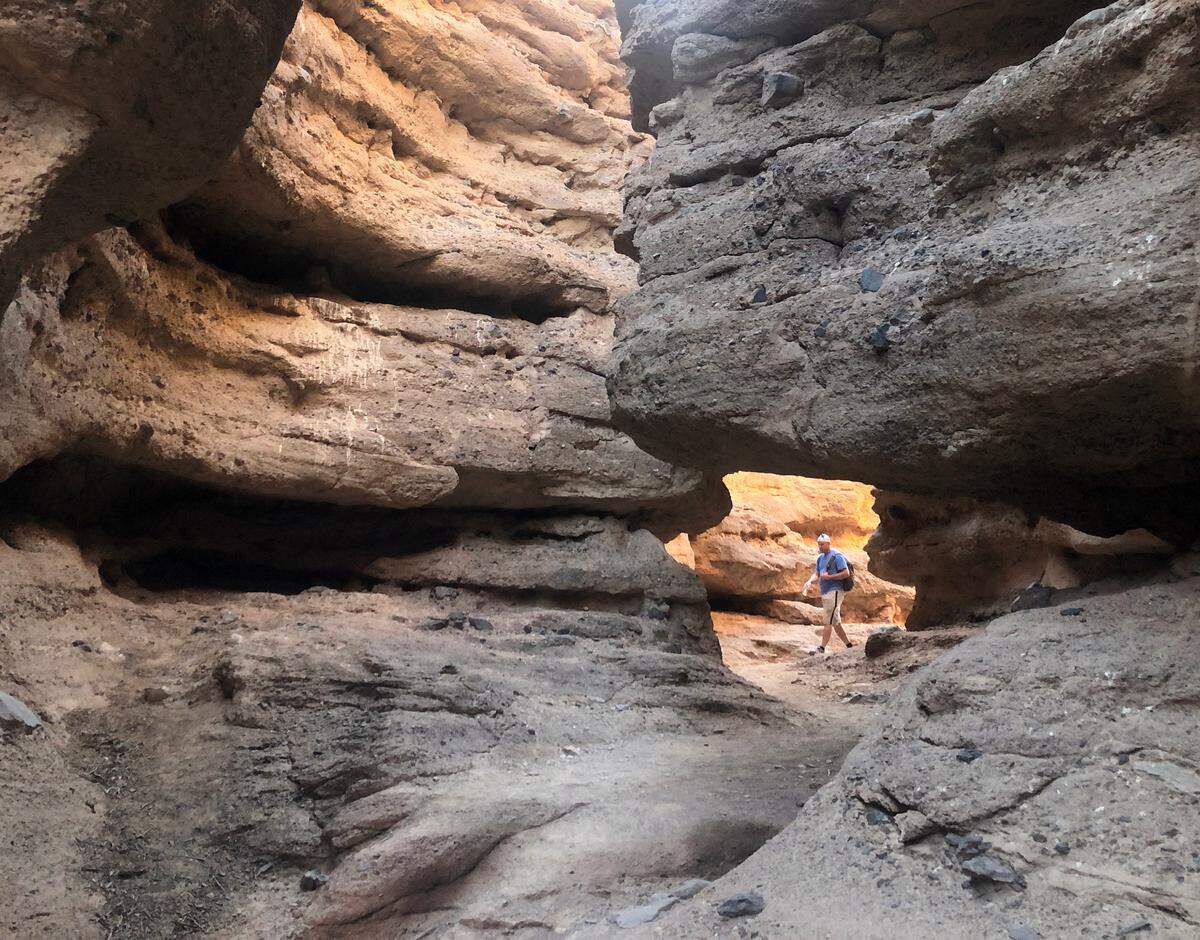
We spent a full day driving the park’s main roads – Lakeshore and Northshore roads – stopping at overlooks for endless views of canyons, basins and mountains. One of our favorite stops was the Redstone Picnic Area, a playground of brilliantly red sandstone outcroppings. It was a preview to where we would end up that day when we exited the north end of the recreation area: Valley of Fire State Park.
We spent three hours in Nevada’s first state park (opened in 1934), where simply driving through delivers breathtaking vistas (don’t miss White Domes Road off the main Valley of Fire Highway). We drove a lot that day, so we wanted to hike. The Fire Wave 1.5-mile out and back hike takes you to an oft-photographed spectacular swirl of white, pink and red sandstone. It’s worth the hike, but we favored the 1.25-mile White Domes loop trail for its variety of colors and formations.
There are no lodging options near the state park but since we wanted to explore both these areas, we stayed in Boulder City, where you can find hotels and a few vacation rentals. The more recently developed Lake Las Vegas community is another option, and you’ll find more properties there on VRBO or Airbnb.
Death Valley National Park
The largest national park outside of Alaska is two hours west of Las Vegas. Death Valley National Park straddles the Nevada-California border and has 1,000 miles of paved and dirt roads to explore scenic drives, historic sites and trails.
The terrain is otherworldly and surprisingly varied, from the 600 feet deep Ubehebe Crater to the immense formations seen at Zabriskie Point and the Badwater Basin salt flats, the lowest point in North America at 282 feet below sea level.
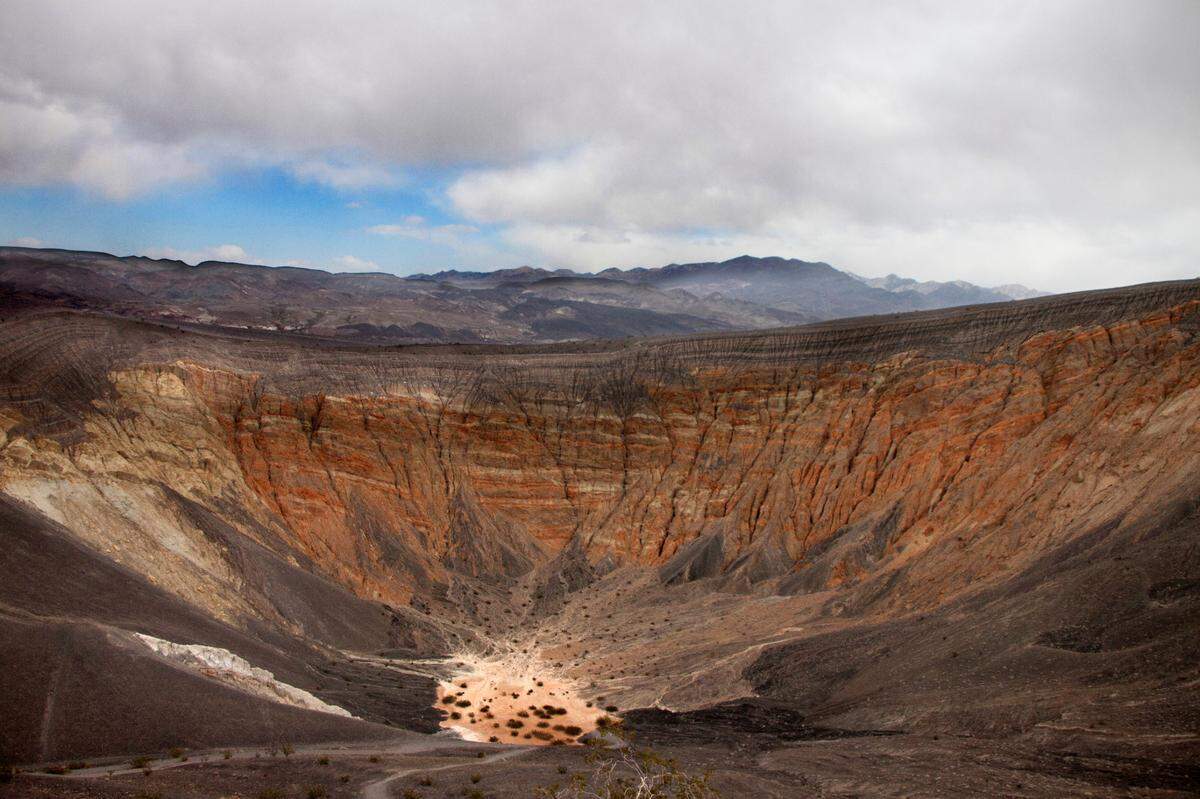
The park is open year-round and you can always explore via driving, but if you want to hike plan your trip for the spring or fall. Planning in advance is a must here. Accommodations, gas and food are all available inside the park but in limited supply, and phone and internet service is not dependable. We explored in a sedan, including the 2.7-mile one-way adventure down Twenty Mule Team Canyon’s bumpy dirt road, but some areas of the park require a high clearance vehicle.
There are not many places to stay overnight in or around the park. We choose one of the few motels available in the towns outside the park. That was in 2018; I can’t imagine staying there now with a new eye on distancing and sanitizing. Plus, you spend a lot of time driving to and from the park.
Opt for staying inside the park if you can afford it. You’ll pay for convenience and amenities including 87-degree spring-fed pools and the 18-hole Furnace Creek Golf Course, the world’s lowest elevation golf course. The Xanterra Travel Collection-owned Oasis at Death Valley has two hotel properties and a campground in the middle of the national park. There are options for stand-alone rooms and casitas as well as rooms with exterior doors in one-level buildings.
Grand Canyon
We’ve also flown from Wichita to Las Vegas, rented a car and circled the Grand Canyon. We did it in a week one September, but it was more hurried than we would have liked.
We drove through Valley of Fire State Park on our way to Utah and through Zion National Park before reaching the North Rim of the Grand Canyon, which sees just a fraction of the tourists the South Rim attracts. We spent a portion of a day exploring the striking viewpoints of the North Rim before driving 220 miles in about four hours to reach the South Rim in time for sunset. We had just two nights and one and a half days to explore here, so we focused on the 13-mile paved Rim Trail. From there, we headed about 115 miles south to Sedona for two nights before driving the 250 miles back to Las Vegas.
We didn’t have time to explore Grand Canyon West, which is not part of the Grand Canyon National Park but on the Hualapai Reservation and operated by the Hualapai Tribe. It’s about 2 hours from Las Vegas and is best known for its glass bridge, adventure options and overnight cabins.
Along the entire route, we made quite a few stops. There are so many worth seeing, you’ll have to determine what you have time to do. Those we made time for: White Pocket in the Vermillion Cliffs National Monument (Utah-Arizona border), Coral Pink Sand Dunes State Park (Utah), Best Friends Animal Sanctuary (Utah), Lake Powell and Horseshoe Bend in the Glen Canyon National Recreation Area (Arizona), Sunset Crater Volcano National Monument (Arizona) and Oak Creek Canyon, known as the little cousin to the Grand Canyon (Arizona).
Day trips
Our last “carefree” vacation before the pandemic, in early February, was two nights and three days exploring hiking trails and scenic drives east of Las Vegas and two nights in a posh suite on the Strip doing Vegasy things. We’ve split up several of our trips here this way so that we get to enjoy the desert scenery while also taking advantage of a city full of fabulous food and nonstop entertainment.
But you can also do elements of all I’ve outlined through day trips if you prefer to stay in Las Vegas proper. In addition to the outdoor attractions above, Red Rock Canyon National Conservation area’s 13-mile scenic drive and 26 trails are 30 minutes west of the city, Mount Charleston in the Spring Mountains National Recreation Area is 45 minutes northwest, and there are dozens of golf courses in and around Vegas.
COVID precautions
As we were going to print, Nevada extended until Jan. 15 the state-wide capacity restrictions at casinos, restaurants and bars as well as enforcement of mask wearing and mandatory reservations for dining out. Like many places, there’s been a start and stop cadence to Las Vegas’ reopening.
Check websites for any attractions you are traveling to confirm hours of operation and to learn about restrictions in place such as timed tickets. Another good resources is the Las Vegas Convention and Visitors Authority website visitlasvegas.com.
Many resorts and hotels on and off the strip are open with health and safety measures in place; check traveler review websites to find out how specific properties are complying. Las Vegas also has a huge inventory of vacation rentals that could offer more distancing, and there are RV rental options.