
Joyland’s former owners win civil case against man who took Louie the Clown
The man who pleaded no contest to stealing Joyland’s iconic Louie the Clown mannequin has now lost a civil lawsuit filed by the park’s former owners.
But this suit involves an organ.
Last week, District Court Judge Deborah Hernandez Mitchell, who presided over a bench trial, ruled that Damian Mayes — a former employee of the longtime amusement park at 2801 S. Hillside who pleaded no contest in 2016 to charges of stealing Joyland’s Louie the Clown — must return the organ that Louie “played” at the park for more than half a century before he went missing in 2005 or 2006.
He also must return a large sign that reads “Home of The Mighty Wurlitzer Pipe Organ” that was included as part of a deal he made with the park’s owners in 2010 to purchase the organ.
Meanwhile, the Nelson family must return $25,000 of the $30,000 down payment Mayes made in 2010 “less the prejudgment and post judgment interest at the respective statutory rates,” the ruling reads.
And that amount, said Greg Kite, who represented the Nelson family in the case, equals $25,000. The Nelson family will have to reimburse local doctor Grant Rine, who loaned Mayes $5,000 toward the purchase of the organ, he said.
Mayes has 30 days to appeal the ruling, Kite said. Mayes, though, is currently in prison for convictions in a Harvey County child sex crimes case. He’s eligible for parole in 2028.
The organ and sign are in Mayes’ Wichita home, where his wife still lives, Kite said.
Mayes’ lawyer, Randall Price, did not return a call seeking comment.
Fifteen-year saga
The ruling is the latest chapter in a saga that started when Louie the Clown — a life-sized paper-and-wood, partly-mechanical mannequin that Joyland founders Harold and Herb Ottaway bought at a trade show in Chicago in the 1940s — went missing from the park in either 2005 or 2006. The Nelsons closed the park for good in 2006.
In 2015, police searched Mayes’ house north of Hydraulic and Kellogg and found Louie, who was valued at about $10,000.
Mayes pleaded no contest to one count of felony theft in October 2016, just before he was scheduled to go on trial on three charges connected to the case. He was sentenced to 15 months in prison, even though he was already in prison in connection with the Harvey County case.
In 2010, Mayes paid $30,000 of the agreed upon amount for the organ, but he never paid the remaining balance of $9,000, the Nelson family’s lawsuit said. The family decided to sue him in civil court.
Because he had already taken the clown at the time he agreed to buy the organ and concealed that fact, the judge said, Mayes had “unclean hands,” a legal term that means one party deceived the other when entering into a contract.
“Had the plaintiff known, when it appeared to be missing, that the defendant was in possession of Louie the Clown, she would not have sold the Wurlitzer Organ and the large sign to him originally,” the judge wrote in the ruling.
Mayes had previously worked for the park taking care of both Louie and the organ, a Wurlitzer Style 160 “Mammoth” Military Band organ that was built in 1901 and measures 8 feet by 20 feet and is 10 feet tall. It was capable of producing trumpet, flute, drum, xylophone and glockenspiel sounds, and it is believed to be the largest model organ Wurlitzer made and one of only a few left in the world.
In recent years, court documents said, Margaret Nelson Spear has been diagnosed with Alzheimer’s disease and now lives in an assisted living center. Her husband, Stan Nelson, died in July 2010.
Their son, Roger Nelson, said on Monday that although he’s glad there’s some resolution to the organ case, which has dragged on for four years, the family is not sure what kind of shape the organ will be in when they eventually get it back.
They’ll likely try to sell it and maybe recoup some of the losses his parents suffered as the park deteriorated, he said.
“The park has been kind of a disaster for her retirement, for both my parents’ retirement,” he said. “You have to try to get what you can get and go from there.”
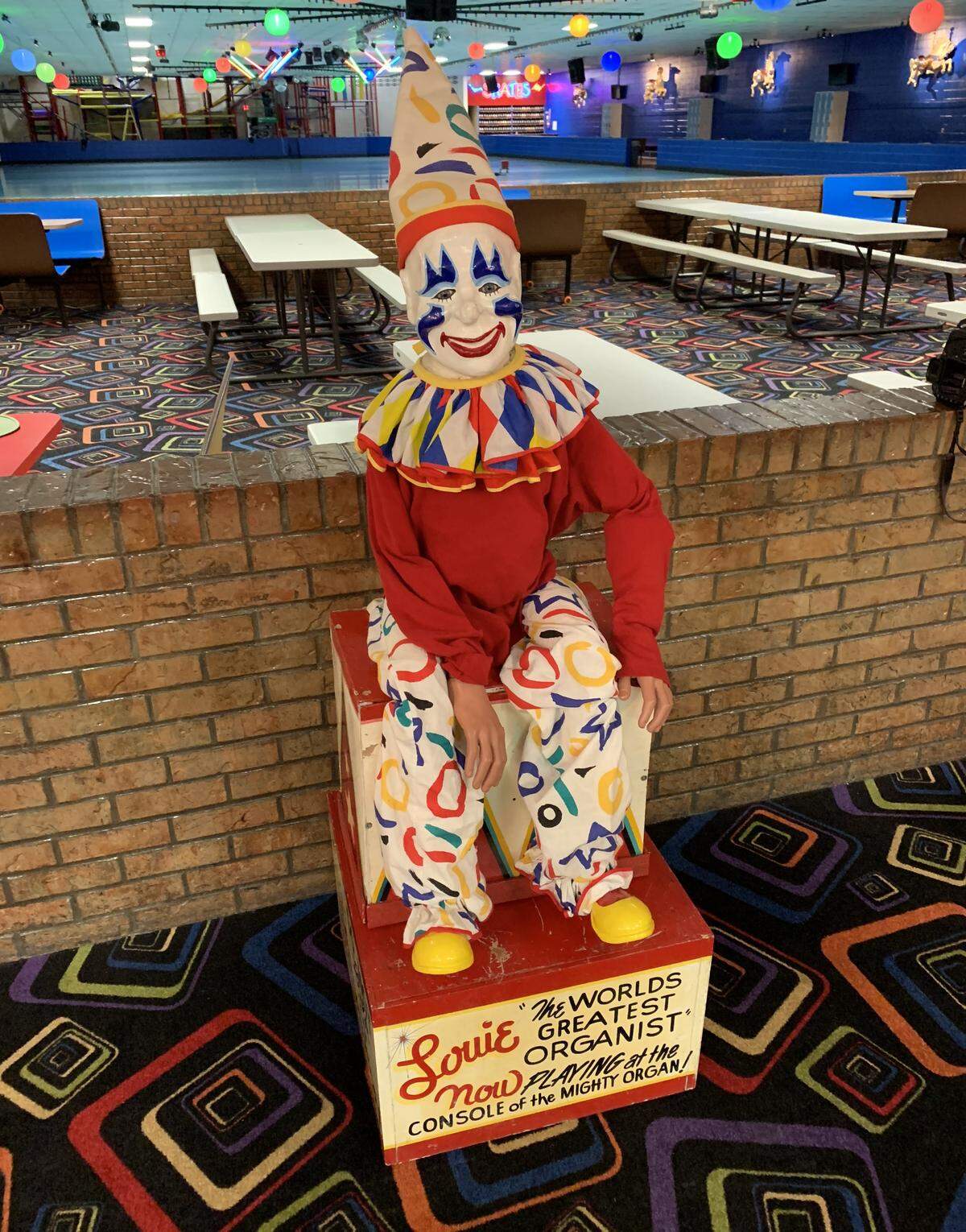
Roger Nelson is now in possession of Louie, who he says is safe in storage in one of his buildings.
Joyland’s history
Brothers Harold and Herb Ottaway and their father, Lester Ottaway, first opened Joyland in 1947. In the early 1970s, the Nelsons bought the park and ran it until 2005. Two other groups made attempts to operate and buy Joyland, but they were unsuccessful.
Despite its position as a beloved Wichita landmark, the park deteriorated over the years and was overrun with trespassers, vandals and arsonists.
In April 2015, the Nelson family announced plans to demolish the park’s remaining buildings and dismantle its historic wooden roller coaster. The Historic Preservation Alliance of Wichita and Sedgwick County negotiated to buy a section of the track and some coaster cars. Kite is president of the alliance.
Gregory and Tina Dunnegan bought the Joyland property at auction for $198,000 in November 2018, and in July 2019, the Wichita City Council authorized plans to redevelop the Joyland site and add an event center, a paintball gun range and one or more restaurants.
This story was originally published September 22, 2020 at 5:01 AM.
.jpg)