
Symphony’s 2020-21 season continues spotlight on new composers
The Wichita Symphony Orchestra’s 2020-21 season will continue its spotlight on new composers, giving them time on six of the eight Masterworks concerts featured next season.
“We’ve found we’ve had more success playing some of the contemporary music,” Daniel Hege, entering his 11th season as music director and conductor, said. “The contemporary music that’s being composed today — at least the music that I’m choosing and some other orchestras are — is music that communicates very directly upon the very first listening, which is, I think, a critical detail to get right.”
Contemporary music that might have been programmed a decade or two ago “was more difficult to grasp on a first hearing,” Hege said. “Nowadays, we really have to play music people will really love or have a connection to on the very first time they hear it.”
The new music has received very favorable responses from the audiences, Hege said.
“The music has something to say. It has melody, it has texture, it has color,” he said. “It has a great groove of the rhythm. It has all the aspects and elements that people look for in traditional music that they like.”
The season also has what symphony CEO Don Reinhold calls “some of the great war horses” of the symphonic canon, including Chopin, Tchaikovsky, Copland, Brahms, Mozart and a 250th celebration of Beethoven’s birth.
Here’s a look at the upcoming season:
Hollywood Hits, Sept. 26
While the past few seasons have included live performances of film scores — “Apollo 13” is April 18, the last of three in the current season — the symphony is foregoing that to concentrate on the music of movies such as “Gone with the Wind,” “The Magnificent Seven,” “Rocky,” “Dances With Wolves,” “Moon River” and James Bond.
“In Wichita, we’ve found there are a lot of lovers of film music — whether there’s film or not,” Hege said, pointing to sellout crowds for two retrospectives of music by John Williams. “There’s a good appreciation just for the film music medium.”
“We don’t always need to spend a whole lot of money on visuals,” Reinhold added. “People know these tunes. It’ll be pretty much familiar music to everybody.”
Schumann Symphony No. 3, Oct. 24-25
PROJECT Trio, a flute-cello-double bass trio with a variety of influences, will be featured in the first Masterworks concert of the season.
“They performed at our Young Peoples’ Concerts and just knocked everyone out,” Hege said. “We knew it would wow our Masterworks audience too.”
They will be playing “Scatter,” written for trio and orchestra by Adam Schoenberg, a living composer. The concert opens with another modern composer, Anna Clyne, and concludes with Schumann’s No. 3, “Rhenish.”
“The people who don’t know it will find it as a great discovery,” Hege said.
“One of the greatest, sweeping openings in the entire symphonic repertoire,” Reinhold added. “It just takes you away.”
Chopin and Tchaikovsky, Nov. 14-15
Daniela Liebman, a Mexican-born pianist who turns 18 in June, is featured on Chopin’s Piano Concerto No. 2.
“She’s really an up-and-comer, and really quite a brilliant artist,” Hege said. “We always like to find these new names, these rising stars. And she’s definitely one of those.”
Guest conductor for the concert will be Laura Jackson, music director of the Reno Philharmonic in Nevada.
A Mexican-themed “Fiesta” by composer Jimmy Lopez Bellido (“It’s so catchy,” Hege says) opens the concert, concluded by Tchaikovsky’s Symphony No. 1, “Winter Daydreams.”
“It’s a symphony we don’t get to hear that often, but it’s a lot of fun,” Reinhold said.
Beethoven Celebration, Dec. 5-6
For the month of the composer’s 250th birthday, Hege said, “We thought we have to give more than just a nod to Beethoven.
“We’re looking at the crossroads of 250, this round number, if we look back but we look forward at the same time,” he said.
The look forward comes from pianist-composer Michael Brown, who plays his own “Piano Concerto” inspired by the master.
“There are elements and fragments of Beethoven he uses in the work to link his contemporary approach with the music of the past,” Reinhold said.
It is sandwiched between the Wichita Symphony Chorus, featured on Beethoven’s “Choral Fantasy,” and Beethoven’s Symphony No. 4.
While not as well-known as his 5th or 9th symphonies, “The 4th is as great as any of them,” Hege said.
“Universe at an Exhibition,” Jan. 23-24
Astronomer Jose Francisco Salgado, who put visuals with Gustav Holst’s “The Planets” with the Wichita Symphony in 2018, returns with visuals of outer space to the music of Mussorgsky’s “Pictures at an Exhibition.”
“The chance to marry a traditional war horse with the perspective of all the photography and visions of deep space as they come across in Salgado’s interpretation of the music should be interesting,” Reinhold said.
“He is a very gifted visual artist and has an intuitive sense of how music works with the visual images he is able to put together,” Hege said.
The night opens with the space-themed “Mothership” by Mason Adams, a Grammy Award-winner for best opera and composer-in-residence at Kennedy Center for the Performing Arts, and Aaron Copland’s “Clarinet Concerto,” featuring principal clarinet Trevor Stewart.
“One of my favorite pieces,” Hege said. “It’s really a gorgeous work.”
A Gershwin Valentine, Feb. 13-14
A planned biennial collaboration with Music Theatre Wichita was stalled because of the lack of scores written for an orchestra and the rights for the original selection being pulled because of an impending national tour, Reinhold said.
“It fell through very late in the game for us,” Reinhold said.
The choice is a George Gershwin-themed concert for Valentine’s weekend.
“When we knew we had the hall for those dates, it was a no-brainer,” Hege said of the concert, whose details are to be determined.
“Love & War: Romeo & Juliet and Don Quixote,” Feb. 20-21
“Both of those are based on literature, so they go well together as partners for that program,” Hege said.
“It’s good every once in a while to bring out a large, huge, romantic work of Richard Strauss,” Hege said of the composer of “Romeo & Juliet.” “He wrote these big, romantic pieces and we don’t play them often enough, but it’s good for the orchestra and it’s good for the audience, who really appreciates that fascinatingly large symphonic sound.”
Two Wichita Symphony principal players solo on “Quixote,” – cellist Leonid Shukaev and violist Catherine Consiglio.
“Anyone who’s familiar with those pieces knows how colorful the orchestration is on both those pieces,” Reinhold said. “Strauss, better than anybody, could musically depict about anything he wanted. In this piece he’s depicting windmills and all sorts of things in the Don Quixote story.”
Lise de la Salle plays Mozart, March 13-14
The French pianist’s last performance with last season was what Reinhold called the “Himalayan task” of all five of Rachmaninoff’s piano concertos over a three-day period in 2019.
“I was joking, ‘She’s only going to play one concerto this time?’,” Hege said. “She really came in and just knocked everyone’s socks off when she was here last time. She’s just a phenomenal performer.”
Hege calls “Piano Concerto No. 9,” which features de la Salle, “Mozart’s first really mature piano concerto.”
The night begins with Brahms’ “Tragic Overture” – “It’s tragic only in the dramatic sense,” Hege said – and concludes with a second half of waltzes, polkas and more composed and inspired by Johann Strauss.
“I think people will love hearing Strauss waltzes played by the Wichita Symphony,” Hege said.
“It’ll be like a breath of fresh air in our season, with wonderful music to listen to,” Reinhold added.
Copland 3 and “Blue Electra,” April 17-18
Hege calls Aaron Copland’s Symphony No. 3, “the great American symphony.”
“I really can’t think of one that would eclipse it,” Hege said of the piece, which he last conducted for Wichita in 2013. “It has all the nobility and the heroism in that.”
The piece includes the familiar “Fanfare for the Common Man,” which is balanced with new composer Joan Tower’s “Fanfare for the Uncommon Woman” as the opener for the night. The pieces have the same instrumentation – brass and percussion – but are not similar, Hege said.
The middle of the program also features two new composers. Arthur Honneger’s “Pacific 231” is a salute to the railroad, and Michael Daugherty’s “Blue Electra” is a tribute to Kansas-born aviator Amelia Earhart.
“Not only is it a brand new piece that’s only a month old when we get it, but it’s inspired by Amelia Earhart, which is of great significance to Kansas,” Reinhold said. “It’s extremely intriguing to me.”
“We here in Wichita are in the center of the United States, at the crossroads of transportation,” Hege said of the two pieces. “Let us celebrate two of those that are key here.”
Mambo Kings, April 24
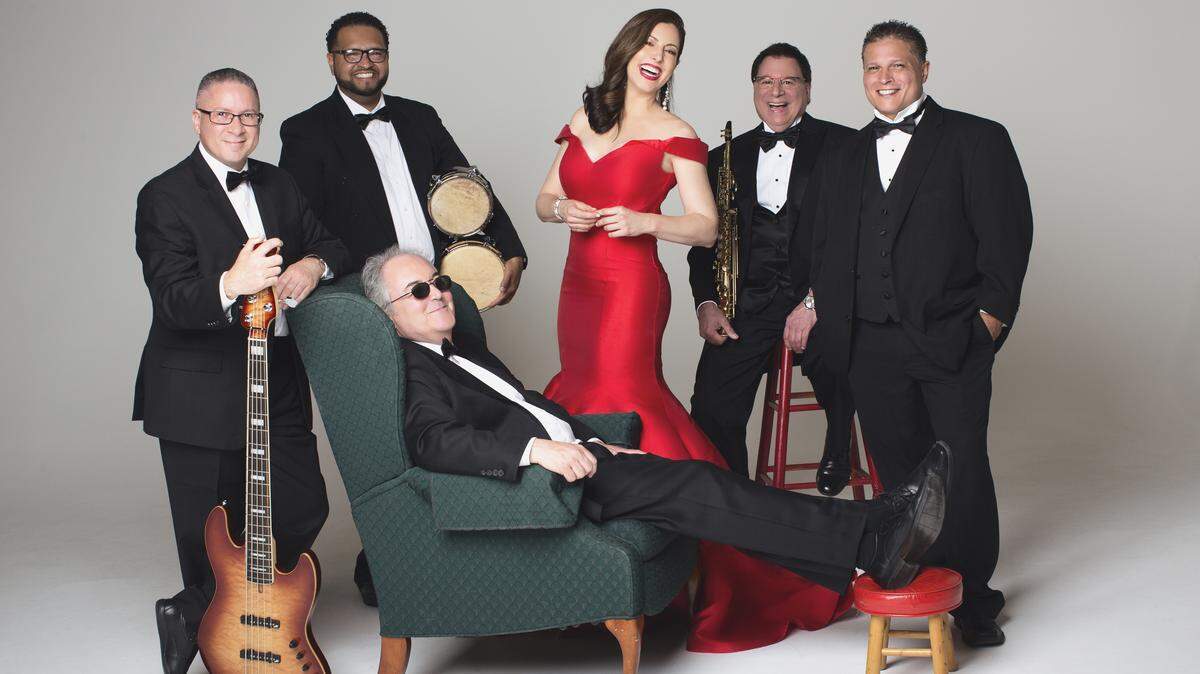
The pops concert that concludes the season features Latin American music by the group that inspired the 1992 movie.
“These guys are just amazing. They have a Latin sound and feel and style to their music, but it’s really for everybody,” Hege said. “They’re a fabulous group.”
“They have a very good reputation out there,” Reinhold added.
Before the 2020-21 season begins, there are three concerts remaining in the current season, including a May 16 show headlined by Tony- and Emmy Award-winner Kristin Chenoweth.
“They’re going really well,” Reinhold said of ticket sales. “We are probably past about two-thirds of the house filled. With about two months go, we’re right on target – and crossing our fingers that the coronavirus holds off.”