
Gov’t Mule started as a side gig for Allman Brothers band members. It’s still touring.
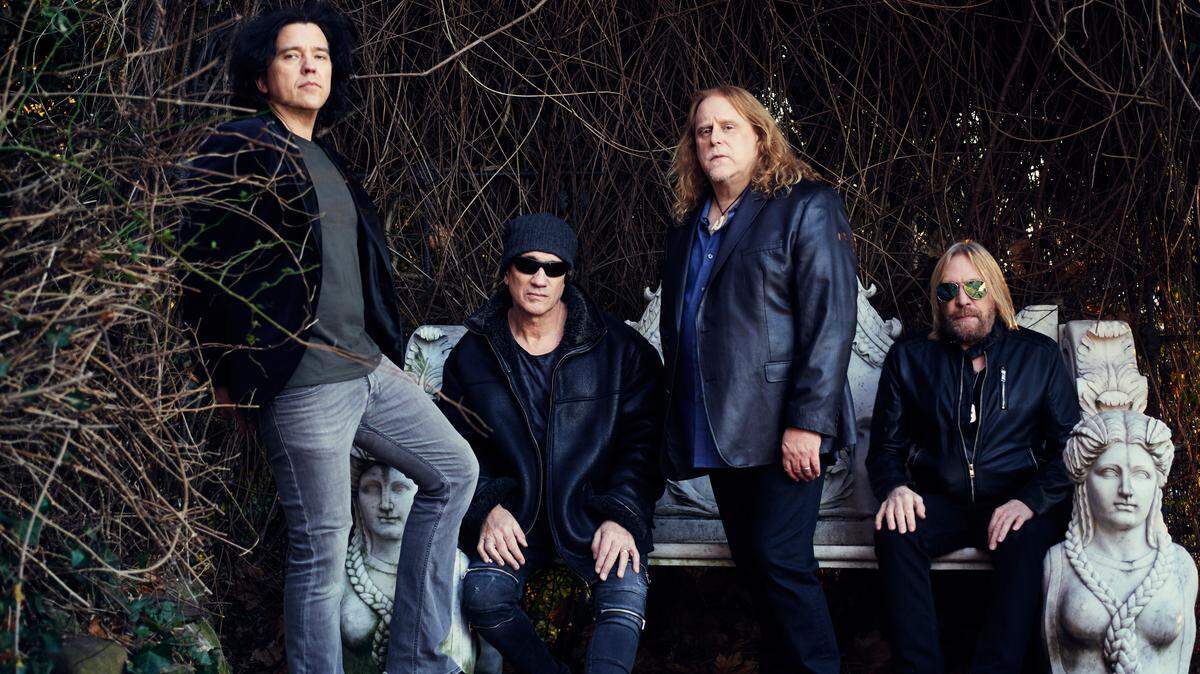
Twenty-five years ago, Warren Haynes co-founded Gov’t Mule as a side project when his main group, The Allman Brothers Band was taking a break.
Two years later, the Southern rock jam band became Haynes’ primary outlet — and it’s remained so through the years in which Haynes has played with the Dead and ventured out with solo projects.
The Mule is celebrating its 25th anniversary by, of course, going on the road and playing to the legions of fans it has built up by constantly touring with its acclaimed live show. The band also has a new concert release to promote, “Bring On The Music – Live at The Capitol Theatre,” which was directed by noted photographer/director Danny Clinch.
Recently, guitarist/singer Haynes called in for a conversation that turned out to be all about the show. Here’s some of that talk:
Q: So what makes a great show?
Haynes: You can really tell if a show is going to be great from the very beginning. From the first minute you know if that show is going to be right, going to be good. There’s an energy coming from the audience that’s kind of hard to explain. If it’s going to be great, it’s there from the beginning. For us, we’re going to do what we do. We play a different set list every night, take a totally different path every night.
Q: Talking about playing a different set list every night — I see so many bands playing the same set list every night. You guys are the opposite of that. Where does that come from?
Haynes: Jazz bands, blues bands and bluegrass bands have been doing that for decades. In rock, the great bands have imitated that. When I joined the Allman Brothers in 1989, we did the same set for two or three years. Then we changed. It really proved to be the best decision, for the band and the fans. For the band, we didn’t feel stagnant playing the same songs every show. For the audience, they never knew what they were going to get hit with.
Gov’t Mule adopted that philosophy from the very beginning. Even though, when we started out we only knew a handful of songs, it was ‘shake ‘em up.’ Now, 25 years later, we could do four nights and not repeat a song.
Q: Doesn’t playing a different set list each night open up the songs to be played differently as well?
Haynes: Yes, especially if you come back to a song after a few months, or even a few days, when you come back to it you’re kind of on an open path where you can take it where you and the song want to go.”
Q: That requires some special communication on stage, doesn’t it —so the whole band is taking the song in the same direction?
Haynes: All the bands that kind of share this philosophy have that sort of communication on stage. We’re paying more attention to the music and each other. The audience is tied into that, too. They can see we’re communicating, they can see where the music is going.”
Q: Does all this mean, that, live performance is what’s most important for Gov’t Mule, more than the records?
Haynes: As much as I’m very proud of our studio records, the live performances is where we come across, where the music comes across. Sometimes the studio performances is just a blueprint for what’s going to happen in the future. Sometimes you’ll play a song the same way 35, 40 times. Then you’re doing it one night and change it and it’s different from then on.
Taking a cue from bands before us, the two biggest being the Allman Brothers and the Grateful Dead, there has to be a balance between songs and jamming — just one or the other doesn’t work as a complete thing. If you feel a balance between the two, it can be more of one than the other, but still a balance, it makes a more satisfying show.
Q: You play 2 ½ hours with a 30-minute break. Is the ideal length or could you play long, four or five hours?
Haynes: On occasion, we have. When we did the Deepest End live DVD in New Orleans, we played for six hours. We can do it. But it’s nothing I’d want to do every night, play four, five, six hours. Normally, 2 ½ hours is about the right amount.
Q: I should have asked this earlier. How do you come up with the set list? Do you do it right before the show or do you just wing it?
Haynes: Usually, just before or sometime on the day of or maybe a day or two before, I’ll go back and look at what we played before when we’re coming into a city and make sure it’s completely different. Also, I’ll look at what we did the night before and, an important element, is what we feel like playing that night.
Q: So what do you do when you haven’t played a place in a long while, or have never played there at all?
Haynes: That gives us a clean slate to start with. In those cases, we’ll get something from each period over the last 25 years. When I look at doing the set list, I think about how it flows, from moment to moment. If we’re doing a more “professional” set, it might be just the greatest hits for over an hour. But when we’re doing these shows, it goes up and down, comes together in different ways.”
Q: You’ve played in front of hundreds of thousands and, I’m sure, in tiny clubs to less than a hundred. Is there an ideal sized venue for Gov’t Mule?
Haynes: I think the best size for us is the small theater thing, 2,000 to 3,000 people. You get some of the intimacy you get with a small audience and you get that wave of energy that you get from a big audience ... but there are a few places where we play smaller venues. It’s really a treat for us. The audience is right on top of us. We love that.
Gov’t Mule
When: 7:30 p.m. Sat., Aug. 17. Doors open at 6:30 p.m.
Where: Outdoors at Wave, 650 E. 2nd St. N.
Tickets: $35 general admission; $45 reserved seating; $55 VIP standing. Show is for all ages.
Information: www.waveict.com