
Take a Missouri road trip to visit home of Walt Disney, J.C. Penney
U.S. Route 36 in northern Missouri takes you to the childhood stomping grounds of Walt Disney, the headquarters of the legendary Pony Express that delivered communications more than twice as fast as competitors and the birthplace of an invention by which all others are measured: sliced bread.
Those are just three of the iconic American innovators, big ideas and inventions you’ll encounter on a road trip along this four-lane, east-west roadway that tourism officials have dubbed “The Way of American Genius.”
From St. Joseph to Hannibal, Missouri’s stretch of Highway 36 covers 195 miles of rolling farmland and small towns, offering indoor and outdoor attractions from state parks, lakes and farm tours to museums, mom-and-pop eateries and shops.
Some of the names are familiar, like Disney, Mark Twain, J.C. Penney and Gen. John J. Pershing; others are lesser known, for instance, Andrew Taylor, the founder of osteopathic medicine, and Howard A. Rusk, considered the father of rehabilitative medicine.
A website, americangeniushighway.com, provides maps, details and audio tours for the highway corridor, encompassing 36 miles north and 36 miles south of the actual highway. I stopped in five of the towns along Highway 36 on the return leg of a road trip, starting in Marceline, about 2 hours northeast of Kansas City, and heading west through Laclede, Chillicothe, Hamilton and St. Joseph.
Marceline Bucket list for Disneyphiles
Walt Disney moved to Marceline with his family in 1906 and while they stayed only five years or so before moving to Kansas City, the time spent on the family farm and in this railroad town made a lasting impact.
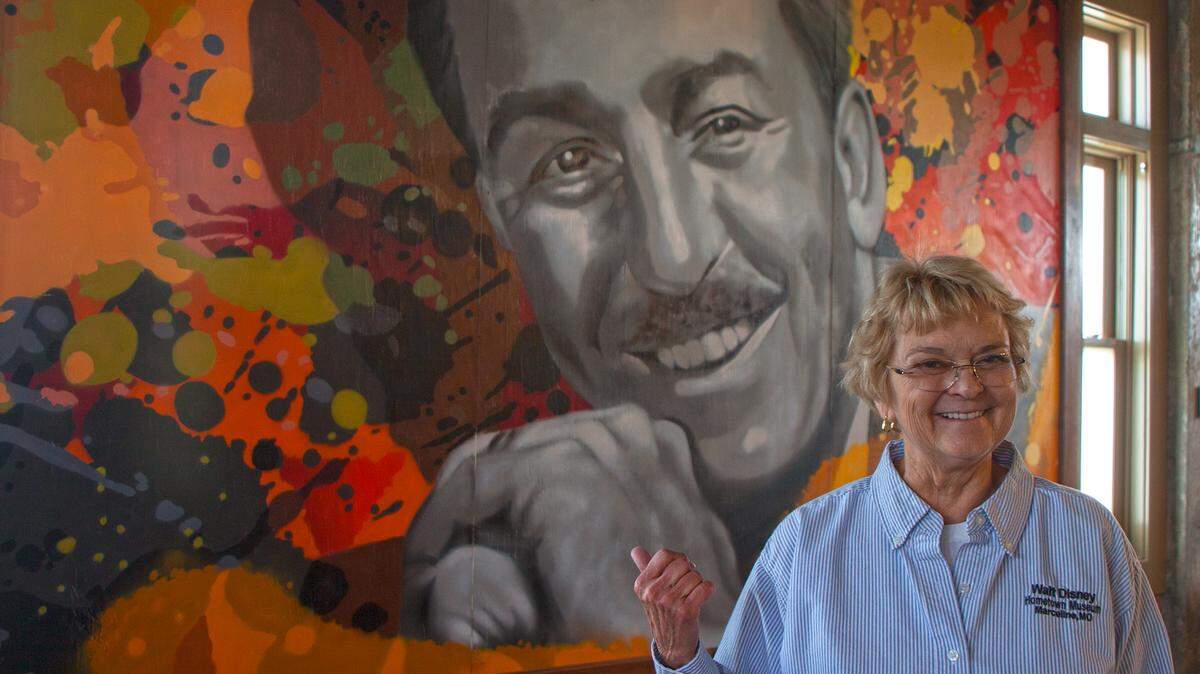
“Walt would later say that it was in Marceline where he found that magic of his life,” said Kaye Malins, founding board member and director of the Walt Disney Hometown Museum, open Tuesday through Sunday year-round.
The Marceline influence shows up in many of Walt’s magical creations, most notably Main Street U.S.A. at Disneyland is modeled after Marceline’s three-block downtown. While a visit to Marceline is more about the man than the mouse, Disney devotees come to this town of 2,200 to get a feel for what inspired Walt and to hear the stories of his childhood and return visits to Marceline that aren’t told elsewhere.
“They want to walk where Walt walked. They want to see where it all started,” said Malins, whose father Rush Johnson is credited with inviting Walt and Roy back to Marceline in 1956 when the city named its new pool after him.
The museum opened in 2001 after the gift of some 3,000 family artifacts from Walt’s sister Ruth. The 10,000 square feet of gallery space is filled with family letters and artifacts, photographs and memorabilia from Walt’s visits to Marceline and unique items such as plans for a living history theme park in Marceline that Walt was working on at the time of his death and a car from Autopia, the only ride to have left Disneyland and maintain operation outside the park’s control. There are also displays showing Marceline connections to Disney projects.
The museum is in a 1913 Santa Fe Railroad station, built on the spot where the Disney family stepped off the train in 1906.
Another way to retrace Walt’s world: visit the Disney farm, privately owned but open to visitors during daylight hours, to see a replica of the family’s barn and a 40-foot cottonwood that was planted by Walt’s grandson in 2004 using a seed harvested from the original tree Walt said he sat under to daydream and sketch.
Other Disney sites in Marceline include the Walt Disney Post Office Building, the only federal building named for him, and Walt Disney Elementary School. While it’s not the school he attended, Walt did speak at the building’s 1960 dedication, furnished the flag pole from the Squaw Valley Olympics and had his Disney team produce character artwork inside the building (if you visit when the building is closed, peek inside the front windows to see some of the murals).
You can also wander Kansas Avenue, where street signs have mouse ears, to see buildings that were replicated in Walt’s Disneyland. Don’t miss stopping at Ma Vic’s Corner Café – the font of the business will look familiar – for their famous “Dusty Miller” dessert: an ice cream sundae with layers of vanilla ice cream, chocolate syrup, marshmallow fluff and malted milk powder.
The third Saturday of each September, Marceline hosts Toonfest, a day of family activities including a parade and craft booths as well as a cartoon art show and symposiums featuring well-known animators and cartoonists.
This year’s event is Sept. 15; visit toonfest.net for more information.
Laclede: Revering a military hero
Fewer than 400 people live in Laclede, which is about midway between St. Joe and Hannibal.
The town’s most famous son is Gen. John J. Pershing, who went by Jack and was given the nickname “Black Jack” because he spent time early in his career in the mostly black 10th Cavalry regiment.
The Gen. John J. Pershing Boyhood Home State Historic Site offers guided tours of the interior of the nine-room Gothic-style house he lived in from 1866 until 1882, when he left for the U.S. Military Academy at West Point. The tours are offered Tuesday through Saturday. There’s also a statue and a veterans memorial outside the site’s visitor center, which includes a gift shop and an area to view a movie on Pershing.
The Prairie Mound School where Pershing taught prior to going to West Point was moved on site and has self-guided exhibits taking visitors through a timeline of his career. A First World War Commemorative Garden currently being installed features a raised flowerbed of poppies in soil from the eight World War I American military cemeteries in Europe that were established by Pershing while chairman of the American Battle Monuments Commission after he retired from Army in 1924.
About four miles outside Laclede, Pershing State Park is a popular spot for camping, hiking through wetlands and fishing in Locust Creek and four small lakes.
Chillicothe: Home of sliced bread
Most of us haven’t known a world without uniformly sliced bread so the phrase “the best thing since sliced bread” is hyperbole rather than personal experience. Learning about the advent of the first machine-sliced bread in 1928 in Chillicothe provides some perspective on a convenience that’s become a way of life.
The Grand River Historical Society Museum displays the large machine invented by Iowan Otto Frederick Rohwedder and first put into service by the Chillicothe Baking Company, recognized as the first commercial bakery in the world to offer machine-sliced bread for sale.
Rohwedder’s first machine did not survive, so this is his second automated slicer and it is on loan from the Smithsonian Institution (if you’re traveling just to see this, be sure to call ahead and ensure it’s still on loan). The large machine is behind glass, and next to it is a simple display telling the story of the local baking company’s business skyrocketing 2,000 percent in the first two weeks by offering sliced loaves that stayed fresh. The convenience of sliced bread meant more bread consumed and created a market for pop-up toasters that hadn’t taken off until the slicer brought standardization to the baking industry.
The museum, open Wednesday, Saturday and Sunday, has a 9,600-square-foot main building filled with exhibits reconnecting visitors with the early history of the region and an annex housing antique vehicles. A tour of nearly two dozen murals painted on downtown buildings also tells the history of the town, now home to 9,700 residents.
Hamilton: Quilt Town, U.S.A. & J.C. Penney hometown
Hamilton was best known as the home of James Cash Penney, born and raised on a nearby farm before going on to found one of America’s largest retail chains.
A new generation is probably more familiar with a younger form of genius in Hamilton: Missouri Star Quilt Company has channeled the internet celebrity of its matriarch into a quilting empire offering the largest selection of precut fabrics in the world.
The two concepts intersect in the town’s walkable downtown. Visitors can learn about Penney’s life and the history of the company at the free J.C. Penney Museum, housed in the same building as the community library, or take a look at Penney’s boyhood home, which was moved to Davis Street, Hamilton’s main thoroughfare.
What regularly brings 10,000 visitors a month to a town of 1,800 residents are 12 themed quilt shops, a sewing center for retreats and the possibility of seeing Jenny Doan, aka Mama Doan and star of the YouTube videos teaching simplified quilting techniques.
The Doan family opened its first brick and mortar store in 2008 and will celebrate its 10th year of what has morphed into Quilt Town, U.S.A. with a birthday bash Sept. 20-22 in Hamilton.
Among the shops is Penney’s Quilt Shop, in what was originally the J.M. Hale and Brother Dry Goods Company. Penney’s first job off the farm was there, and Penney opened the 500th J.C. Penney store there in 1924. Next door is Man’s Land, a respite from fabric shopping offering comfy seats, televisions and a pool table.
St. Joseph: Pony Express
St. Joe, with a population of 90,000 people, is the largest city along Missouri’s stretch of Highway 36.
Among its 13 museums, you’ll learn about inventions in the city, including the Cherry Mash that is celebrating 100 years in 2018 as well as Aunt Jemima pancake mix, developed by a local newspaper editor in 1889.
Several museums tell the story of the Pony Express, from the Pony Express National Museum to the Patee House Museum, where you can stand in the exact site of the operation’s 1860 headquarters.
The free Walter Cronkite Memorial on the campus of Missouri Western State University pays homage to the anchorman who helped launch the CBS Evening News in 1962 and remained its news anchor until his retirement in 1981.
Road trip
What: A stretch of U.S. Route 36 dubbed “The Way of American Genius” 195 miles across northern Missouri from St. Joseph to Hannibal. Stops highlight innovators, ideas and inventions, historical and present day
More information: americangeniushighway.com