
Nonstop flights to Seattle make trips to this active volcano and national park easier
I speak for our entire group of four adults who stayed last July at the National Park Inn inside Mount Rainier National Park when I say that we felt simultaneously happy to be staying one night in the historic lodge and happy to be staying just one night.
The history of this area of the expansive national park, the convenience to trails and the spectacular view from the inn’s porch – front and center of the park’s massive namesake – helped us overlook the lack of air conditioning, television, internet and space to turn around in our two-room unit on the second floor. For one night.
We were coming from our posh hotel room in downtown Seattle to spend two days and one night of exploring one of the country’s oldest national park.
When Alaska Airlines announced it would begin nonstop service from Wichita to Seattle in spring of 2017, we started planning a trip to an area that previously had taken an inconvenient amount of time and money to reach. We’d been to Seattle once before so we wanted to spend part of this trip outside the city.
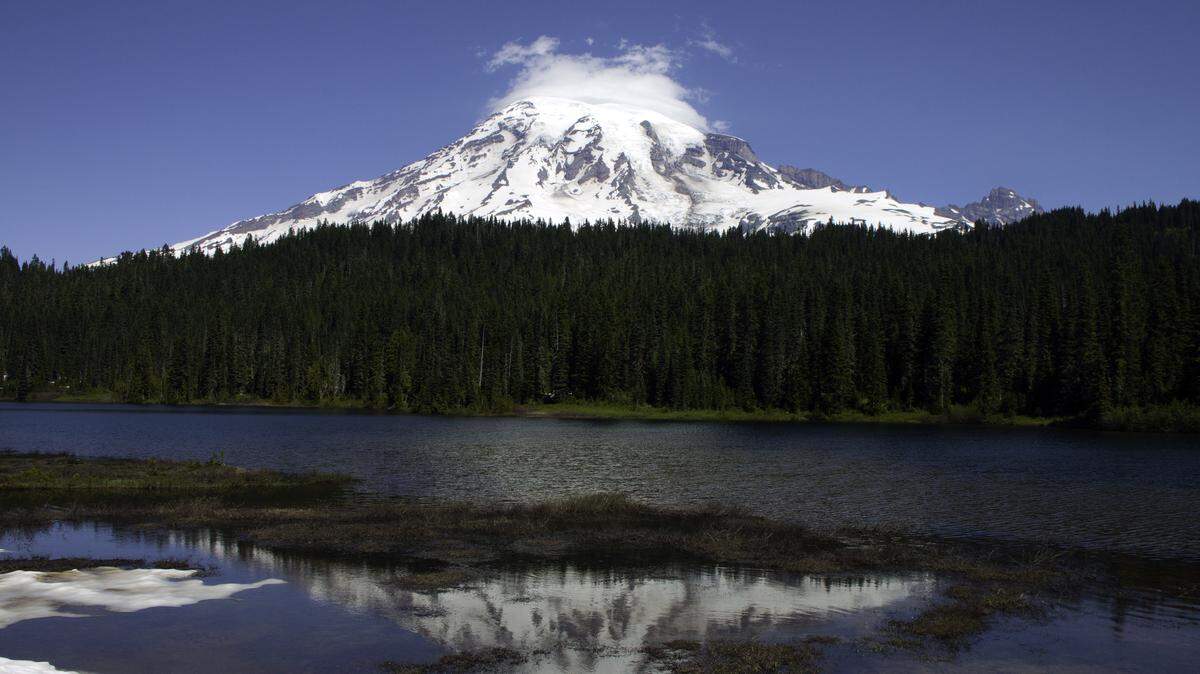
There were plenty of choices for side trips from Seattle but none more visible than Mount Rainier. At 14,411 feet, it’s the tallest singular peak in the lower 48 states. You see it on the flight into Seattle and on clear days residents throughout the Seattle and surrounding area will say the mountain is out, meaning they can see it.
Mount Rainier, part of the Cascade Range, is an active volcano that last erupted in 1854. It has 25 named glaciers and is the largest glacial system in the contiguous United States. It was a 90-mile drive from downtown to the National Park Inn, which you access through the park’s Nisqually entrance in the southwest corner.
This was the original entrance to the park after explorer James Longmire discovered mineral hot springs in 1883 while camping on the banks of the Nisqually River. He quickly capitalized by building the first tourist inn at Mount Rainier. His two-story split cedar structure had five guest rooms.
In 1899, President McKinley made it the country’s fifth national park and first created from a national forest. By 1906 the National Park Inn opened with three stories and room for 60 guests. According to park historians, Mount Rainier became the first national park to experiment with automobile access, allowing cars in 1907 with a $5 toll, which would have been an extravagant sum.
A 1926 fire destroyed the inn, but an annex survived and it is the current National Park Inn. The property was renovated in 1936 and again in 1990. There are 25 guest rooms (all but two are on the second floor), a restaurant, a small general store in one of the park’s oldest log structures and a covered porch spanning the length of the building with about a dozen chairs.
Mount Rainier National Park’s 235,612 acres are broken down into five regions. The region around the inn is Longmire, and it was designated a National Historic Landmark District in 1987. Many of the park’s oldest remaining structures are in this area, including the 1929 Longmire Service Station next door to the inn.
Right across the street is the Trail of the Shadows, a .7 mile flat loop hike to the old Longmire resort site, a historic cabin and mineral springs. You also can pick up longer trails from here; there are 240 miles of maintained trails at all ability levels within the park.
We drove farther in toward the Paradise region, stopping along the way at lookout points and hiking to one of the park’s more than 100 waterfalls. We had planned to hike part of the popular Skyline Trail from the Paradise Jackson Visitor Center, but the melt had the trail snowy and slippery. Instead, we drove to Reflection Lakes to for another iconic view of the peak.
We returned to the inn early enough for dinner in the restaurant and to watch sunset from the porch. We moved inside to the small common area to play cards before heading upstairs to our even smaller bedroom. Typically in early July the temperatures reach the mid-70s and drop into the 50s at night. Longmire sits at 2,700 feet and during our overnight, the temperature stayed in the 70s.
The next morning, we explored the northeast part of the park before exiting on the north side to head back to the Seattle area. We did the easy 1.5-mile round-trip Grove of the Patriarchs hike. Don’t skip this even if you’re wanting a tougher hike; take the hour or so and explore here. You walk through old growth Douglas firs, western hemlocks and western red cedars – some are 25- to 50-feet in circumference and more than 1,000 years old. The oldest trees are on an island you reach by crossing a suspension bridge over the Ohanapecosh River.
We ended our park journey by driving to the highest point accessible by car: Sunrise Visitor Center. At 6,400 feet, Sunrise is only open in the summer and the 16-mile paved road leading there can open as late as July. With a short hike at the top, you can get close-up views of the large Emmons Glacier. Don’t miss the pullover on the way up at Sunrise Point; it’s well-marked and if you get out you’ll see sweeping views that include five volcanoes.
While the peak is the centerpiece, the Mount Rainier region covers 2,800 square miles including the national park, portions of seven wilderness areas, three national forest areas and mountain communities in every direction. One of the most developed and convenient to Seattle is Crystal Mountain. It averages 350 inches of snow each year and is a popular ski destination. In the summer, the area converts to a playground for scenic gondola rides, an 18-hole disc golf course, hiking, biking and horseback riding.
While there are only two places to stay inside Mount Rainier National Park, there are more than 60 options in these surrounding communities. You’ll find more historic lodges as well as modern vacation home rentals, hotels, resorts, cabins and bed and breakfasts.
Though, I doubt any of those can rival the sense of place that surrounds you while sitting on the porch of the National Park Inn. For one night.
Mount Rainier National Park
Getting there: Alaska Airlines offers a daily nonstop flight to Seattle. Mount Rainier is 68 miles southeast of Seattle.
Cost: $30 for unlimited entry for one vehicle and passengers for seven consecutive days
When: The park is open year-round, however some roads, facilities and entrances close during winter season
More info: visitrainier.com
This story was originally published July 9, 2018 at 4:38 PM.