
How Technology is Gradually Changing the Way People Invest

For most of modern financial history, investing followed a similar pattern. Individuals could build portfolios with stocks, bonds, or mutual funds, often with the help of brokerage firms or financial advisors. Information moved slowly because transactions were handled through these intermediaries, and the tools available to regular people were relatively limited compared to what was available to institutional professionals.
However, over the past few decades, technology has slowly reshaped how people are able to interact with financial markets. It first began with the digitization of brokerage services, and has now expanded into a much broader ecosystem that includes mobile trading platforms, algorithmic portfolio tools, cryptocurrency, and other blockchain assets. Digital assets didn’t just appear out of nowhere. In reality, they represent the latest phase in a technological evolution that continues to influence how investors access, analyze, and participate in financial markets.
The Traditional Framework of Investing
For much of the twentieth century, financial engagement often relied on systems that were managed by professional institutions. Brokerage firms executed trades, banks provided custodial services, and market information was distributed solely through specialized terminals or financial publications.
Stocks allowed individuals to own shares of public companies, banks provided income through government or corporate debt, and mutual funds offered a more diverse portfolio that was managed by professionals. These instruments remain critical to global financial markets to this day.
Yet access to these systems once required even more steps than today’s investors are used to. Placing a trade may have required contacting a broker directly. Market data was not always readily available; many individual investors relied heavily on financial advisors to make investment decisions for them. As communication routes and internet access improved, these barriers slowly came down.
The Internet and the Rise of Online Trading
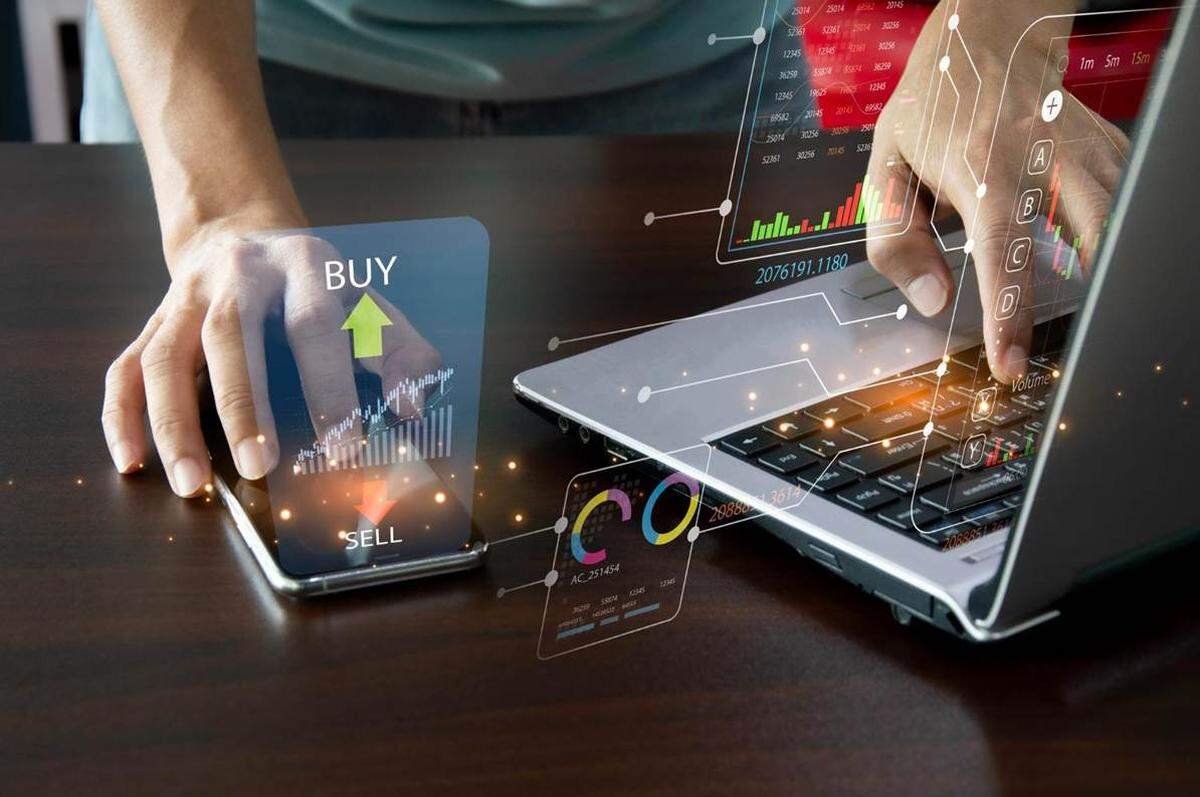
The late 1990s marked an important turning point for retail investing. Internet-based brokerage services introduced platforms that allowed individuals to place trades electronically rather than through phone calls or in-person meetings.
Online trading did not get rid of the need for financial intermediaries, but it did streamline many other processes. Investors could open their own accounts, view market data, and execute orders on their own accord. Over time, these platforms also introduced additional tools like charting, portfolio analysis, and market research.
Mobile technology accelerated change even more. Smartphones made it possible to monitor financial markets in real time and manage portfolios from almost anywhere. The overall effect was a gradual shift towards greater convenience and accessibility of finance.
These changes also invited more interest in alternative investment opportunities, including international markets, exchange-traded funds, and commodities. Eventually, the digitization of finance expanded into an entirely new category of investing.
Digital Assets Enter the Conversation
In 2009, Bitcoin introduced an entirely new concept: a digital currency that operated without a central authority. Instead of relying on banks or payment processors, Bitcoin transactions are recorded on a decentralized network known as the blockchain.
Blockchain technology functions as a distributed ledger that is maintained across many computers connected to the network. Each transaction is verified using cryptographic methods and is added to a shared immutable log that anyone can review.
The new system attracted a lot of attention because it demonstrated that there was a different way to store and transfer value. While the long-term role of cryptocurrencies continues to be a hot topic, their emergence and relevance introduced investors to a new type of financial asset.
Today, cryptocurrency exchanges act as the primary entry point for individuals who want to interact with digital asset markets. For example, someone making their first Bitcoin purchase on Kraken begins by opening an account, verifying their identity, and funding the account with a bank. The transaction is processed through the exchange and is later confirmed on the blockchain network. This process demonstrates how digital assets combine traditional finance steps with newer technologies such as digital wallets and the blockchain. Understanding how these parts can work together helps new investors get a sense of how the transactions actually operate behind the scenes.
Blockchain Uses Beyond Cryptocurrencies
While cryptocurrency often attracts the most mainstream attention, blockchain technology actually encompasses a wide range of industries. Fundamentally, a blockchain is a method of recording transactions across a distributed network of computers. Each new block of data is linked to the previous record using cryptography, which creates a chain of transactions.
Since several participants have copies of the ledger, the system verifies transactions collectively rather than through a single central authority. This approach has led researchers and businesses to explore potential uses in areas such as supply-chain tracking, digital identity systems, and secure document verification.
Financial institutions have also examined whether distributed ledger technologies could help improve things like international payment transactions. Although many of these applications are still in the works, they demonstrate how the technology behind cryptocurrency has the potential to influence broader financial infrastructures.
Central Banks and Global Research
The popularity of digital assets has prompted central banks and international organizations to look into their potential impact on existing financial systems. Institutions around the world are evaluating how distributed ledger technologies may interact with payment networks, banking regulations, and monetary policies.
A Financial System Under Transition
Over time, investing has moved from paper certificates to telephone trading, web platforms, mobile apps, and now blockchain-based networks. Each stage of this evolution has inevitably introduced new questions, risks, and benefits.
Traditional systems continue to play an essential role in global finance, yet digital technologies are expanding the ways in which investors can interact with finance. Cryptocurrencies and the blockchain represent some of the newest developments in this transformation. Whether they become a permanent fixture in the financial realm or evolve into new forms remains a glaring question for investors and developers alike. Understanding both traditional financial systems and emerging digital assets provides a valuable perspective on the changing nature of investing.
Investing involves risk and your investment may lose value. Past performance gives no indication of future results. These statements do not constitute and cannot replace investment advice.
The information provided in this article is for general informational and educational purposes only. It is not intended as legal, financial, medical, or professional advice. Readers should not rely solely on the content of this article and are encouraged to seek professional advice tailored to their specific circumstances. We disclaim any liability for any loss or damage arising directly or indirectly from the use of, or reliance on, the information presented.
Members of the editorial and news staff of kansas.com were not involved with the creation of this content. All contributor content is reviewed by kansas.com staff.