Evergy’s proposed electric rates for solar find few supporters, many critics
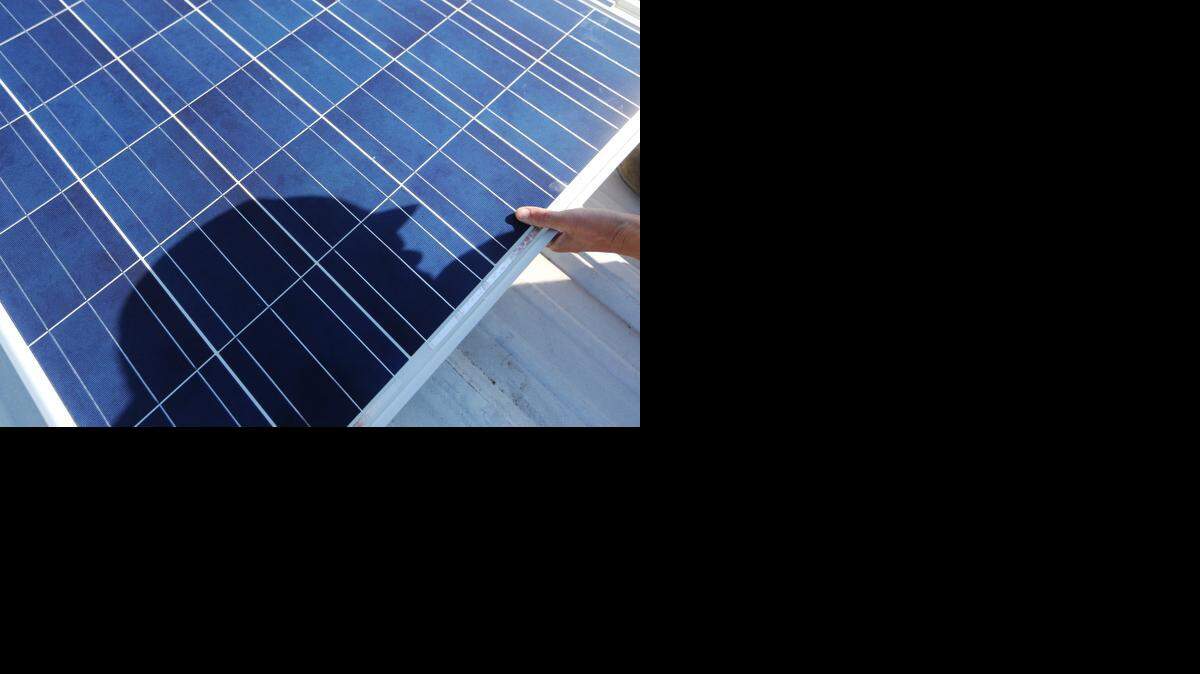
Kansans sent nearly 1,100 calls, emails or letters to the Kansas Corporation Commission, nearly all marked “opposed” to Evergy’s proposed residential solar rates. The comments were released by the KCC in a summarized report, and less than 20 were marked as supportive of Evergy’s plan.
Residential electric rates in Kansas must change after the Kansas Supreme Court ruled in April 2020 that the demand fees Evergy charge their solar customers were a “discriminatory rate,” resulting in violation of Kansas law.
Kansas is one of four states whose current solar battles are being watched by green energy advocates as residential solar policies are decided on the state level. President-elect Joe Biden’s plan to bring 100% clean power to the nation by 2035 might depend on state policies outside of his control.
The KCC received 1,084 phone calls, letters and emails between Oct. 15 and Dec. 21. While this number of comments isn’t unusual, as the previous comment period regarding residential solar rates in 2018 saw similar numbers, there are approximately only 1,000 solar customers in Kansas. Several people said they were not solar customers but concerned that Kansas solar customers were unfairly treated.
After a two day hearing in mid-December at the KCC, three proposals for electric rate structure changes have moved to the forefront. Two of the proposals are from Evergy and have been criticized by solar industry leaders and green energy advocates for discouraging people from using solar energy in Kansas.
Evergy’s preferred proposal of a $3 per kW grid access fee, which would really only apply to those who have a solar array, received criticism for being too similar to the rate the Supreme Court ruled against earlier this year.
Evergy’s second rate proposal of a $35 minimum bill for all customers, was criticized by more than 50 Kansans during a November hearing who said the rate was unfair to consumers.
The minimum bill proposal gained the support of the KCC staff during the December hearing. Carly Masenthin, a staff member, called it the “most straightforward, fair and balanced option.”
The third proposal was presented by the Citizen’s Utility Ratepayer Board, a state agency tasked with advocating for Kansas residents. CURB wants Evergy to charge all customers, solar and non-solar the same, at least temporarily until a new rate structure can be planned with input from the Legislature.
Under the CURB proposal, all customers would pay a service charge and an energy rate based on how much electricity they use, and Evergy would be allowed to keep track of the revenue it would have collected under the current proposed rate design. The utility would be allowed to use these numbers to inform their next rate design during the rate case in 2023.
Reject all plans
Many of the Kansans who wrote in asked the KCC to reject Evergy’s proposed rates outright. Some accused Evergy’s proposals as being thinly veiled attempts to discourage solar, and said they felt that with the COVID-19 pandemic and people being out of jobs, this was a poor time to raise rates.
“This isn’t a ‘rate hike,’” said Gina Penzig, Evergy’s communication manager. “The goal is to reduce the subsidization of solar customers by other non-solar customers. As a regulated utility, it’s expected that Evergy’s prices are based on our costs to serve customers. The commission has established that former net metering rates didn’t meet this expectation and resulted in customers who don’t have solar paying more to cover the cost to serve those who have private solar generation.”
Whether they were solar customers or not, several Kansans wrote strongly in favor of incentivizing green energy, whereas they saw the Evergy proposals as penalizing renewable energy.
“Solar users are and will continue to supply energy to Evergy with our solar units,” wrote Preston Goering of Newton. “This attempt to charge solar customers will dampen any growth in the solar and wind energy market, it will hinder the transition to clean earth-friendly energy, and it will shore up a company that is not making that transition to clean energy.. These things will continue to contribute to global warming.”
An Additional Fee for Solar Customers
Most of the Kansans who wrote in support of Evergy’s proposed changes, supported the grid access fee over the minimum bill.
“Raising the minimum rate for everyone rather than charging the persons who are using the alternative energy solutions is not fair,” wrote Husnain Shafqat of Wichita. “I’ve had bills lower than 35 and I don’t want any bill to go up because someone else decided to put solar panels in.”
Evergy pushed back on claims that the grid access fee would discourage solar in the state, pointing to statistics that showed solar had increased since it implemented its three-part rate, which was ruled illegal by the Kansas Supreme Court.
Several, including KCC Staff and Robert Vincent of Kansas Industrial Consumers, a group representing several large companies, said they were concerned the grid access fee will bring additional litigation.
Since the Supreme Court ruling prohibits charging solar customers differently than regular customers for the same service, Evergy needs to identify the specific services it supplies solar customers and provide adequate evidence to establish the services are different, said Glenda Cafer, a lawyer representing Pioneer and Southern Pioneer electric companies, which are based in Ulysses in southwest Kansas.
A $35 Minimum Bill
KCC staff said during the hearing that they support the minimum bill over the grid access fee, as the fee has the “potential to lead to future litigation.”
Several low income and elderly Kansas residents pleaded with the KCC to reject the minimum bill.
“We are seniors and already have high enough bills,” wrote Patricia Hunt, of Edwardsville. “Our incomes are expanded enough. With everything on the rise, it would really put a burden on us, as well as everyone else with low or fixed income, so consider everything before that final decision. Remember we aren’t asking for much and maybe corp can do without that raise this time.”
According to Evergy’s previous testimony at the KCC, this proposal would increase the electric bill of at least 140,000 low-income Kansans.
Some rural Kansans also objected to the minimum bill, saying separate buildings, such as garages and farm buildings have their own meters.
“Due to having a separate meter for a detached garage, we already pay the monthly service fee of 14.50 and in the past we may have once had a bill over 35, but never had a bill as high as 35 in the past 18 months,” wrote Patricia Specht, of Tecumseh. “We should not have to bear the burden for those who choose to have solar power.”
Evergy executives said they wouldn’t apply the minimum bill to customers who can show they have financial need. Customers will have to self identify as low income, according to Brad Lutz, Evergy’s director of regulatory affairs.
A return to the old rate
CURB’s proposal of using the same rate structure for all customers until the next rate case in 2023 delays solving the problem, said Douglas Shepherd, vice president of management consulting services for Kansas Electric Cooperative, Inc..
“The immediate problem is that it’s been said several times in this hearing that the adoption of solar is not slowing down. In fact it’s increasing,” Shepherd said. “ I think the harm is, if we don’t fix it now, it’s going to become a bigger problem. That’s why I think it’s important that we do go ahead and resolve it now.”
Evergy said CURB’s proposed plan, exacerbates the problem and doesn’t solve anything.
“It’s simply not an appropriate rate,” Lutz said. ‘“If our goal is to make progress ... going backwards to the two-part rate does not achieve anything.”
This story was originally published January 8, 2021 at 5:01 AM with the headline "Evergy’s proposed electric rates for solar find few supporters, many critics."