
Kansas isn’t paying what it owes for special education. We need action | Opinion
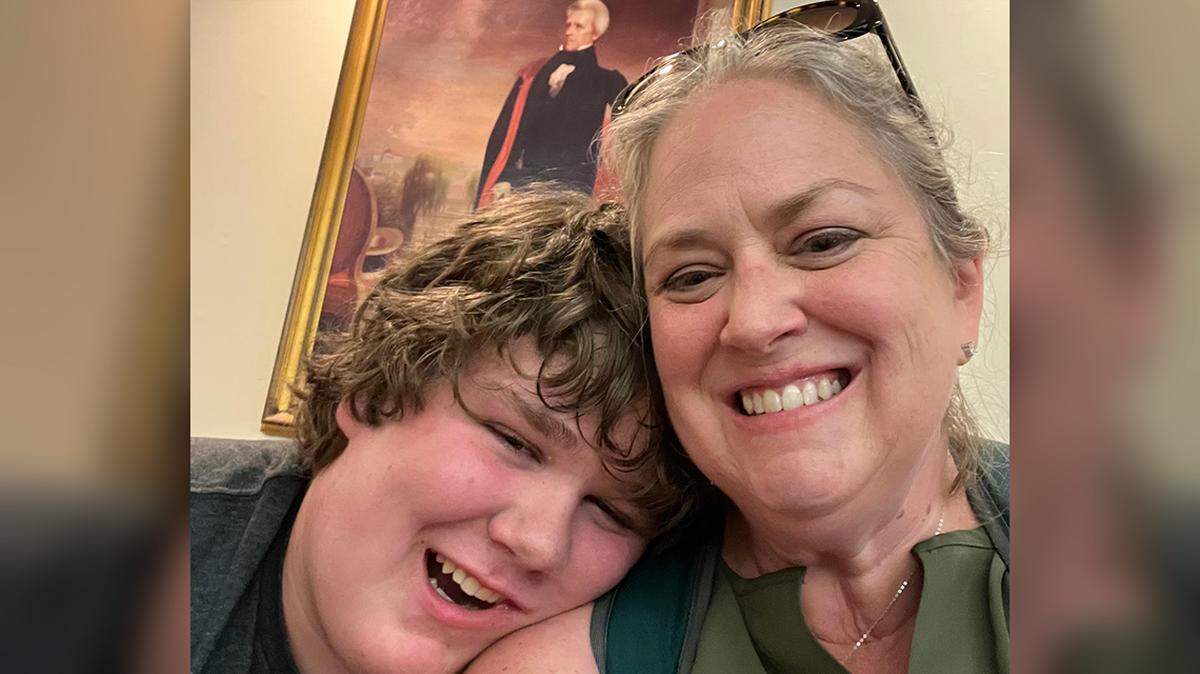
My son is going into his junior year of high school. He has autism and is non-speaking. For his entire school career, he has relied on a qualified paraprofessional to access his education, meet his individualized education program or IEP goals, and receive the appropriate public education the law guarantees him. We have been fortunate. The Blue Valley school district has brought in dedicated individuals who know him and make it possible for him to learn. That is becoming harder to sustain, and the reason has nothing to do with the school’s commitment. It has to do with what Kansas refuses to pay.
Kansas law requires the state to reimburse school districts for 92% of excess special education costs. The last time that happened was the 2010 to 2011 school year. Today, according to the Kansas Legislative Research Department, the state pays roughly 67 cents of every dollar it legally owes.
Blue Valley pulled $18 million from its general fund this year to cover what the state refused to pay. Across all six Johnson County school districts, $132 million was redirected from general education. Paraprofessionals are watching hours cut and duty days slashed. Some have left. More will follow.
In Olathe, Superintendent Brent Yeager confirmed his district transferred $44 million from general funds, eliminated 27 positions, and is now considering school consolidations. In Kansas City, Kansas, a University of Kansas report documented chronic paraprofessional vacancies and students missing services midyear. In rural Kansas, when the only qualified paraprofessional leaves a small district, there may be no replacement within driving distance. Children can spend an entire year without services their IEPs legally guarantee.
This is not a Johnson County problem. It is a Kansas problem, from the suburbs to the smallest towns on the plains.
For my son, a paraprofessional is not a support service among many. A paraprofessional is how he participates. Remove that relationship and his ability to make meaningful progress collapses. That is a violation of federal law. In 2017, the U.S. Supreme Court ruled unanimously that an IEP must be reasonably calculated to enable real educational growth, not merely place a child in a room and call it compliance. A state that refuses to fund special education creates the exact conditions under which that standard cannot be met.
My son has two years left. The system that has supported him is being dismantled in the time he has remaining.
Districts going to court
On May 20, Blue Valley Schools joined with De Soto, Olathe and Shawnee Mission school districts to form the Kansas Public School Funding Coalition to pursue litigation against the state. Together, these four districts serve more than 83,000 students. In the 2024-2025 school year alone, they spent more than $119 million in local taxpayer dollars to cover the state’s special education shortfall.
The districts say they have exhausted every avenue, including individual meetings with lawmakers, written and in-person testimony and years of advocacy, and that the Legislature has consistently chosen to shift the burden onto local districts and taxpayers rather than meet its legal obligation. They have now issued a request for legal counsel to evaluate and pursue litigation. The message is clear: The time for waiting is over.
This is everyone’s issue. Special education funding is legally required to be separate from general education dollars. When the state refuses to pay its 92% obligation, districts raid the general fund, reducing resources for every child’s classroom and teacher. This is not a trade-off between disabled and non-disabled students. It is a state failure that costs every Kansas family. Any parent could find themselves here: many do not know their child has a disability until they are already in school.
This is not a partisan issue. The failure to fund special education has continued across multiple legislatures and administrations. Every Kansas House seat is on the ballot in August 2026. Every candidate should answer one question: will you fund special education at the 92% the law requires?
Find your legislators and their votes at kslegislature.gov/li — search HB 2513. Blue Valley area residents can see a local breakdown at standupbluevalley.org For special education parent rights, visit the Disability Rights Center of Kansas at drckansas.org or call 785-273-9661.
My son has two years left. So does this Legislature’s window to get this right. Look up the record, and vote accordingly.
Anne Hayes is executive director and co-founder of Inclusive Development Partners, a woman-owned small business dedicated to improving the lives of marginalized populations. She is a proud Kansan and University of Kansas graduate who has been working on international inclusive education for more than 30 years.
This story was originally published May 24, 2026 at 5:02 AM with the headline "Kansas isn’t paying what it owes for special education. We need action | Opinion."