
Wichita considers making cuts as deficit looms. Here are some options
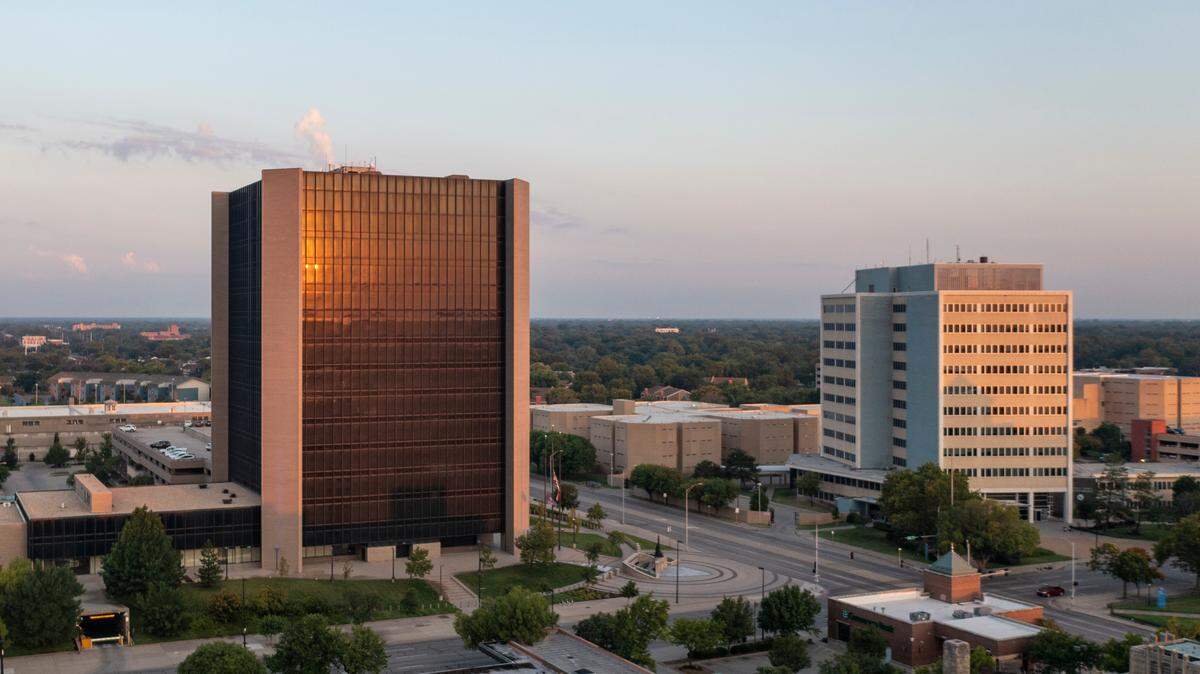
The city of Wichita is looking at how to reduce a projected budget deficit, including eliminating animal control services, reducing firefighter positions and eliminating a municipal courtroom.
The city is projecting it will see a $2 million deficit in 2026, and a $5.5 million deficit in 2027.
“It’s going to take different approaches and strategies in order for us to be effective. It’s going to take partnerships,” outgoing City Manager Robert Layton said during a budget workshop Tuesday.
Some council members pushed back against cuts to fire and animal control services.
The city is already projecting it will see about a $900,000 cost saving in the coming year because health insurance rates will not be as high as budgeted and it expects other savings like decreased postage costs.
If the city keeps the property tax mill levy rate the same during this year’s budget cycle, it will need to make cuts.
Suggestions for those cuts came from department heads after the city directed them to find places to trim their budgets.
For the library, that includes eliminating New York Times and Wall Street Journal subscriptions for library card holders and outsourcing some staff in its local history section to the Wichita Genealogical Society. That would reduce the deficit by $135,000 in 2026.
The biggest reduction the city is looking at for 2026 is eliminating a courtroom, and its three staff members, at a $450,000 savings. The city has four courtrooms, plus a video courtroom.
The city said the courtroom is no longer needed because of a decrease in traffic violations.
“I think we do have to recognize there are some workload issues that are associated with not having the kind of citation activity we have in the past,” Layton told the council.
Most council members signaled they were supportive of most cuts the city was looking at for 2026. However, some took issue with a $180,000 reduction for tree planting, saying it’ll be needed long after the drought is over to reduce the city’s heat island.
“While I think it’s a short term budget fix, I think it’s irresponsible long term to continue to keep on putting off tree planting,” council member Maggie Ballard said.
More serious budget cuts would be considered by the council if the city doesn’t collect the full amount of property taxes levied.
Over the past several decades, the city council has maintained a property tax rate around 32 mills. The city’s property tax revenues increase or decrease based on annual property valuations by the county appraiser’s office. Some council members have pushed to lower the mill levy using a formula that would tie property tax revenue to inflation and assessed value on new construction.
Those cuts could include fully eliminating animal control services field operations, and the shelter, by 2027, and eliminating fire positions that were funded by a fire safety grant that’s set to expire next year.
That grant allowed aerial fire trucks to be staffed with four people instead of three.
Most council members said those two items were a non-starter.
“I have no interest in eliminating personnel,” council member Dalton Glasscock said.
Council member Mike Hoheisel, whose district is affected by stray animals, also took issue with eliminating animal control services.
“I’m not on board with any of those,” Hoheisel said.
The city will present its first budget proposals on July 15 with approval by late August.
Could a city sales tax be coming?
Council members also discussed the possibility of a city sales tax to fund capital projects for public safety and reduce the mill levy.
The idea was floated by council members last month. Voter approval would be needed, but any proposal is unlikely to make the November ballot.
The city does not already levy a citywide sales tax.
Sedgwick County currently levies a one percent sales tax, with revenues divided between the county and its cities, including Wichita. That was approved by voters in 1985.
That money goes to infrastructure projects and to the general fund to reduce property tax mill levies.
If voters approve a 0.5% sales tax, it would cost an average family in Wichita $176 annually, according to the city. That would bring in $57.7 million, allowing the city to reduce its mill levy rate and pay for some capital projects for public safety it says are needed in the next five years.
Those numbers would double if the council decides to pursue a 1% sales tax instead.
Most council members were supportive of exploring levying a sales tax.
“We do need property tax relief, we do,” council member J.V. Johnston said. “People have been screaming about that. It’s consistent, it’s loud.”
This story was originally published May 27, 2025 at 3:40 PM.