
He issued a bold ultimatum. But will Crown Uptown’s owner really tear it down? Can he?
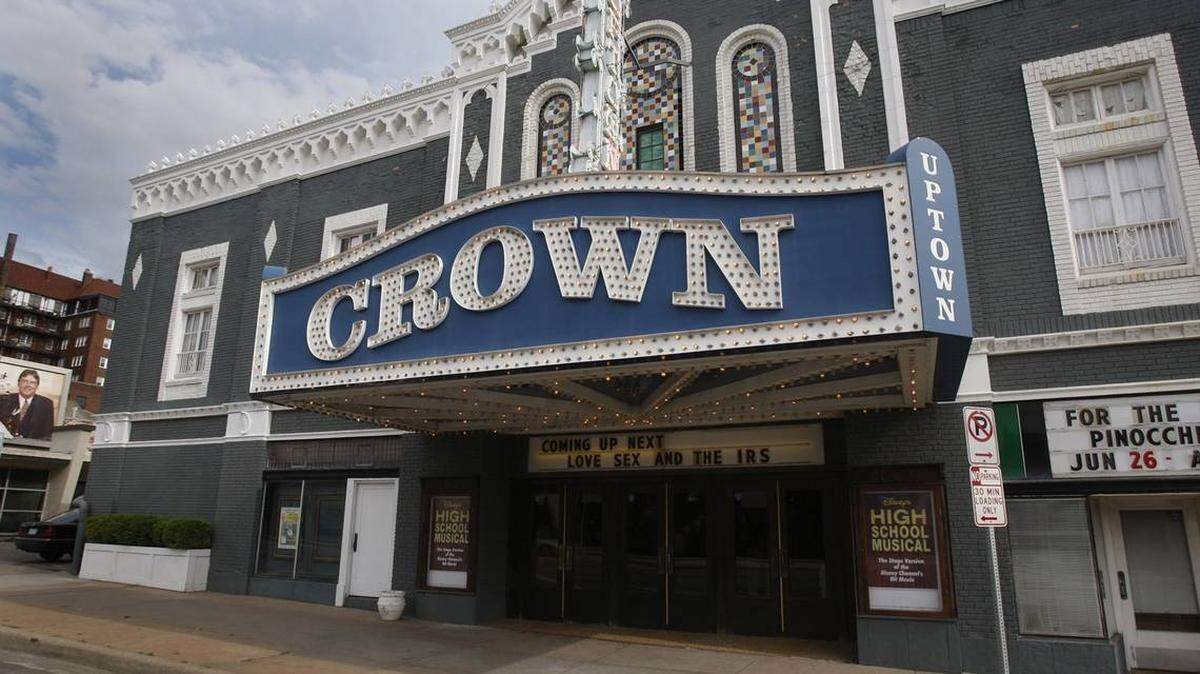
When word got out late last week that the new owner of the Crown Uptown — Tulsa businessman Mike Brown — had promised to demolish the 96-year-old Crown Uptown Theatre at 3207 E. Douglas if the Wichita City Council did not approve his request to more than double the building’s capacity, former owner J Basham felt torn.
On one hand, he was mortified. Basham, who sold the building to Brown last year, never thought the new buyer would make such a threat. In fact, Basham said, he purposely looked for a buyer who he thought would be a good steward for the building, which opened in 1928 as a movie theater.
“I do not want the place to come down,” Basham said. “When I had it on the market, some of the business owners around me said, ‘I wish you the best. Just don’t sell it to someone who would tear it down.’ And I wouldn’t. I don’t want that.”
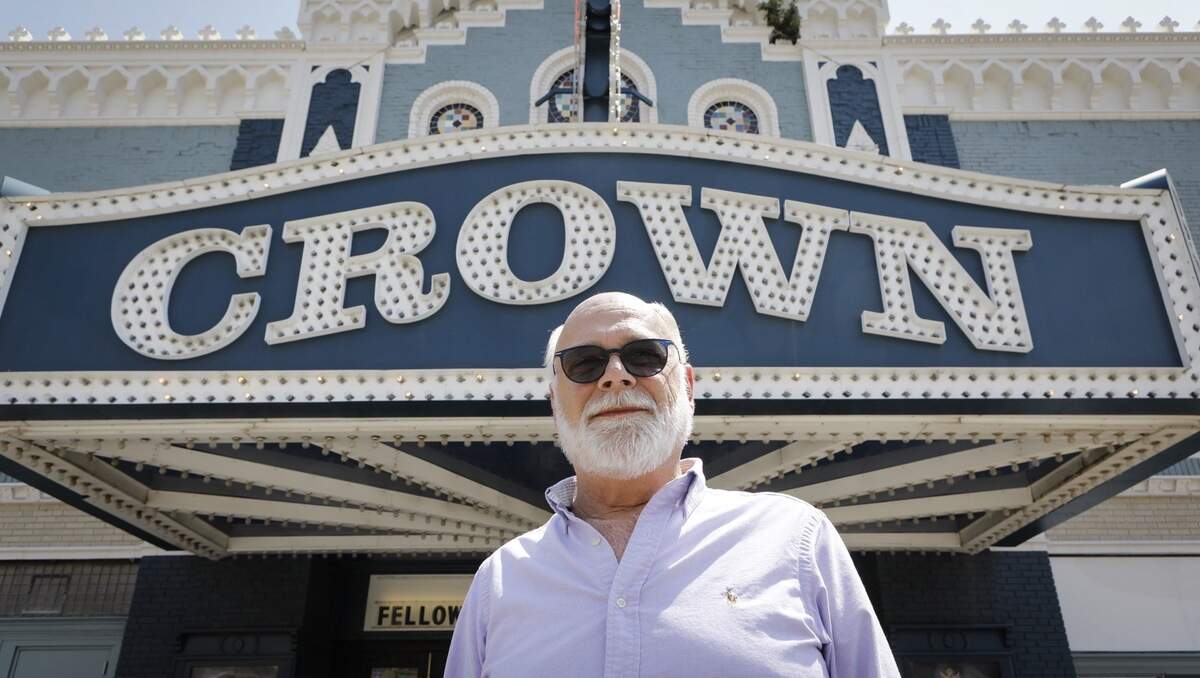
On the other hand, Basham said, as someone who tried to do business in the aging building for many years, he understands Brown’s desire to increase its capacity. Brown should be able to expect a return on his investment, and people who are opposed to the capacity increase don’t understand how much it costs to operate the building, Basham said, noting that heating and electric bills alone often cost him between $5,000 and $6,000 a month.
But, it appears, few Wichitans have such ambiguous feelings about the Crown Uptown, which few people knew was in jeopardy until Brown granted an interview to KSN last weekend promising to tear down the theater on Dec. 4 if the council does not approve his zoning request at its Dec. 3 meeting.
“Without the approval of the capacity increase, the building will go away,” Brown told the TV station, sparking a wave of public outcry and inspiring a Change.org petition demanding that the theater be protected from demolition. (As of Wednesday, the 5-day-old petition had been signed by 200 people.)
When contacted by The Eagle this week, Brown said he had no comment on the issue other than to say that he’d be issuing a statement soon. Basham said that, in a recent conversation, Brown told him that he was thinking about inviting both his detractors and supporters to sit down with him at The Crown and “have an open dialogue.”
But it might be an uphill climb for Brown, who doesn’t appear to have made many friends in the neighborhood during his time in Wichita — and who likely didn’t help his case with his ultimatum.
Wichita City Council member Brandon Johnson, whose district includes the theater, said that he’s been hearing all week from people with strong feelings on the matter. Most say they don’t want to see the Crown Uptown go. Many worry that allowing Brown to more than double the theater’s capacity would create a parking nightmare for College Hill.
Many others said they just didn’t like Brown’s tactics.
“There’s kind of three themes I’m hearing,” Johnson said. “One is: ‘Don’t let the developer bully the city of Wichita to get what he wants.’”
Movie palace to dinner theater
The Crown, which opened as a first-run movie theater in 1928, was an “atmospheric” theater designed by the Boller Brothers, architects from Kansas City. Its first event was a screening of “The Jazz Singer” starring Al Jolson on July 16, 1928.
Known for its ornate facade, the Crown closed as a movie theater in 1975. But a year later, Ted Morris remodeled it and reopened it as a dinner theater. For decades, he filled its stage with shows like “Fiddler on the Roof” and “Seven Brides for Seven Brothers” and fed his audiences at a popular buffet.
During Morris’ tenure, the theater was also home to many company Christmas parties and for years provided a stage for Wichita Children’s Theatre & Dance Center productions.
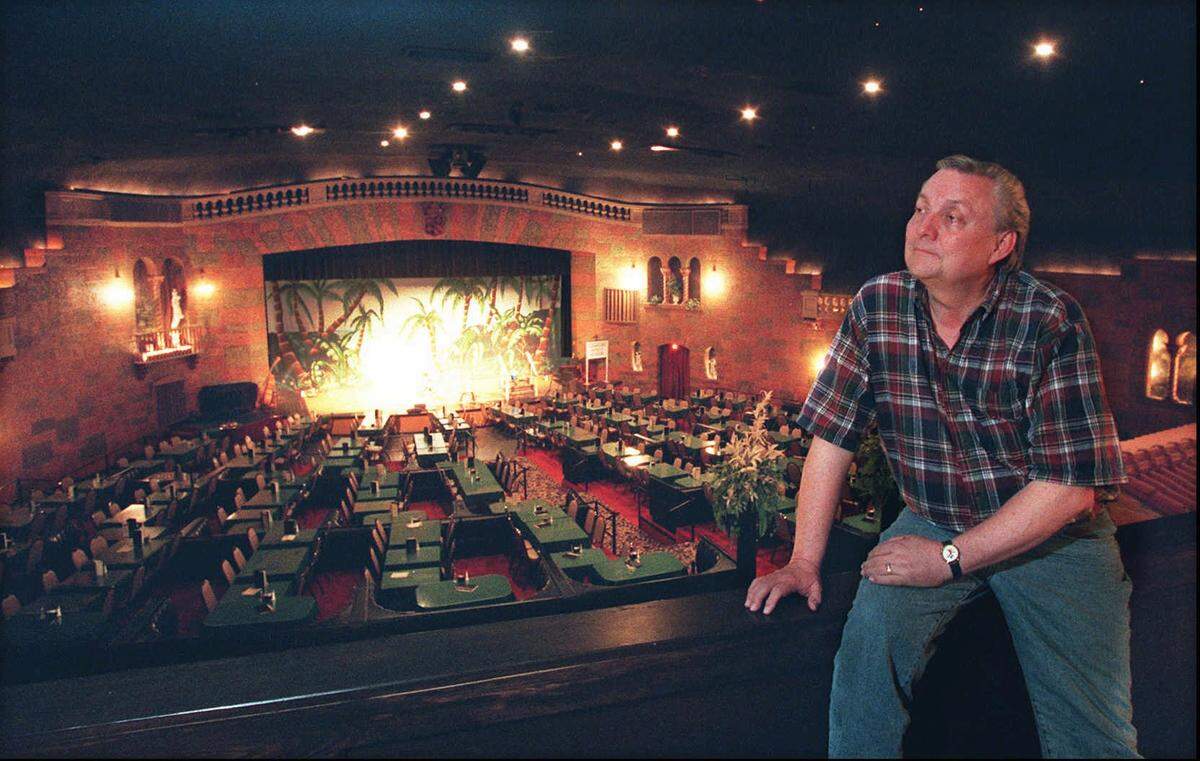
Morris died unexpectedly in 2009, suffering a heart attack in the theater. It got new owners, then in 2017 was purchased by Mike Garvey of Buildings Inc., who fitted the Crown with a new sound system and modern lighting. Garvey ended the building’s run as a dinner theater and instead used it for smaller scale concerts and also rented it out for dances and weddings.
Basham, a longtime theater professional who had managed The Crown for Garvey, purchased the venue in 2017 and ushered it through the COVID-19 pandemic. In 2021, he also ushered dinner theater back into the building by renting it to a nonprofit called Crown Arts Collaborative, which put on full seasons of stage productions.
But in 2022, Basham announced he was ready to retire and was looking for a buyer. He listed the theater building for $1.2 million.
Brown, who worked as vice president of operations for TempleLive when the company purchased the Scottish Rite Center in 2019 and turned part of it into a concert venue, offered Basham double what others were willing to pay for the building, he said.
Brown had the same concert venue vision for the Crown, he told members of the District 1 District Advisory Board during a Nov. 4 meeting. But the overall unreceptive body eventually voted not to recommend that the city council approve Brown’s request to increase the building’s capacity.
To turn a profit, Brown told the committee, he needs The Crown to be able to function at its full capacity, which an occupancy review he had performed — a review he said was agreed upon by fire officials — determined was 2,066. But to fill the building, which has been stripped of the half-circle booths used by previous owners, he needs the City Council to amend a Planned Unit Development passed in 2017 that limits The Crown’s capacity to 850.
His goal is to fill the venue with larger acts — “not your Taylor Swifts of the world,” Brown’s representative, Jay Cook, a planning consultant with Baughman Co., told the board, but acts who won’t consider booking at venues whose capacities are smaller than 2,000.
“This is probably a middle-grade artist, someone on the up-and-coming,” Cook said.
The Metropolitan Area Planning Commission voted Oct. 24 to recommend the council approve Brown’s plan. But at the Nov. 4 DAB meeting, Brown faced significant opposition.
The issue quickly became parking, or a lack of it, in the area around The Crown. Because its parking requirements were settled before newer guidelines were established, the building is required to have only 17 paved off-street parking spaces, but the owners say they understand it would need far more.
The board was told that Brown had made verbal agreements with nearby businesses to use their lots in the evenings and had managed to identify 500 additional spots. If patrons used ride share services and the Q-Line, Cook said, that would be more than enough.
But the board members, some of whom live in the College Hill neighborhood, were skeptical and argued that the area was already congested without a capacity increase. One board member pointed out that, under modern-day parking requirements, the crown would need more than 700 spaces to make their requested capacity work.
Board member Tila Puritty admonished Brown for getting himself into the situation.
“Shame on you for buying the business when you didn’t know what the capacity was,” she said.
“Shame on the title company,” Brown quickly responded.
When the public comment portion of the DAB meeting opened, Brown’s plans were overwhelmingly denounced by College Hill residents and the Crown’s business neighbors, including an animated Stephen Holt, who owns the building attached to the theater and sits on the southeast corner of Douglas and Hillside. Holt told board members that he owned the parking lot directly south of his building but that a war had developed over an 8-foot area in between The Crown and where that parking lot starts.
Trucks, trailers and RVs have been unloading at the Crown since it’s become a concert venue, he said, and they refuse to move, even when they block him and his tenants from getting out of the lot. Holt told The Eagle in July that the vehicles usually stay for eight, 10 or 16 hours and block both driveways.

In June, Dive Inn Properties LLC and Kismet Koncerts Wichita LLC sued Holt’s Crown Plaza LLC, saying that The Crown should be granted an easement out of necessity. The suit says that “the owners of the Crown Uptown Theatre have used the Parking Lot in the manner described above without impairment for nearly 100 years.”
Holt, who was instructed by Johnson to stop speaking out of turn several times during the DAB meeting, told the board that “this type of behavior and tactic of effectively using hostage-style negotiation tactics should be of special note to the neighborhood and its governing bodies.
“Do we really want to set the precedent of allowing developers to buy cherished historic buildings and then threaten to tear them down if they don’t get what they want?”
Owners of other neighboring businesses also spoke out at the DAB meeting against the capacity increase, including Robin Van Huss, the owner of most of the buildings across the street from The Crown, including the Traditions Furniture building, who said she was never asked for permission to use her parking spaces nor would she ever have granted it.
“We’re constantly having to handle parking problems with all the parking lots that we do own,” she said. “We have cross use agreements with our own tenants, but we don’t have any room for anybody else.”
Trish Hileman, the vice president of the College Hill Neighborhood Association, asked if the developers could wait until after The College Hill Neighborhood Plan — which she’s working on with others in the neighborhood to address such questions — was complete. But Brown said that wouldn’t work: He has to sign contracts for his 2025 concert lineup now.
After public comment and before the vote, Brown and his agent, Cook, reiterated that they just wanted to be able to use the building to its capacity, and they don’t believe parking will be an issue.
But the caliber of artists they want to bring to Wichita won’t perform for crowds of just 850.
“Yes, the uptick of 850 to 2,000 is a lot. I’m not denying that,” Cook said. “My client is not denying that. You all know that. But it’s what the building holds. It was its intended use. ... We’re not changing the use. We’re only asking for an increase in the amount of people that’s allowed in the building. “
Would he really?
In the days following the KSN story, the Change.org petition popped up online. It was started by Paul Knapp, a self-described fan of The Crown and a former board member for the Crown Arts Collaborative.
He was inspired to start the petition, he said, because he did not care for how the new owner was doing business.
“I was kind of surprised at the drastic measure that he was putting forth. And I have not really liked the way that I’ve seen the Crown go in the last couple of years, especially with new ownership,” he said, adding that the Crown Arts Collaborative contract was canceled by the new owners when they took over.
Even though his petition won’t result in any binding action, he said, he felt it was important to stand up for the building.
“To come to this final pinnacle moment of, ‘I’m tearing down the building if City Council doesn’t go my way’... that’s kind of holding the building hostage even if he doesn’t intend to. He doesn’t understand the historical significance of the building.”
Knapp also said he questioned whether Brown could legally tear the building down and that he’d been frantically researching to find an answer.
The Crown is not on the National Registry of Historic Places, so it receives no protection against demolition there. But it may be able to get a stay under a 1991 municipal code that listed it and many other structures in town — including the original Nu-Way building at 1415 W. Douglas and the Flatiron Building at 2144 N. Broadway — as “Undesignated Historic Resources.”
Megan Lovely, communications manager with the city, said that, according to the code, if the city receives an application for demolition of a structure on the list, the city preservation staff must be notified and that it may be able to temporarily prevent demolition or alteration “until effective evaluation of the building, site or structure can be made.”
The property owner would have the right to appeal the preservation staff’s ultimate decision. A few structures on the list of Undesignated Historic Resources have since been demolished, including downtown’s Allis Hotel and the Wichita Livestock Exchange building at 702 E. 21st St. But many others have since been added to the historic register.
And there may be another issue, Lovely said.
“We have also had ongoing discussions between the property owner and fire personnel,” she said in an email. “The building is currently classified as an A2, which would require a fire sprinkler system for an increase in occupancy. The City offered to assist the owner in pursuing this, but he has not chosen to pursue that option at this time.”
So could Brown be bluffing about his intention to tear the building down if things don’t go his way?
At the DAB meeting on Nov. 4, he repeatedly said how much he loved the building, and when a board member asked him what his Plan B would be if he didn’t get approval from the council, he said he didn’t know. He’d have to determine how else the building could be used.
“But our intent would be to put all kinds of historic protection on that building moving forward,” he told the board.
Basham said Wood has made the same declarations to him. He has no idea how serious Wood’s demolition threats might be.
“The first day he saw the building, he fell in love with it,” Basham said. “He said, ’I want this building. I love this building. I’ll make you an offer.
“It’s hard for me to imagine him doing it. But again, he’s a businessman, and if he can’t make his money. . . .”
This story was originally published November 27, 2024 at 11:51 AM.
.jpg)